|
|
|
Caterpillar Patterns |
|
|
|
|
|
Caterpillar Patterns |
|
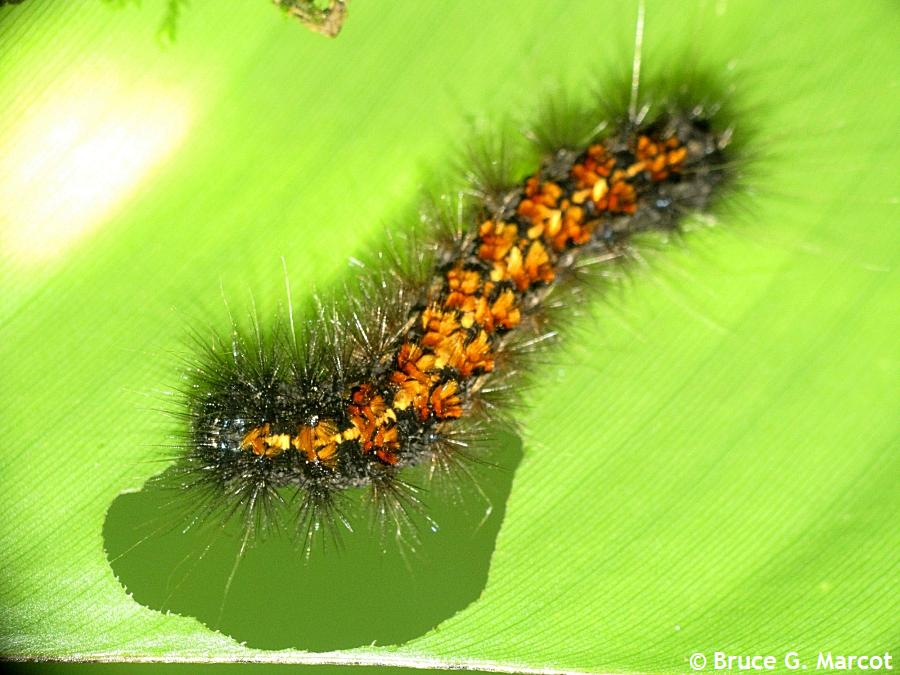
Caterpillar Devouring Leaf |
Credit & Copyright: Dr. Bruce G.
Marcot
|
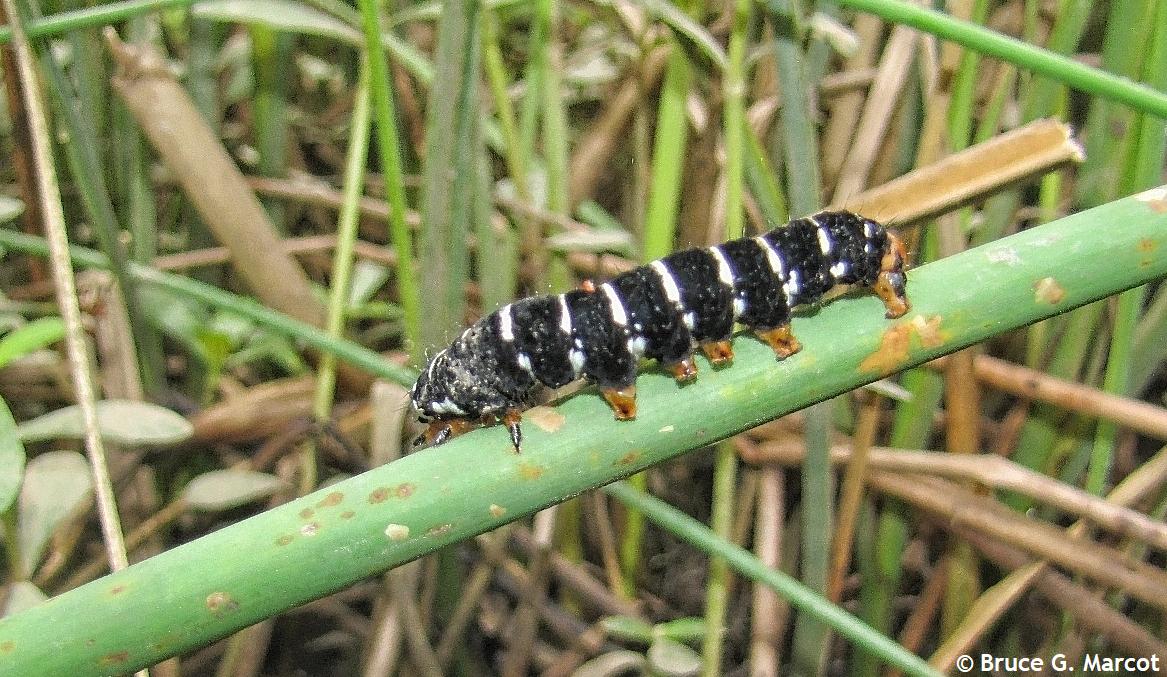
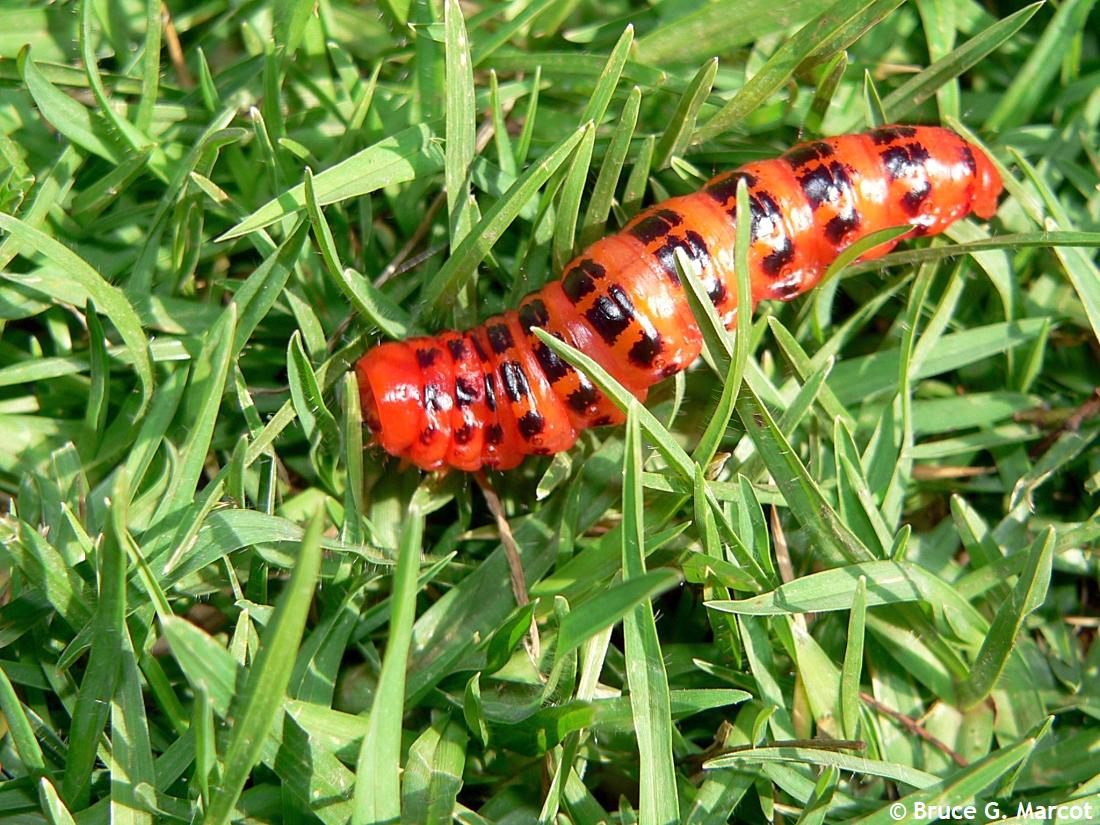
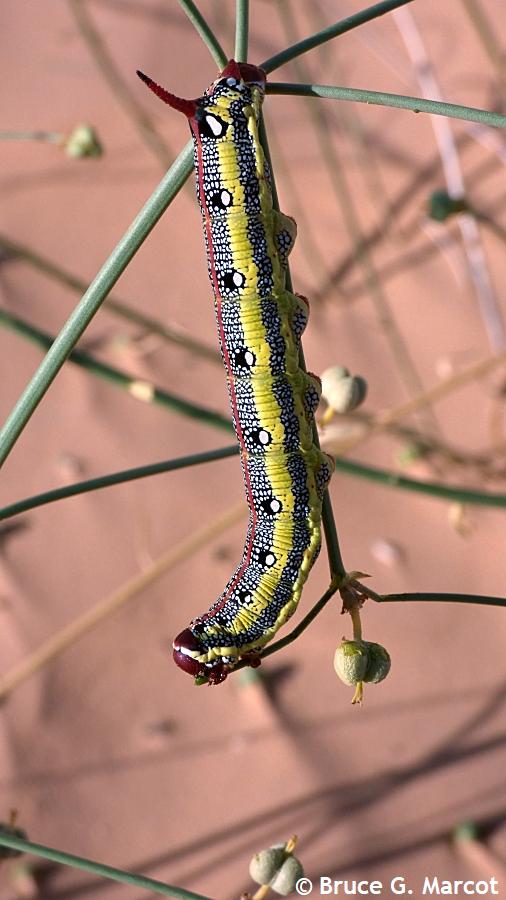
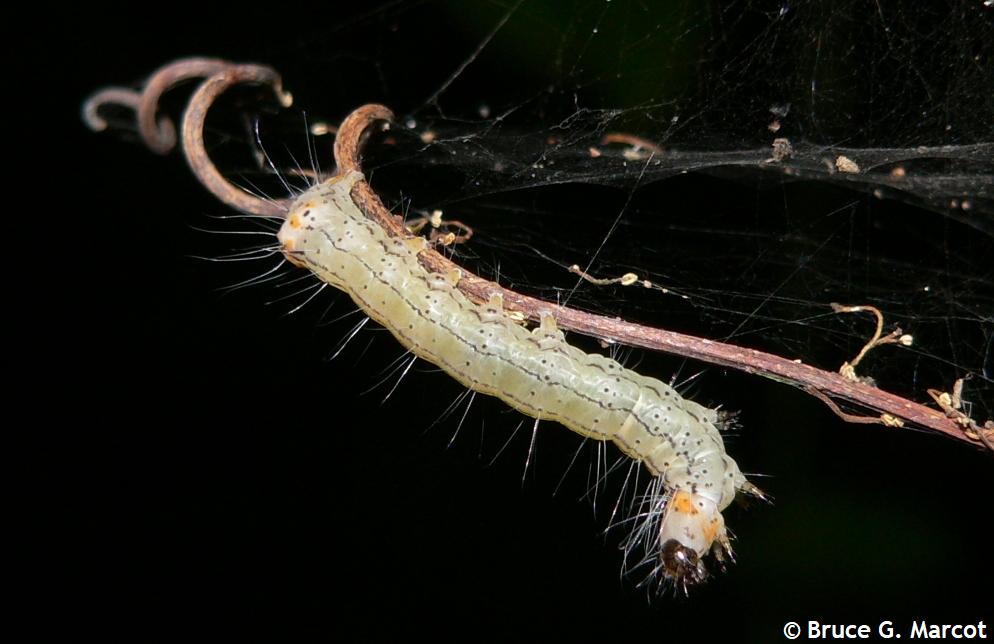
Explanation: We've all seen this, but why are so many caterpillars bedecked with striking patterns and colors? The classical explanation is aposematism, or use of obvious, bright colors as a signal to potential predators that consuming the individual will be harmful in some way, as in being poisonous or, as in the photo above, also having defensive spikes or hairs. However, a recent study (Mouy 2026) suggests that "repeated contrasted patterns" developed in at least some caterpillars to visually break up the body outline, particularly to confuse biting flies. The study suggests that stripes can interfere with flies' visual navigation. This apparently occurs when biting flies approach zebras, whose stripes serve to confuse the flies' visual senses and orientation. So the hypothesis is that the same occurs with multi-patterned caterpillars that would otherwise become the target and victim of biting flies. Along with an example of a woolly bear caterpillar we encountered in a previous EPOW episode, here are some other examples I encountered of the diversity of such patterns in various caterpillars and locations, although I did not observe them in the presence of biting flies (which, too often, seemed more focused on me!, ha).
Lake
Naivasha, Kenya, Eastern Africa:
Sahara
Desert Camp,
|
Next week's picture: Strangler Fig
< Previous ... | Archive |
Index |
Location | Search | About EPOW | ... Next >
Google Earth locations
shows all EPOW locations;
must have Google Earth installed
Author & Webmaster: Dr. Bruce G. Marcot
Disclaimers and Legal Statements
Original material on Ecology Picture of the Week © Bruce G. Marcot unless denoted otherwise