|
||
|
Strangler Fig |
|
|
|
||
|
Strangler Fig |
|
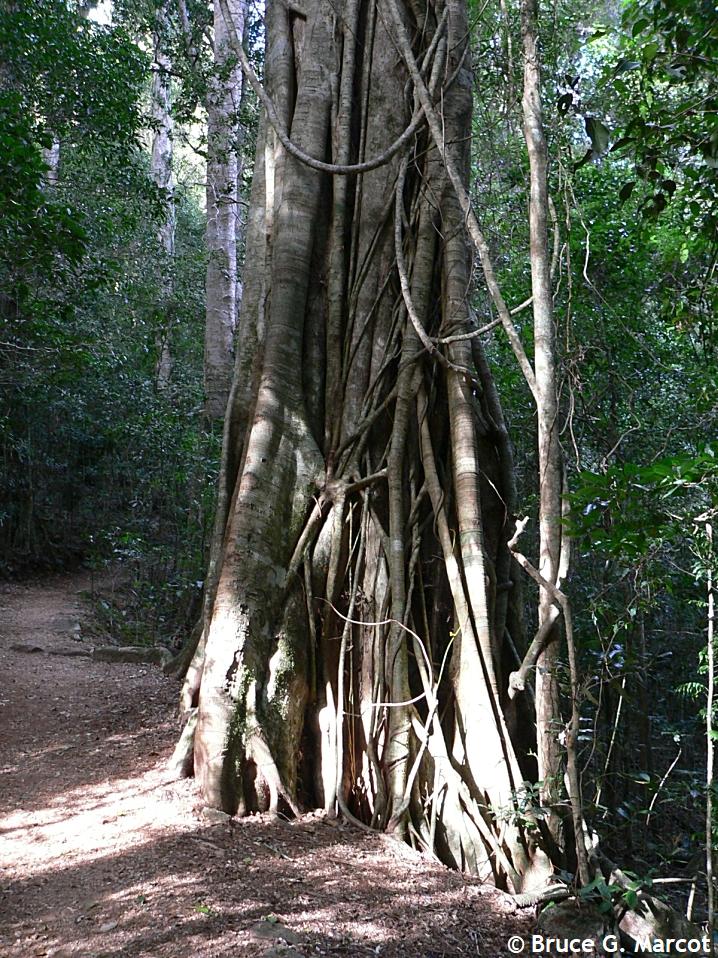
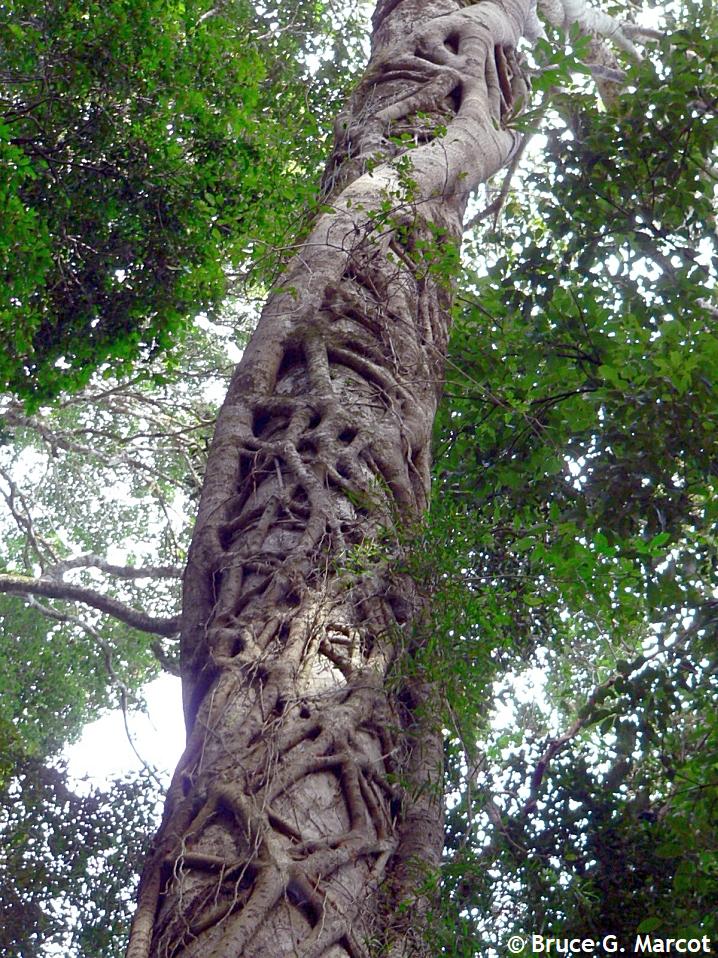
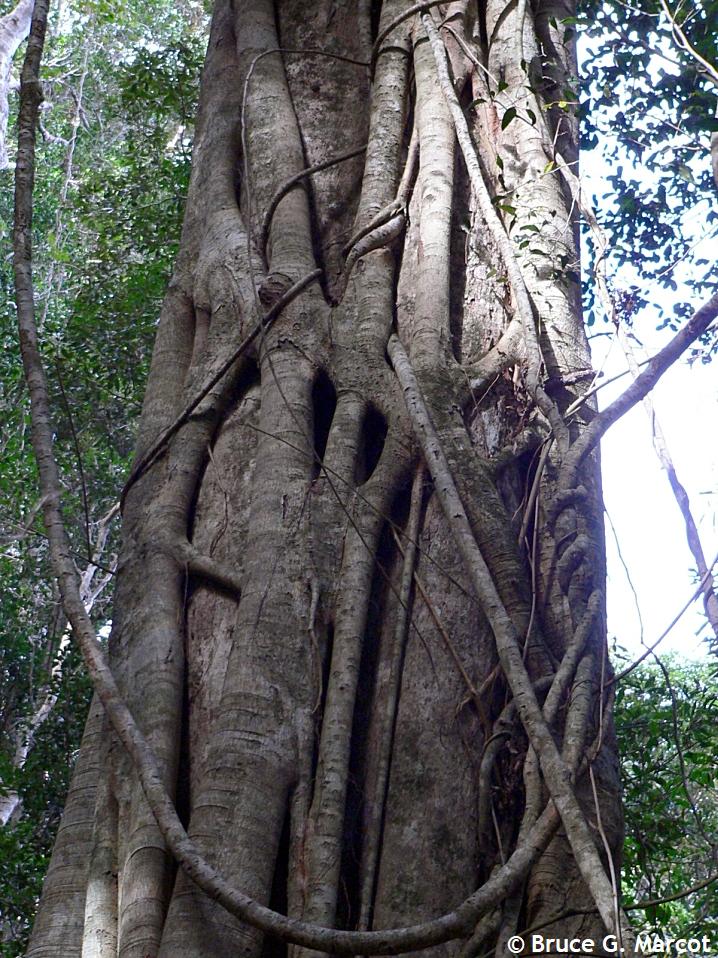
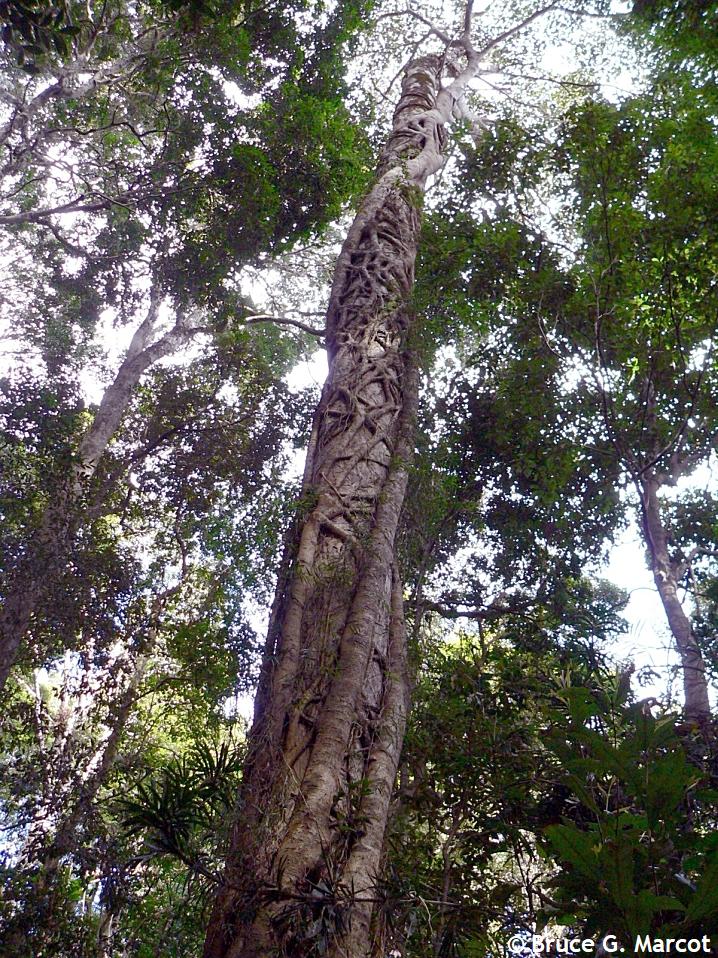
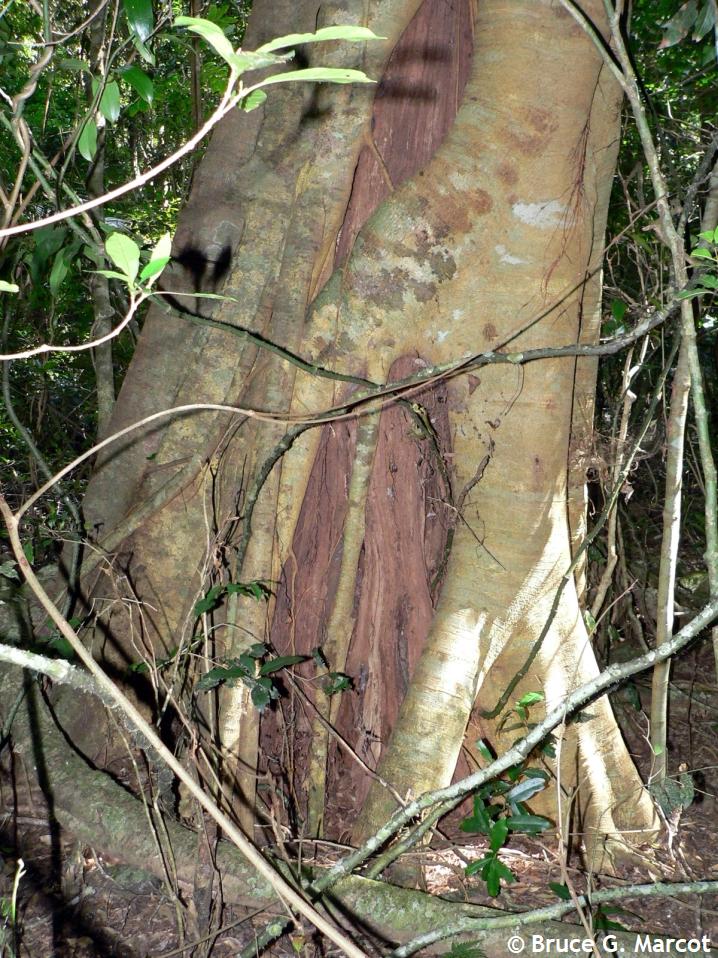
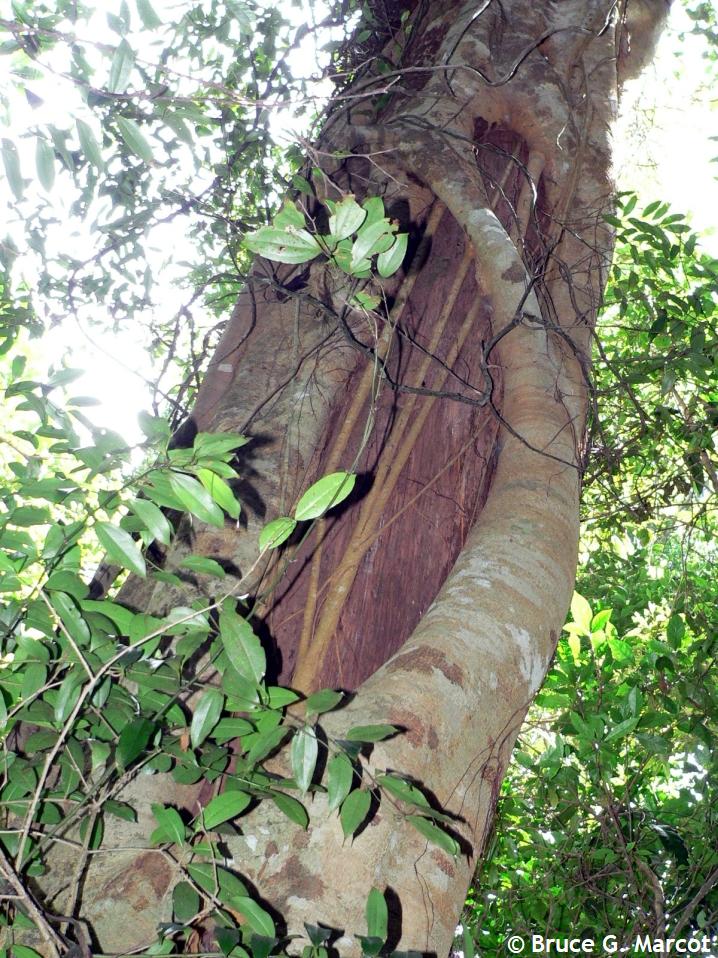
Strangler Fig (Ficus watkinsiana),
Family Moraceae |
Credit & Copyright: Dr. Bruce G.
Marcot
|
Explanation: How well-named is this fig! If you could reverse the clock, you would see that it did not begin from ground level. Its seeds get deposited in the branches of trees, and it sends down shoots that wind around the main trunk of its unfortunate host, almost behaving like an ecoparasite. This is
the strangler
fig that goes by several other names, such as nipple fig and Watkins'
fig named after the specimen collector George Watkins. It is endemic to
rainforests of northeast
Australia along coastal Queensland and northeast New South Wales.
In some cases, the host tree dies, decays, and leaves a hollow fig-wrap standing in the forest. Meanwhile, the fig's fruits are eaten by a variety of wildlife species including cassowaries, many birds, and flying foxes. The fig's flowers are pollinated by wasps. So
next time you may be enjoying a fig fruit, consider the amazing life history
of its source.
|
Next week's picture: Sugar Glider
< Previous ... | Archive |
Index |
Location | Search | About EPOW | ... Next >
Google Earth locations
shows all EPOW locations;
must have Google Earth installed
Author & Webmaster: Dr. Bruce G. Marcot
Disclaimers and Legal Statements
Original material on Ecology Picture of the Week © Bruce G. Marcot unless denoted otherwise