|
|
|
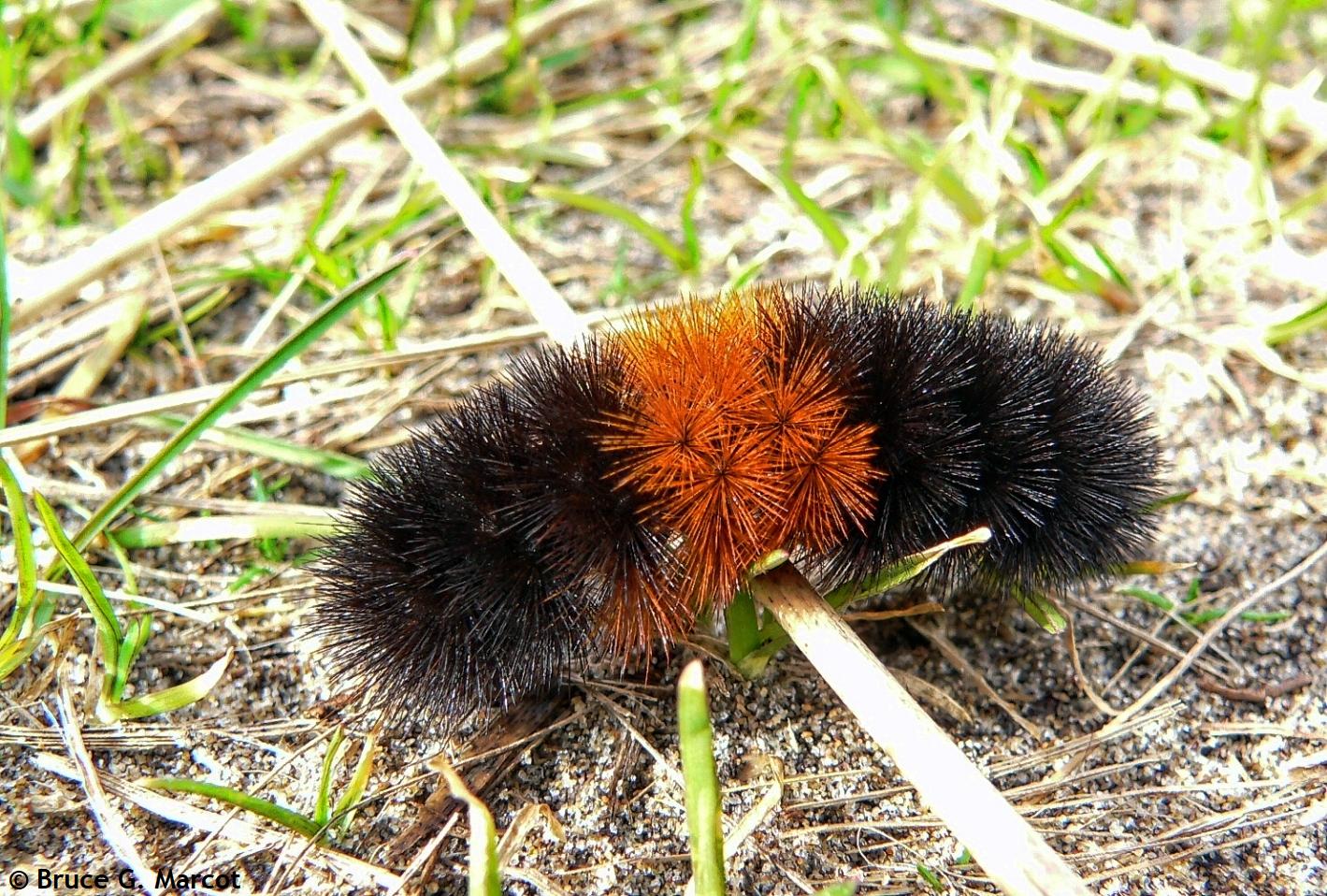
Woolly Bear |
|
|
|
|
|
Woolly Bear |
|
Isabella Tiger Moth larva (Pyrrharctia
isabella), Family Erebidae |
Credit & Copyright: Dr. Bruce G.
Marcot
|
Explanation: While hiking in a field along the north coast of Oregon, USA, I discovered this strikingly-marked moth larva. This is a woolly bear, the larva of the Isabella tiger moth. The species is widely distributed from southern Canada on down to Central America. It is generally abundant with no specific population threats known. The name "woolly bear" derives from their obvious furry appearance like a bear, with the fur consisting of long, thick bristles or setae. What is as striking as its appearance is that woolly bears are known for predicting the harshness of forthcoming winter weather, with wider black bands denoting harsher oncoming weather. This bit of local folklore may have a scientific basis: animals that are "ecothermic" (their body temperature is not regulated from within, but by the external environment, as with insects and other arthropods) sometimes tend to have darker coloration to absorb solar warmth in colder environments. A study (Davis et al. 2026) verified the hypothesis that, indeed, woolly bears with wider black stripes seemed to occur in colder environments. However, the width of the stripes is determined by the ambient temperatures during the time of development of the larvae. Whether that can then "predict the future," the oncoming winter weather, may need further testing. Still, this is a most striking larval stage of an insect, prediction powers or not!
|
Next week's picture: Variable Chiton
< Previous ... | Archive |
Index |
Location | Search | About EPOW | ... Next >
Google Earth locations
shows all EPOW locations;
must have Google Earth installed
Author & Webmaster: Dr. Bruce G. Marcot
Disclaimers and Legal Statements
Original material on Ecology Picture of the Week © Bruce G. Marcot unless denoted otherwise