|
|
|
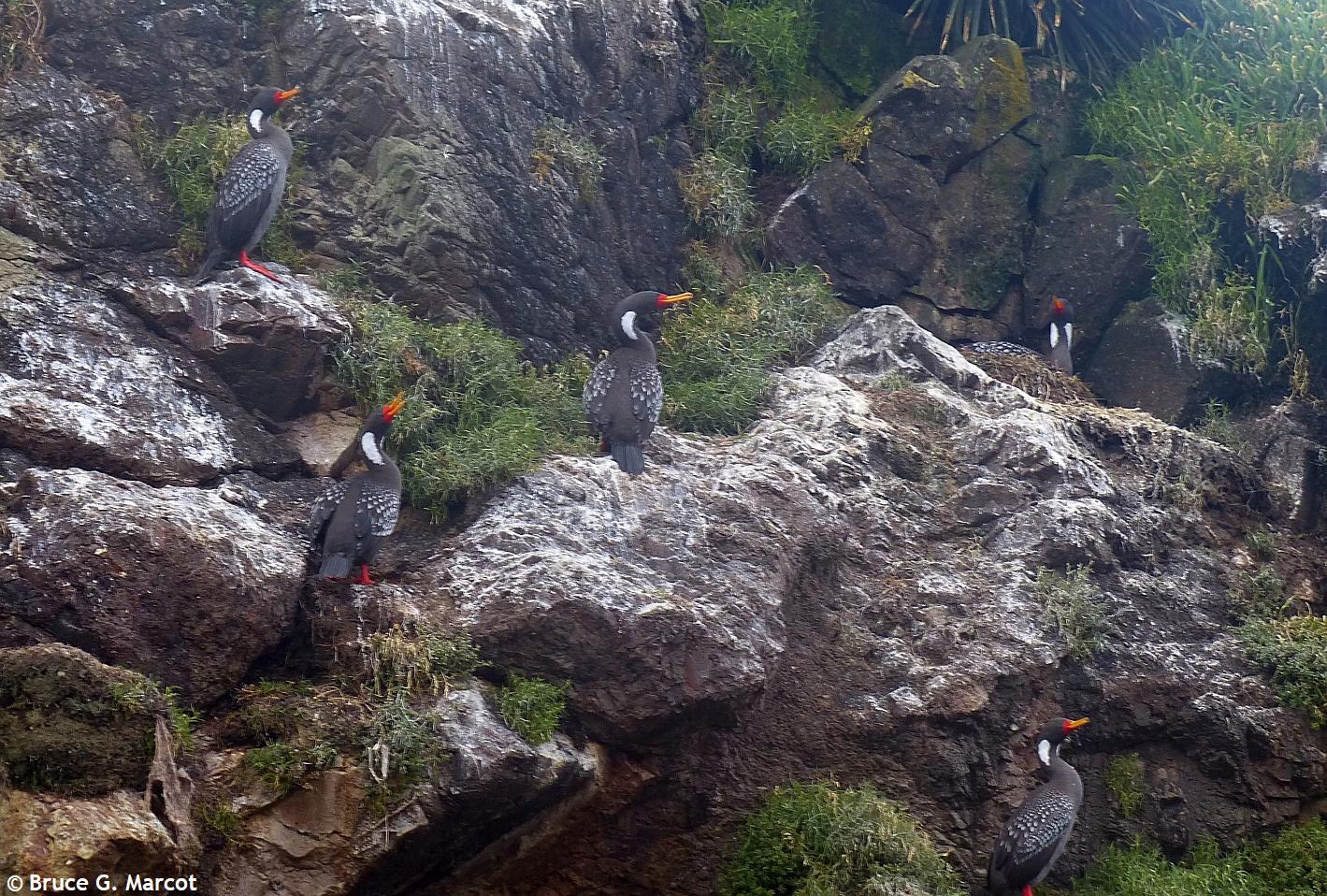
Red-legged Cormorant Colony |
|
|
|
|
|
Red-legged Cormorant Colony |
|
Red-legged Cormorant (Poikilocarbo
gaimardi), Phalacrocoracidae |
Credit & Copyright: Dr. Bruce G.
Marcot
|
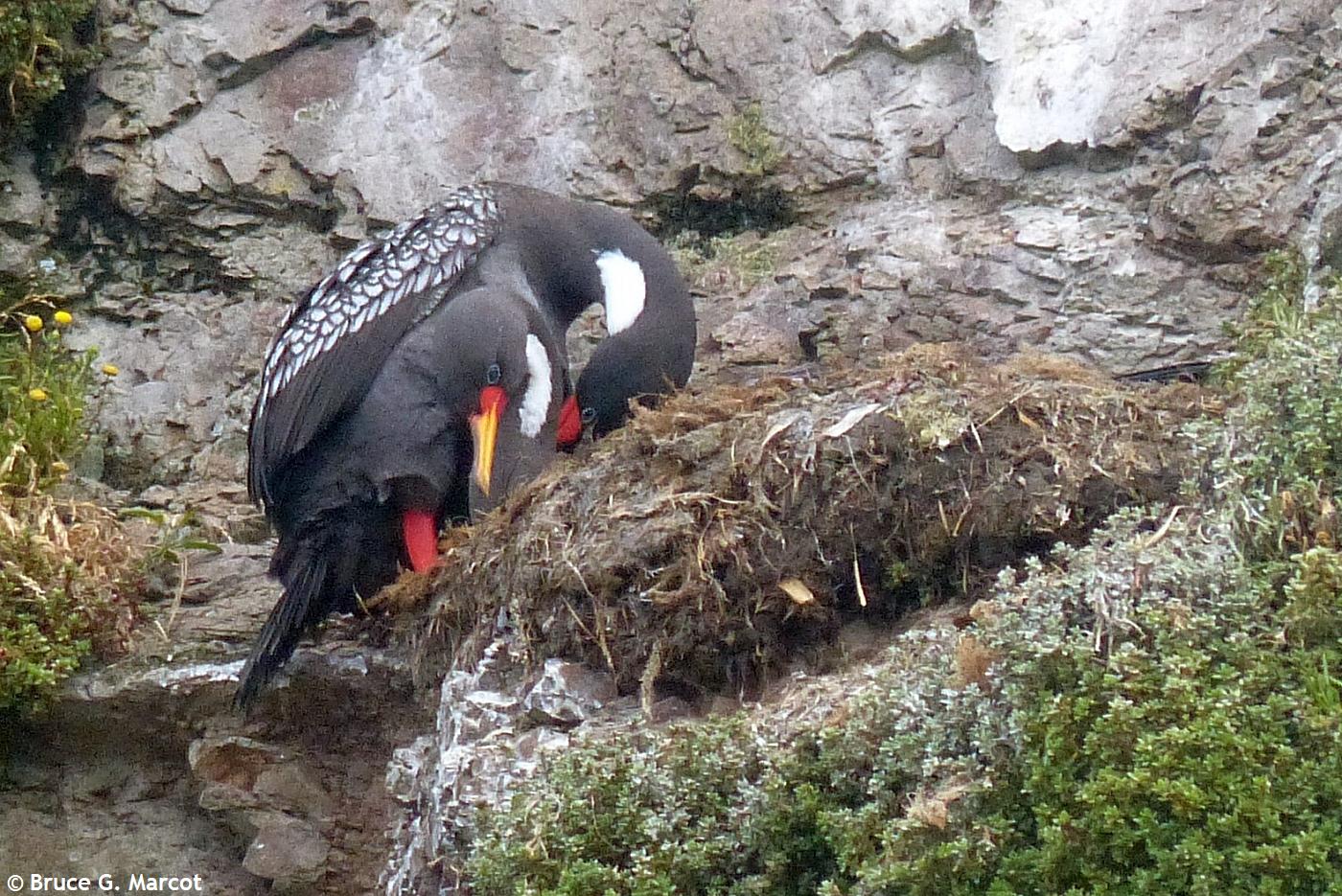
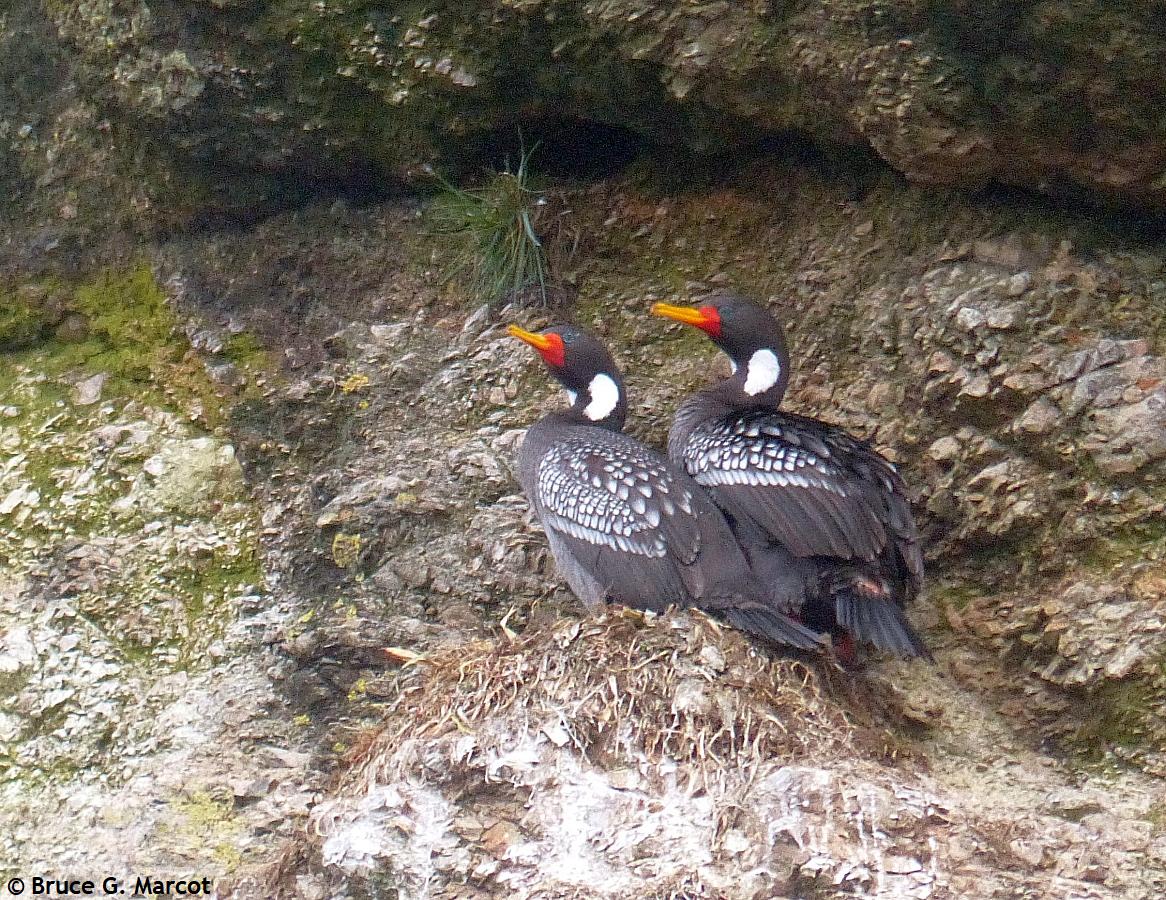
Explanation: We are boating around a small offshore stack, off the Pacific Ocean coast of Chiloe Island in central Chile, South America. Here, we find a small nesting colony of Red-legged Cormorants. Red-legged Cormorants are marine birds of the coastal and intertidal environment. These are found in South America along the southeast Atlantic Ocean coast of Argentina, and along the west Pacific Ocean coast from Peru to southern Chile. They are listed by IUCN as Near Threatened, with a decreasing population. The major threat is unintentional interference in fishing gear, as they dive for their fish and invertebrate food in the near-shore and intertidal areas where people also fish. But also hunting, trapping, and reduced marine food productivity under El Niño conditions pose further stresses. The species forms only very small groups and colonies, likely aggregating to the scarce locations providing marine food and suitable rocky ledges for nesting and resting, such as in the following photo showing a female tending to her chick on the nest, covering her with her wing:
|
Next week's picture: Climate Effects on Sea Ice Pressure Ridges
< Previous ... | Archive |
Index |
Location | Search | About EPOW | ... Next >
Google Earth locations
shows all EPOW locations;
must have Google Earth installed
Author & Webmaster: Dr. Bruce G. Marcot
Disclaimers and Legal Statements
Original material on Ecology Picture of the Week © Bruce G. Marcot unless denoted otherwise