|
|||
|
Climate Effects on Sea Ice Pressure Ridges |
|
|
|
|||
|
Climate Effects on Sea Ice Pressure Ridges |
|
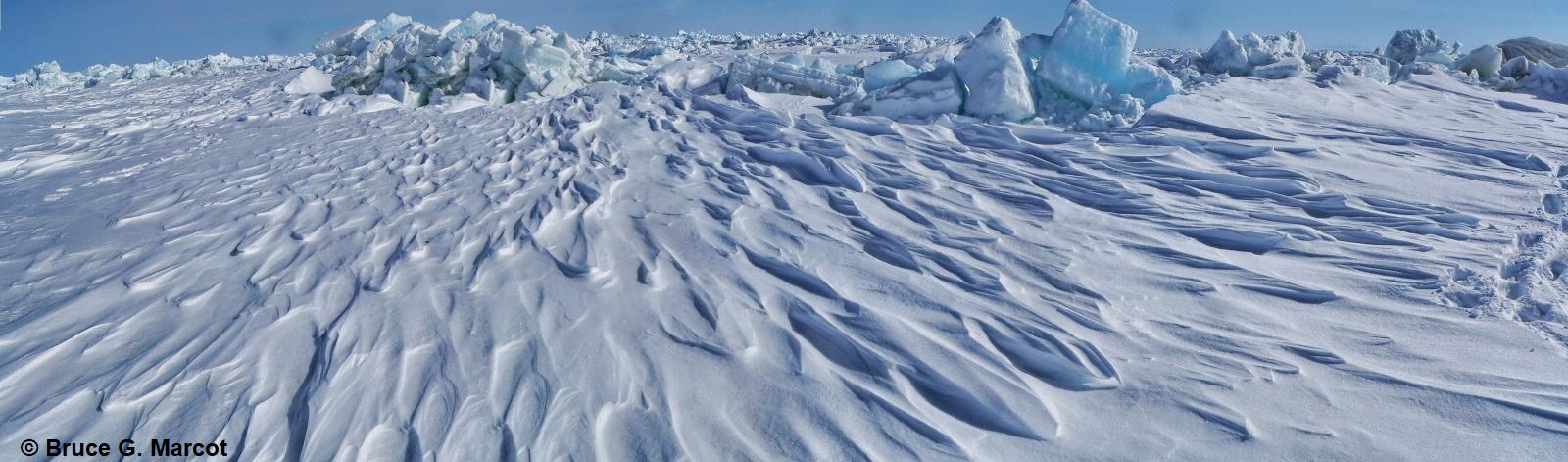
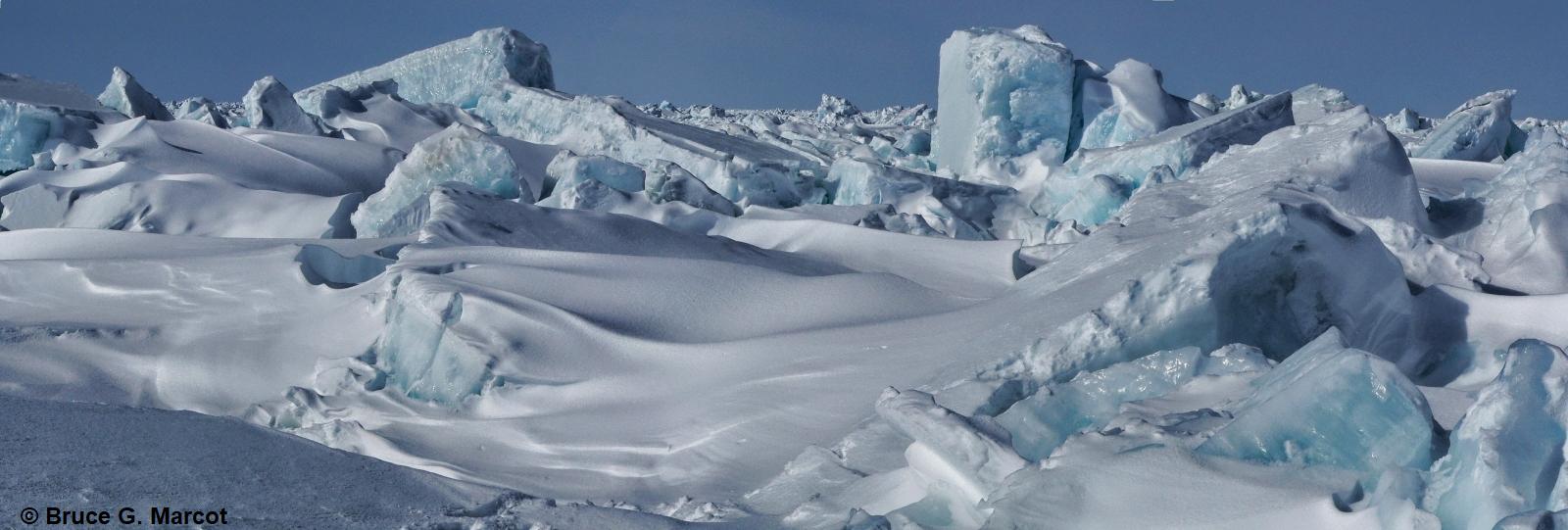
Sea Ice Pressure Ridges, Beaufort Sea, Arctic Ocean, Alaska |
Credit & Copyright: Dr. Bruce G.
Marcot
|
Explanation: We've been here before! In a previous EPOW episode, we found ourselves some 25 or so miles out on the Arctic Ocean, more precisely the Beaufort Sea north of Alaska National Wildlife Refuge. And here, in mid-spring, at least part of the sea is frozen, with vast floating plates colliding to form these crumpled sea-ice pressure ridges. This time, though we are exploring more than just the spectacular, and dangerous, cryotopography of this seascape. The scene is changing because the climate is changing. Recent studies (Krumpen et al. 2025, Sumata et al. 2023) found that the Arctic Ocean ice surface is becoming smoother, with fewer such pressure ridges, which in turn is caused by the melting and thinning of the sea ice and loss of older, deeper ice layers. Over time, the sea-ice pressure ridges are becoming thinner and less frequent, which, as the authors note, may benefit shipping but can have major impacts on the rest of the ocean ecosystem. Other recent studies, such as by Maksym (2025), have confirmed that the Arctic ice surface is becoming smoother, as the ice thins under increased regional warming. Sea ice in the arctic -- especially these pressure ridges -- provide vital habitat for the growth of algae, as we explored in another previous EPOW episode. And the algae is the foundation for a major arctic food web. The algae feeds marine invertebrates such as shrimp, that in turn feed fishes such as cod, that feed the seals that feed the polar bears, and more. And a vital marine food web is critical to native human inhabitants that rely on the system to provide food and nutrition. And another recent study (Castellani et al. 2025) showed that the sea-ice pressure ridges contribute importantly to large-scale algal blooms in the arctic. The ridges allow more light to pass through the ice cover because of their geometry, and thus serve as key environments for algal growth and as "funnels of light" for pelagic animals. These authors found that the pressure ridges contribute more than half of all sea ice surface habitat for the algae during springtime. Key habitat it is! Thus,
as the regional climate continues to warm, and the sea ice melts and thins
more, the ice pressure ridges become increasingly infrequent and less
sustained, as does their key role providing a base for microalgae.
And so collapses what might be a major contribution to the overall arctic
marine food-web.
|
Next week's picture: Bog Tea
< Previous ... | Archive |
Index |
Location | Search | About EPOW | ... Next >
Google Earth locations
shows all EPOW locations;
must have Google Earth installed
Author & Webmaster: Dr. Bruce G. Marcot
Disclaimers and Legal Statements
Original material on Ecology Picture of the Week © Bruce G. Marcot unless denoted otherwise