|
|
|
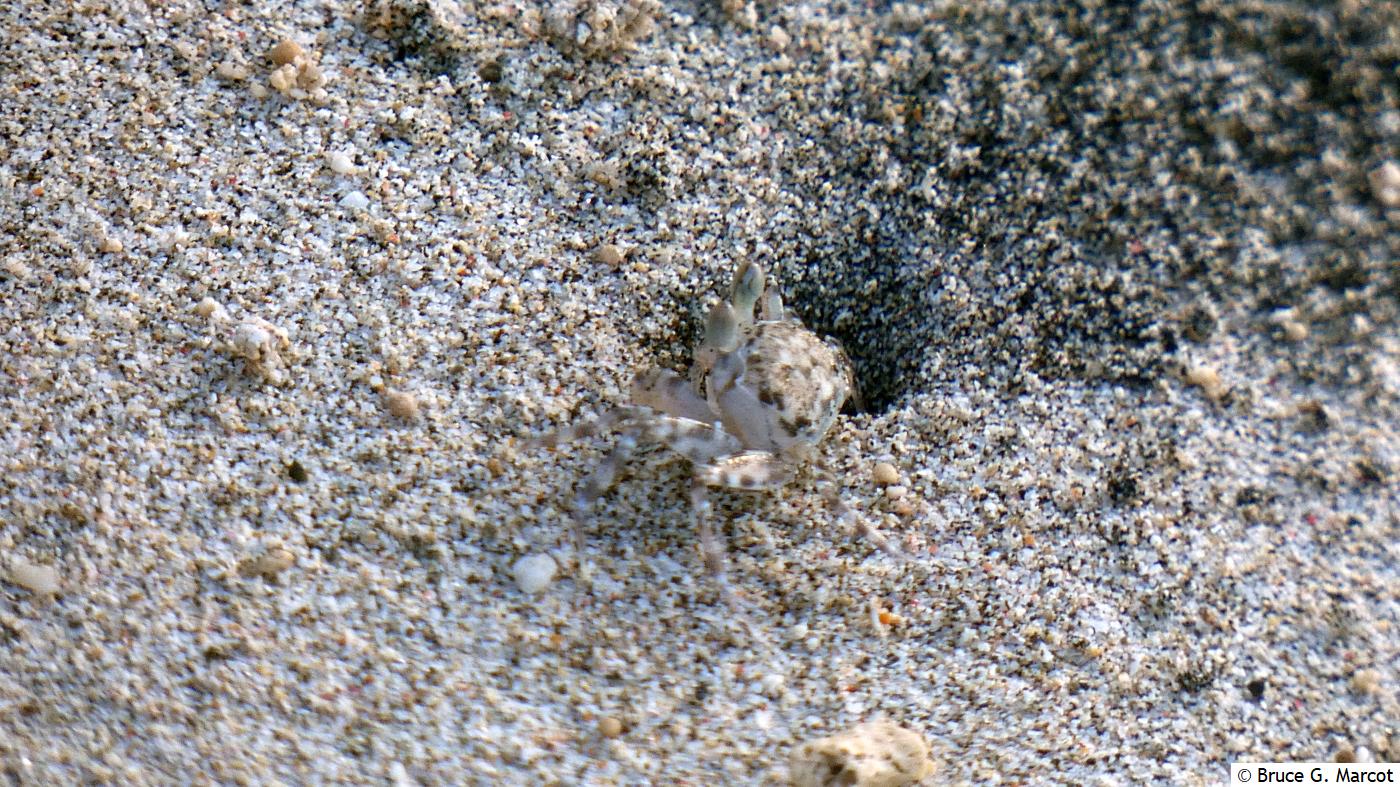
Cryptic Sand Crab |
|
|
|
|
|
Cryptic Sand Crab |
|
Sand Bubbler Crab (or Sand-Bubbler),
Genus Scopimera or Dotilla, Family Dotillidae |
Credit & Copyright: Dr. Bruce G.
Marcot
|
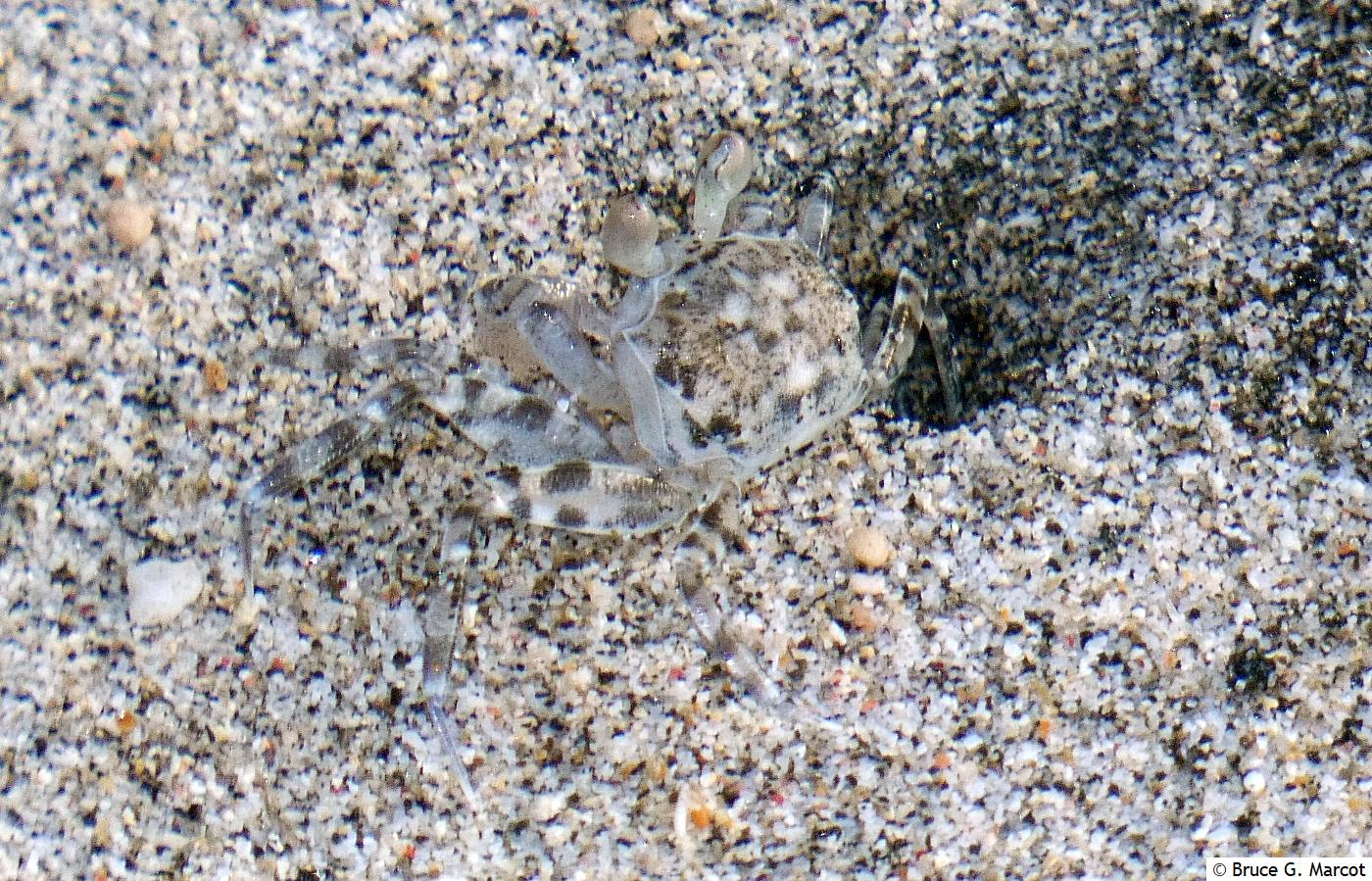
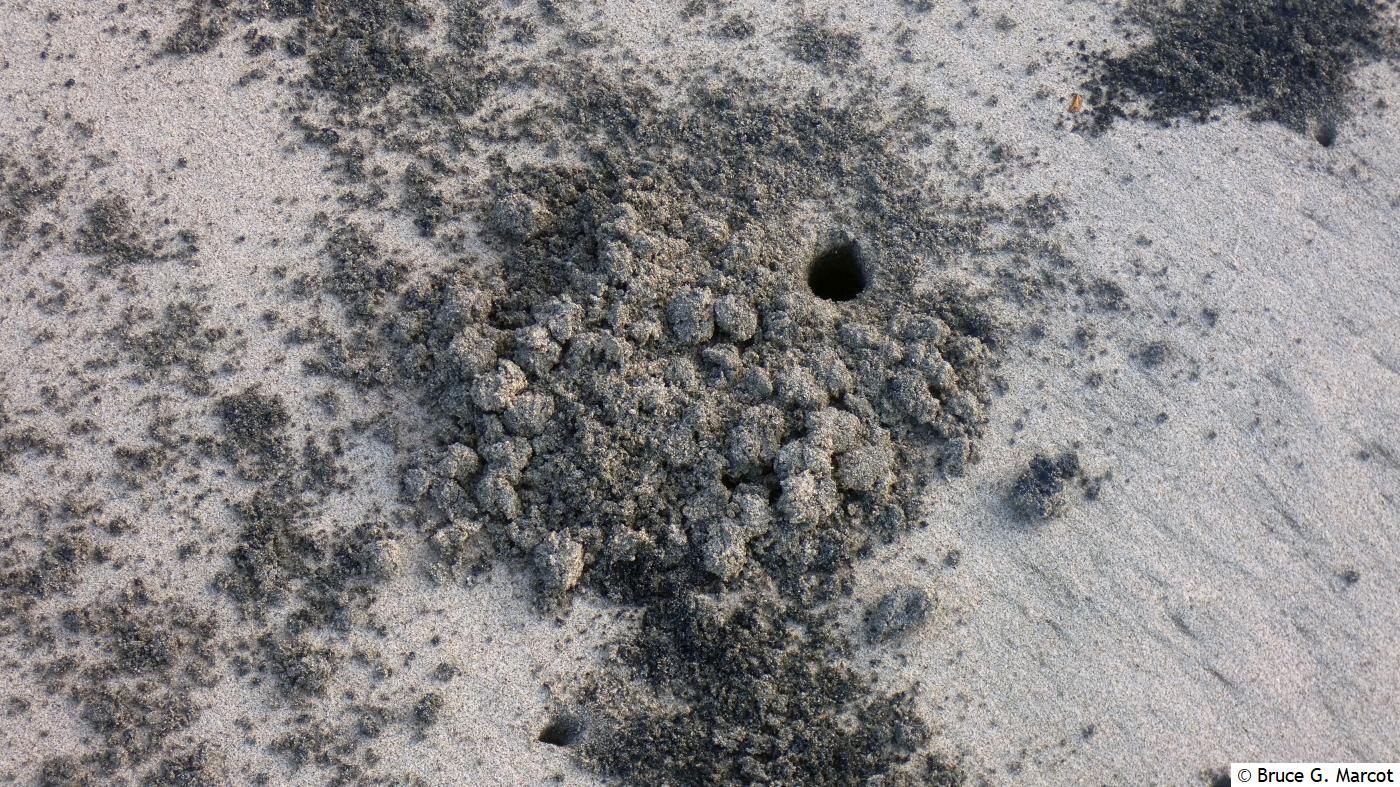
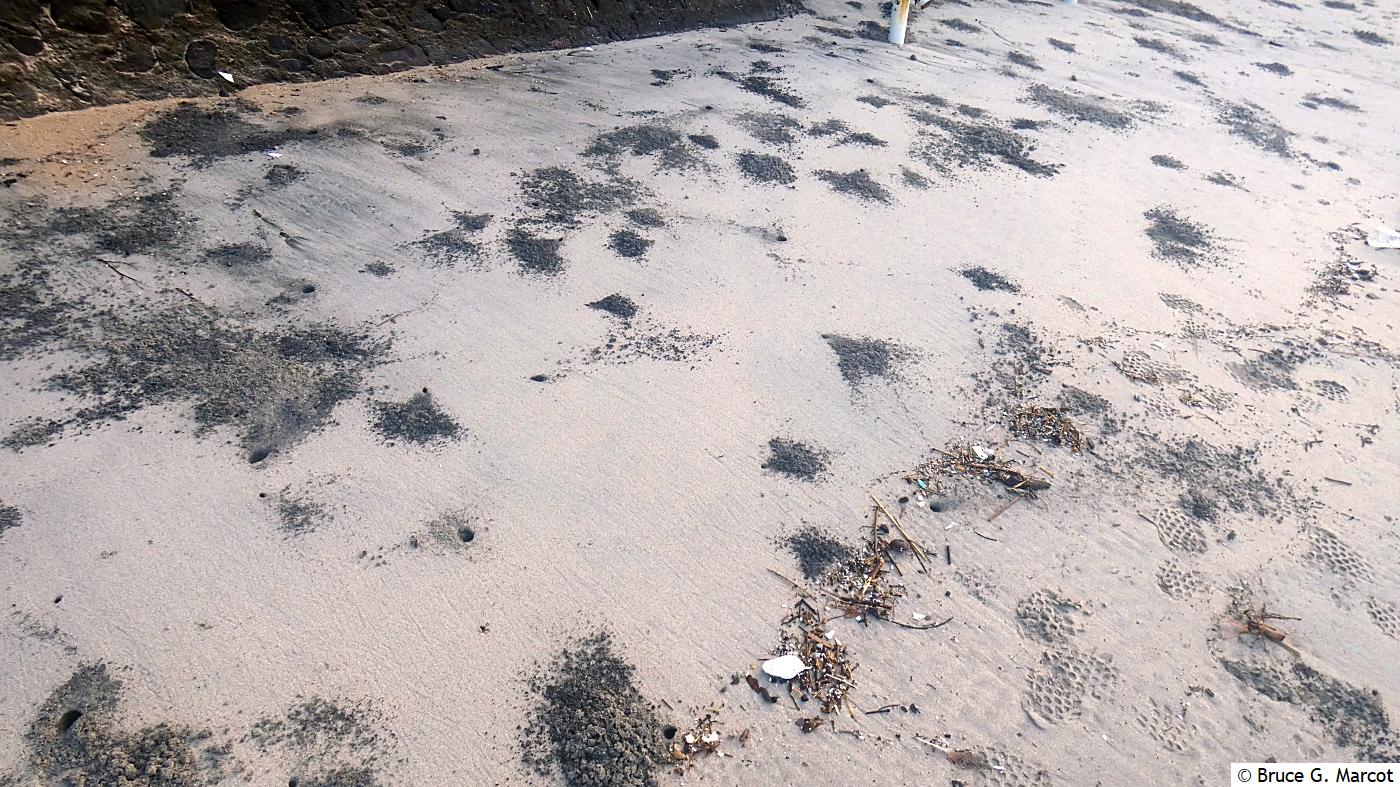
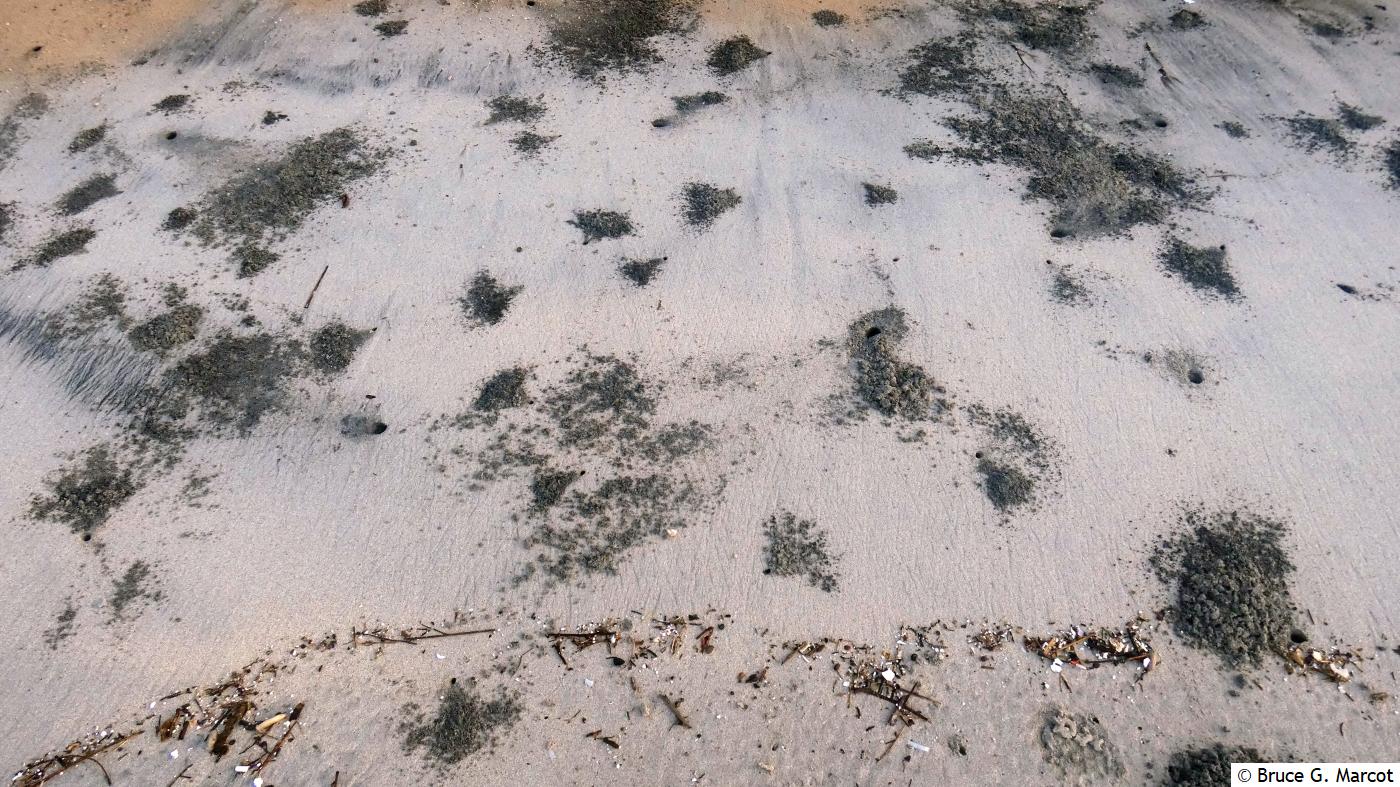
Explanation: Look closely, look quick! We are on a narrow, white-sand beach along the southeast coast of the island of Bali, Indonesia. And darting across the sand are these thumbnail-size crustaceans, emerging and disappearing into small burrows, and depositing clumps of darker sand piles. These are "sand bubbler crabs" (or just "sand-bubblers"), inhabitants of this tidal zone. Previously, we encountered a very different sand crab along the coast of Oregon, USA, but it was nothing like this one.
And in so doing, they play a key ecological function of reducing decaying organic matter on the beaches. So, over time, this fine white-sand beach becomes splotched with their used sand piles ...
Sand crabs are wonderfully cryptic, blending in with their speckled environment so as to avoid predators such as gulls, egrets, herons, and other shorebirds.
|
Next week's picture: Rock Bee Tree
< Previous ... | Archive |
Index |
Location | Search | About EPOW | ... Next >
Google Earth locations
shows all EPOW locations;
must have Google Earth installed
Author & Webmaster: Dr. Bruce G. Marcot
Disclaimers and Legal Statements
Original material on Ecology Picture of the Week © Bruce G. Marcot unless denoted otherwise