|
|
|
Rock Bee Tree |
|
|
|
|
|
Rock Bee Tree |
|
Rock (Giant Honey) Bee (Apis
dorsata laboriosa), Family Apidae |
Credit & Copyright: Dr. Bruce G.
Marcot
|
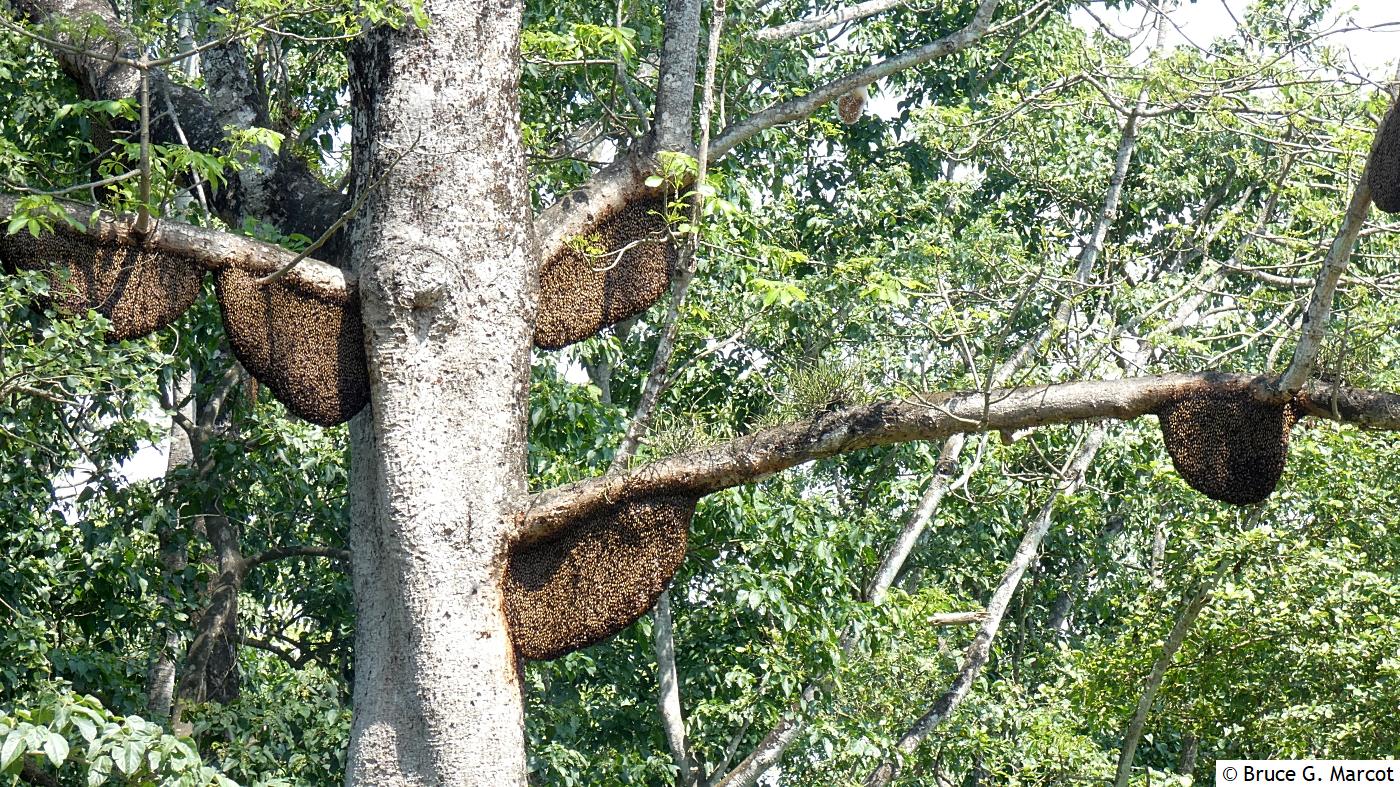
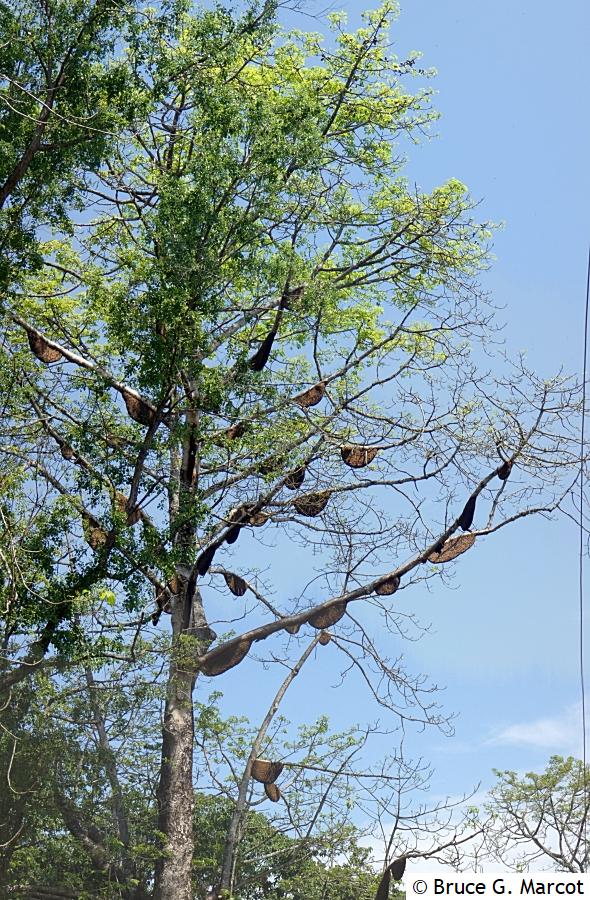
Explanation: What is adorning the forest, here in Royal Chitwan National Park, in Chitwan District of southern Nepal? These are the immense and numerous hives of the rock bee, a.k.a. giant honey bee and Himalayan giant honey bee, by any name the world's largest honey bee.
As one study (Kastberger et al. 2024) describes it, "The nest consists of a single honeycomb covered with the bee curtain which are several layers of worker bees that remain almost motionless with their heads up and abdomens down on the nest surface, except for the mouth area."
almost The taxonomy of the species is a bit uncertain. Here, I use the Latin name Apis dorsata laboriosa, although some sources separate dorsata and laboriosa as individual full species, with the latter being the content of this week's photos here in southern Nepal. Regardless, the colony is an amazing encounter, where individual nests can reach almost 5 ft (1.5 m) in length.
|
Next week's picture: An "Earth Loving Form"
< Previous ... | Archive |
Index |
Location | Search | About EPOW | ... Next >
Google Earth locations
shows all EPOW locations;
must have Google Earth installed
Author & Webmaster: Dr. Bruce G. Marcot
Disclaimers and Legal Statements
Original material on Ecology Picture of the Week © Bruce G. Marcot unless denoted otherwise