|
|
|
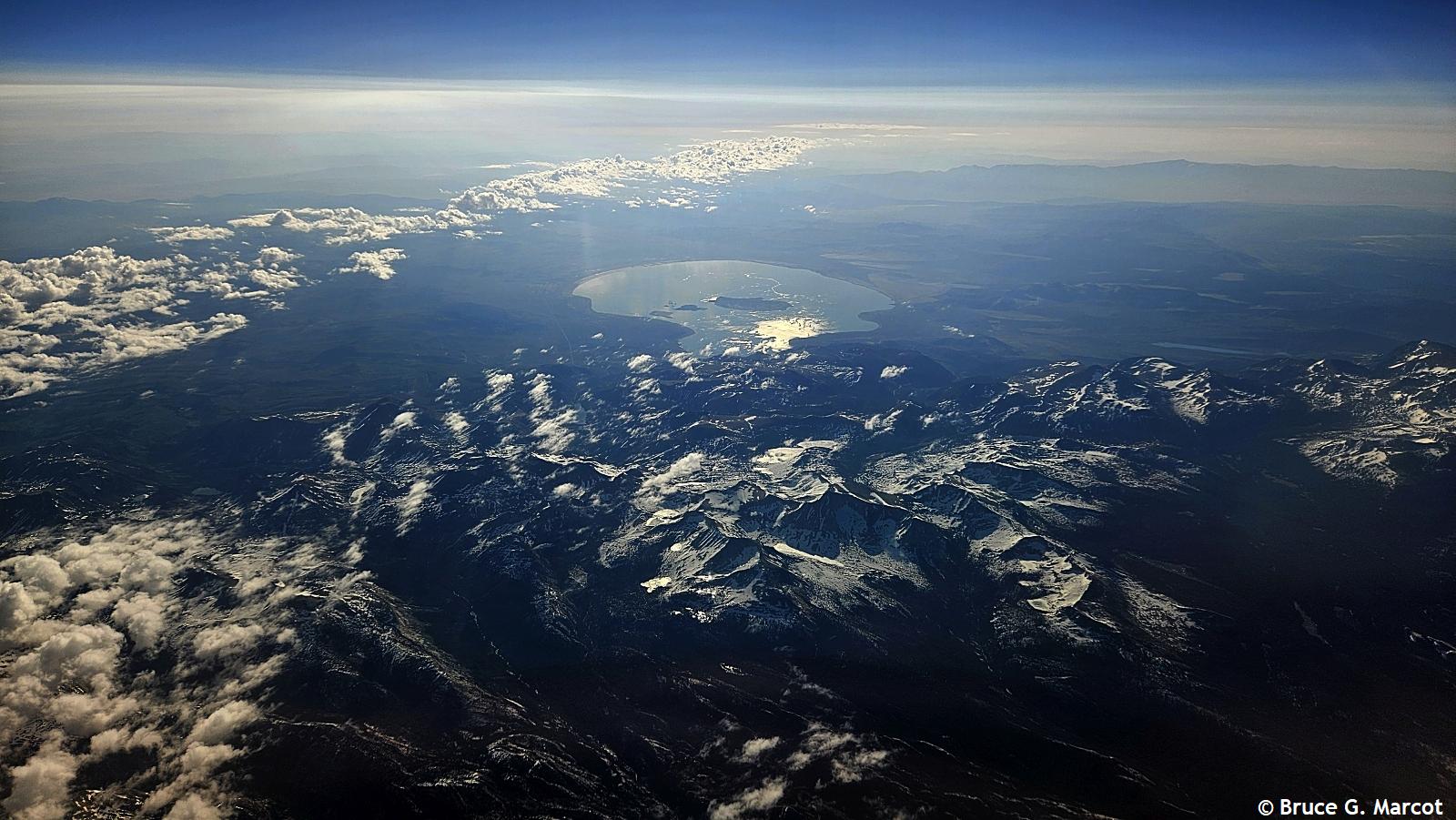
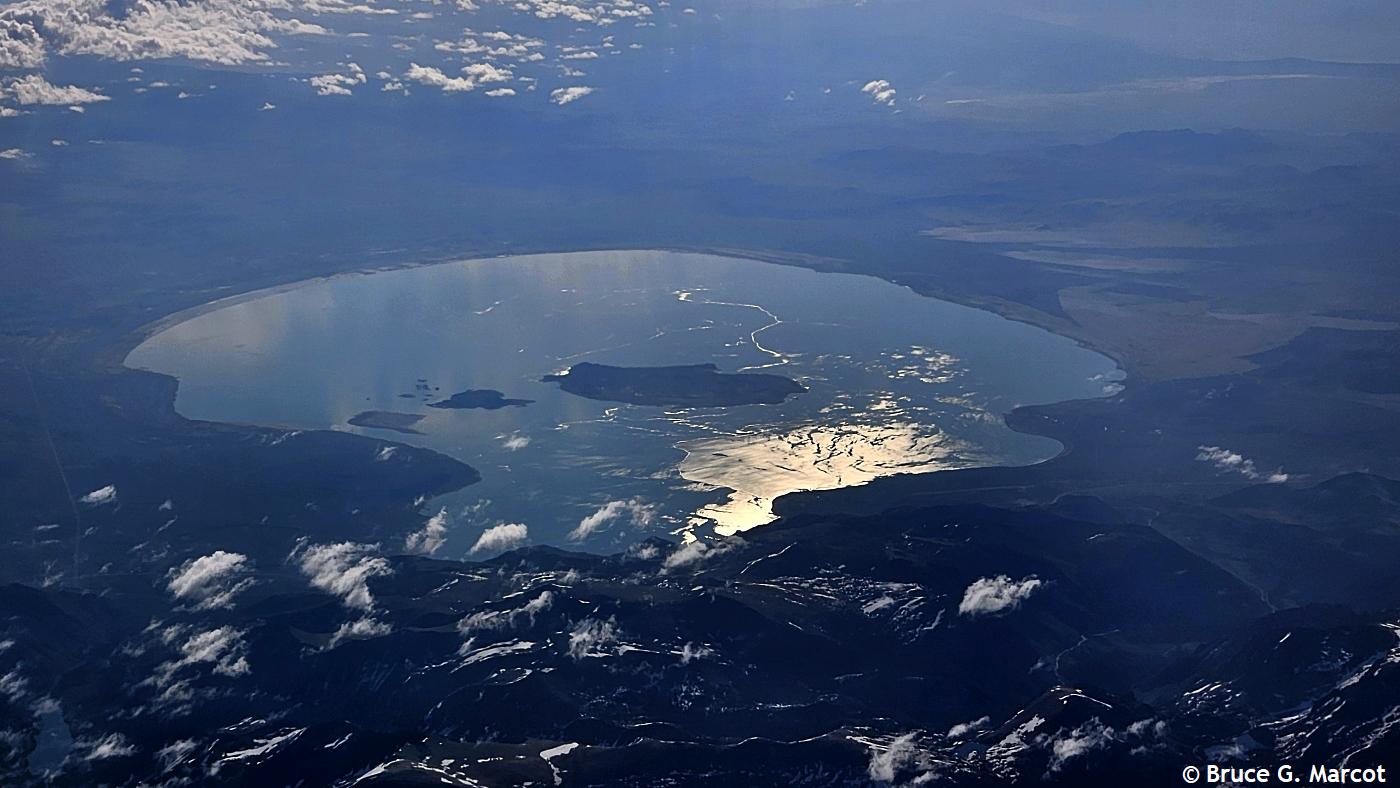
Mono Lake Landscape |
|
|
|
|
|
Mono Lake Landscape |
|
Mono Lake, California USA |
Credit & Copyright: Dr. Bruce G.
Marcot
|
Explanation: On a flight northward, up the western edge of the Sierra Nevada Mountains of central California, we skirted over snow-edged peaks of Yosemite National Park, peering eastward into the Great Basin. And there appeared Mono Lake, a most interesting ecosystem with a fascinating natural history. Mono Lake is intensely saline, with twice the saltwater concentration than found in the ocean, and thereby supports no fish, although it is replete with brine shrimp and alkalai flies. The lake provides habitat to a variety of migratory birds that feed on the shrimp. Its ancient geologic history predates most other inland water bodies of the region. However, its volume has been dropping over decades, starting in 1941 when Los Angeles began diverting water otherwise feeding into the lake. One report notes that the lake level declined by 45 feet between 1941 and 1982, losing half its volume. This exposed parts of the lakebed and doubled the salinity level.
Various sources provide very different potential histories of the name. The lake may have been named for the Monache Indians who inhabited the area in earlier times. Or, the name "mono" may have derived from a Spanish word such as many California county names are of Spanish origin, such as its namesake Mono County. Or, it may refer to being "one," that is, solitary, alone, deserted. And so it appears, in the inland haze, as we pass by. |
Next week's picture: Cryptic Sand Crab
< Previous ... | Archive |
Index |
Location | Search | About EPOW | ... Next >
Google Earth locations
shows all EPOW locations;
must have Google Earth installed
Author & Webmaster: Dr. Bruce G. Marcot
Disclaimers and Legal Statements
Original material on Ecology Picture of the Week © Bruce G. Marcot unless denoted otherwise