|
|
|
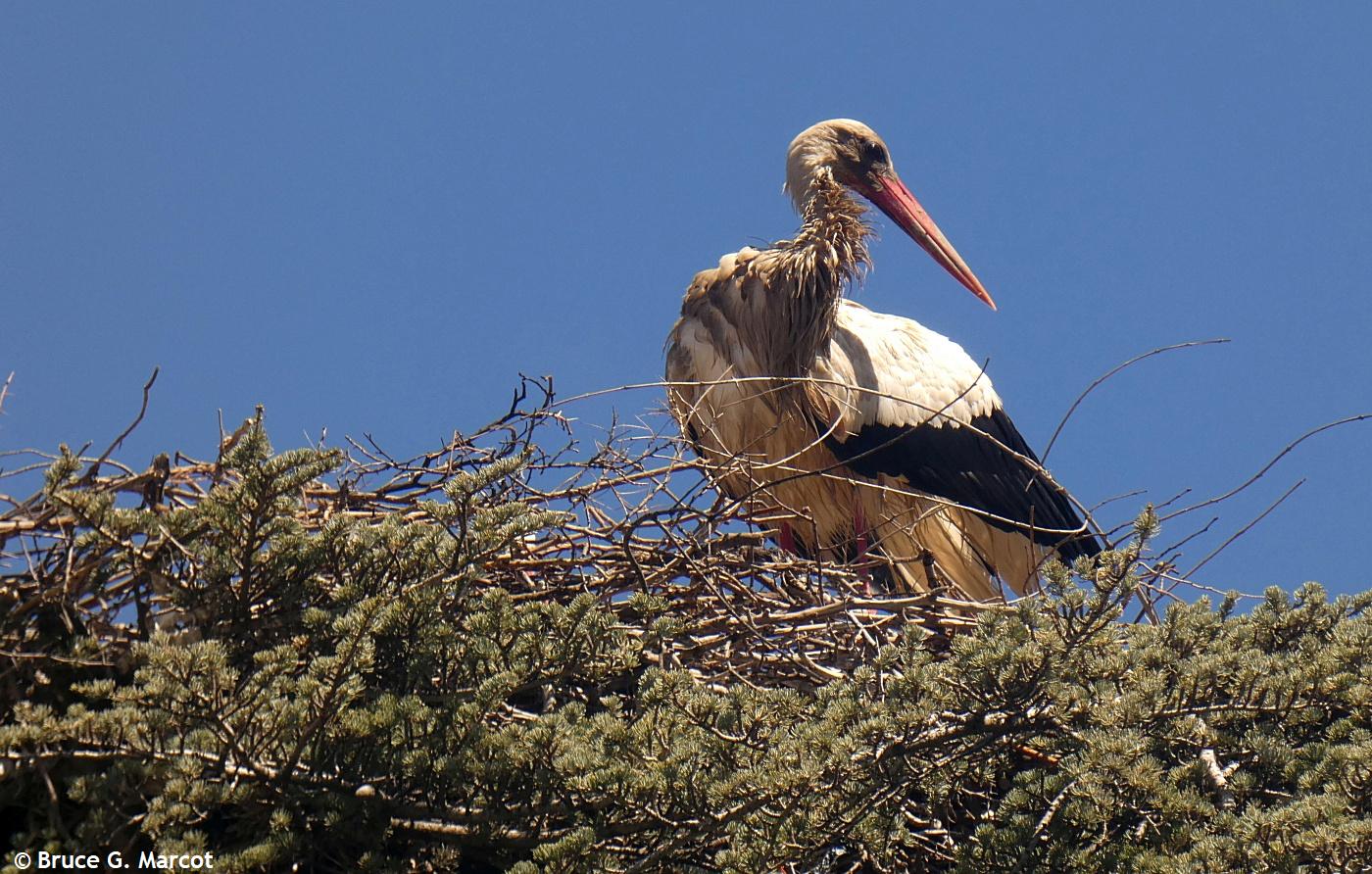
White Stork on Nest |
|
|
|
|
|
White Stork on Nest |
|
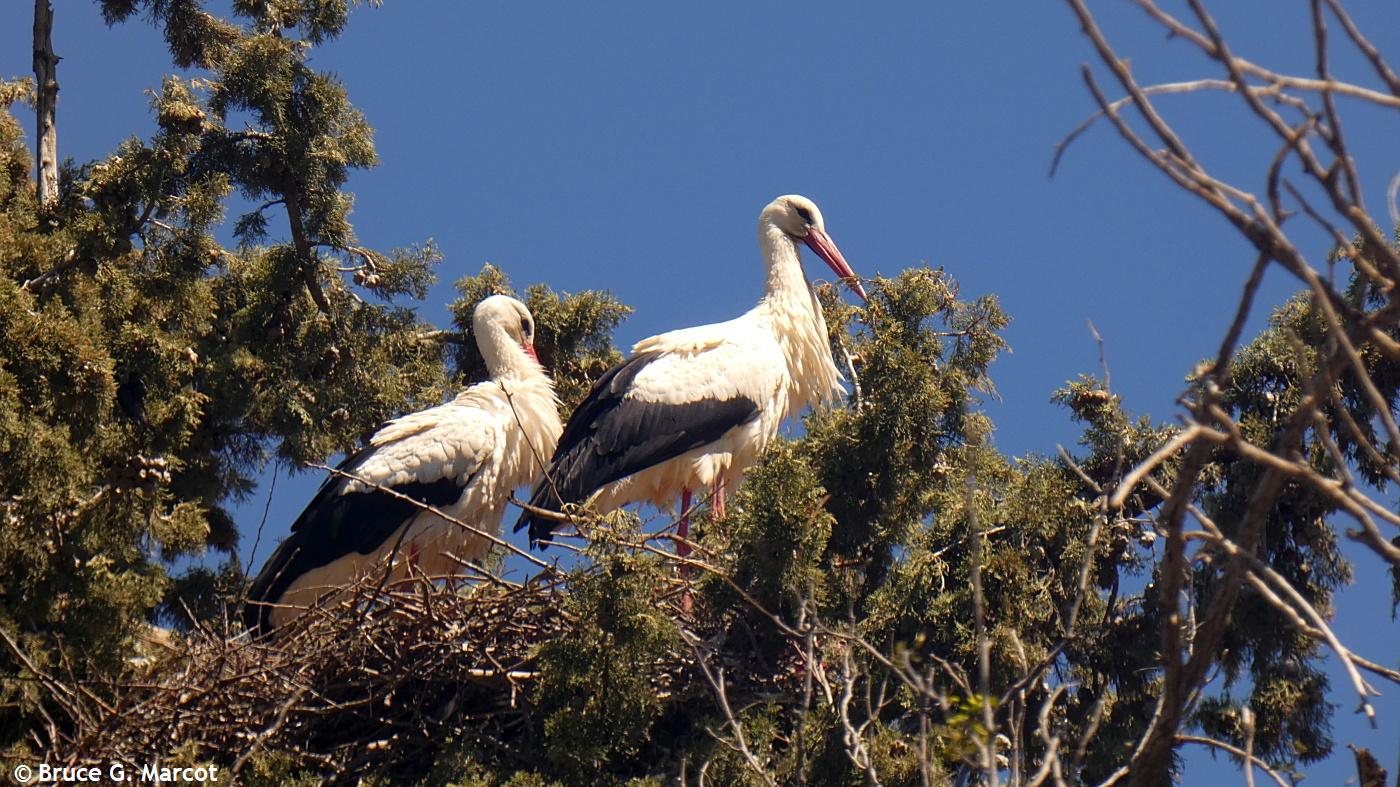
White Stork (Ciconia ciconia),
Family Ciconiidae |
Credit & Copyright: Dr. Bruce G.
Marcot
|
Explanation: They are not particularly abundant, but are surely quite visible for their large size and prominent nest positions. This is a White Stork, here in North Africa, along the Mediterranean Sea. This is an adult, likely a female tending to unseen eggs or young; male and female adults have the same plumage, so you can't tell them apart that way. Adults are very much white, with black wings, whereas juveniles have dull red bills and legs, and wings are dark brown. But
... what is that gray smudge on this bird's neck and chest? There are no
descriptions of this being a color variation, so I surmise that this bird got
simply into some muddy parts of some marshland or meadow, or perhaps one of
the many, extensive trash dump sites in the region, and carried it back to the
nest (see Information, further below).
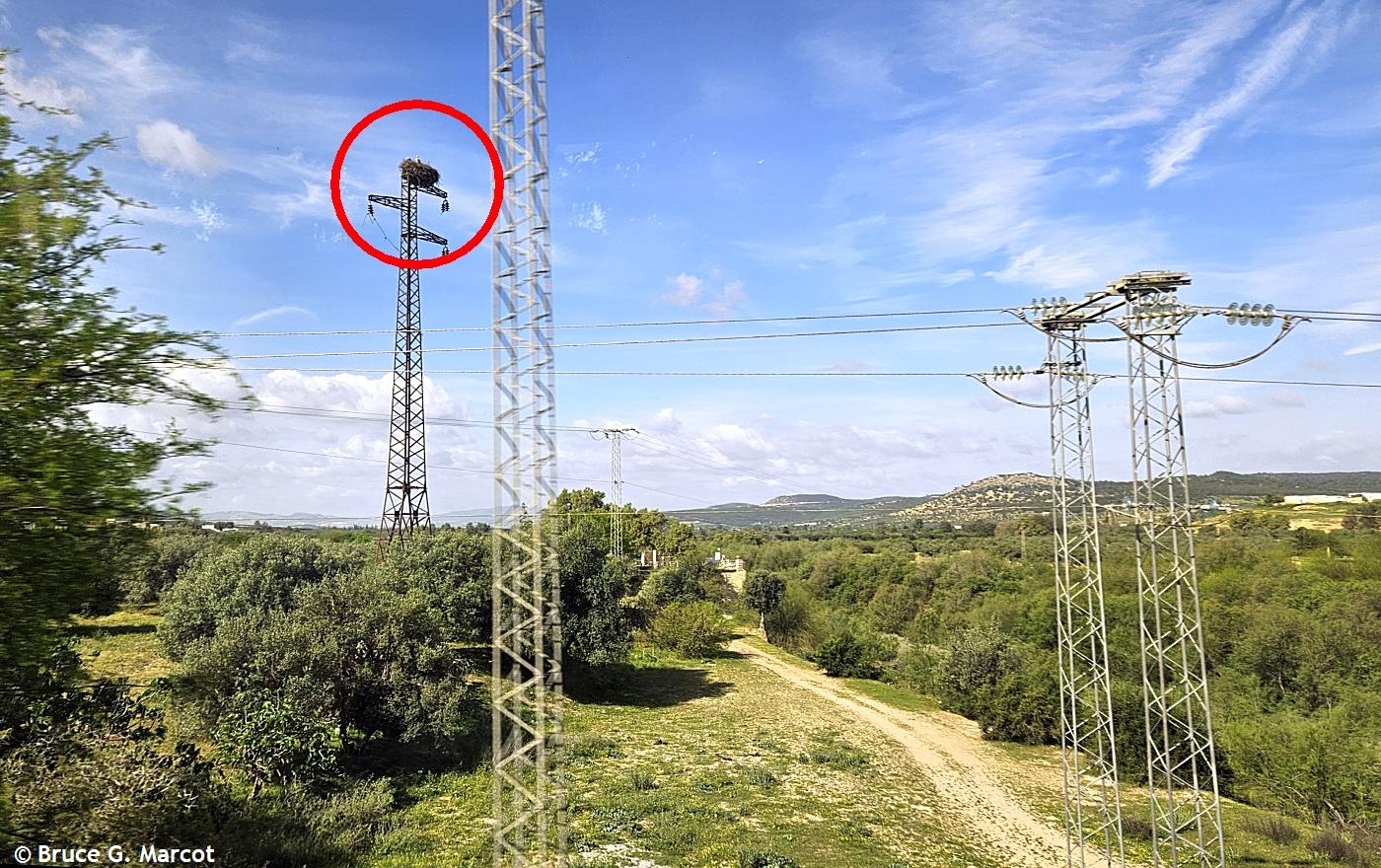
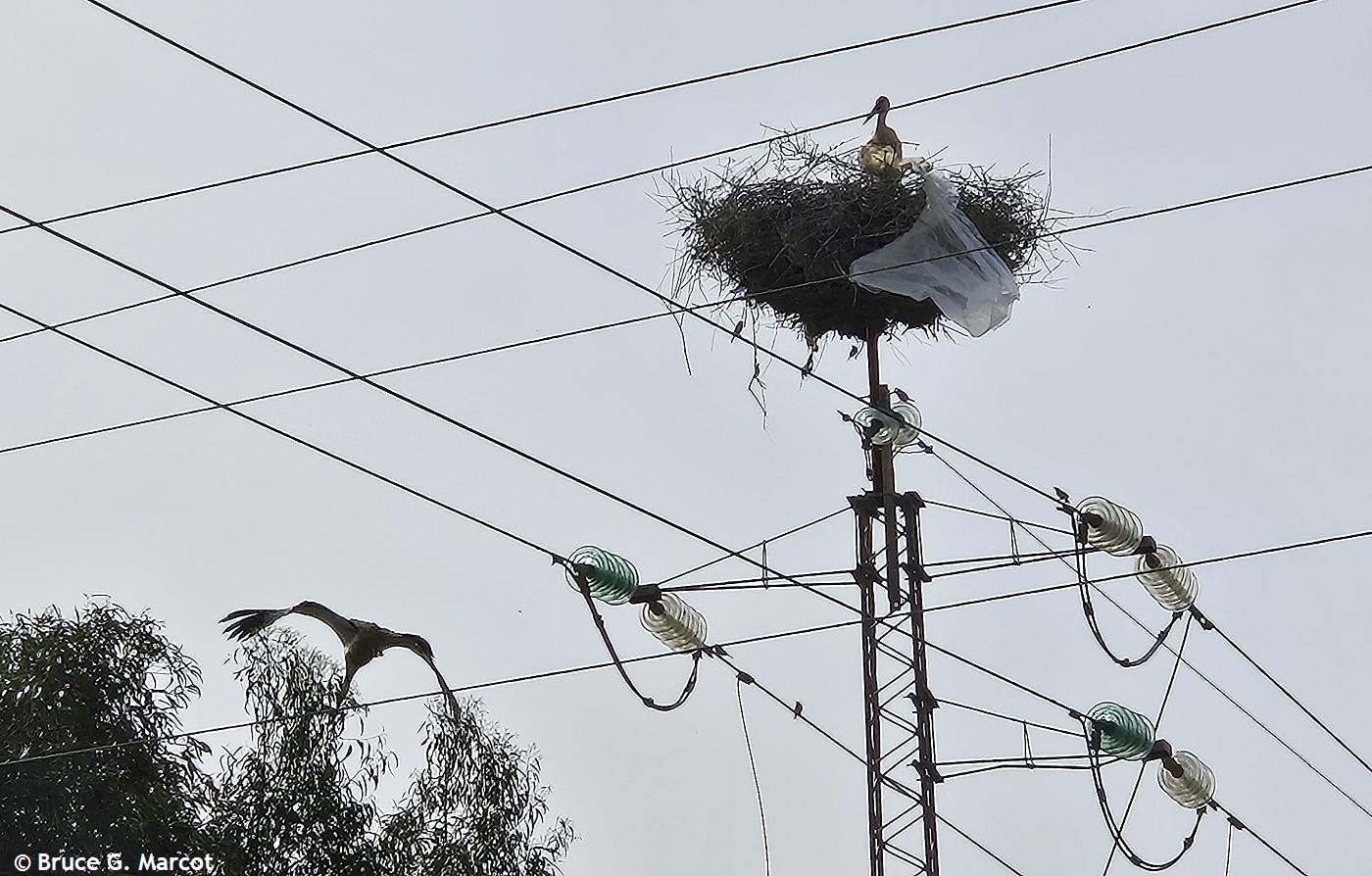
And even isolated nest-site locations may not be free from human intervention. On the northeast coast of Tunisia, in the town of Hammamet, I discovered this White Stork nest in potential double-trouble from the live power lines and from a massive sheet of plastic that had wafted onto the side of its nest:
Even in the finest of coastal sea locations, this species has to beware of human interference!
|
Next week's picture: Oases of North Africa
< Previous ... | Archive |
Index |
Location | Search | About EPOW | ... Next >
Google Earth locations
shows all EPOW locations;
must have Google Earth installed
Author & Webmaster: Dr. Bruce G. Marcot
Disclaimers and Legal Statements
Original material on Ecology Picture of the Week © Bruce G. Marcot unless denoted otherwise