|
||
|
Possum-Proofing the Trees |
|
|
|
||
|
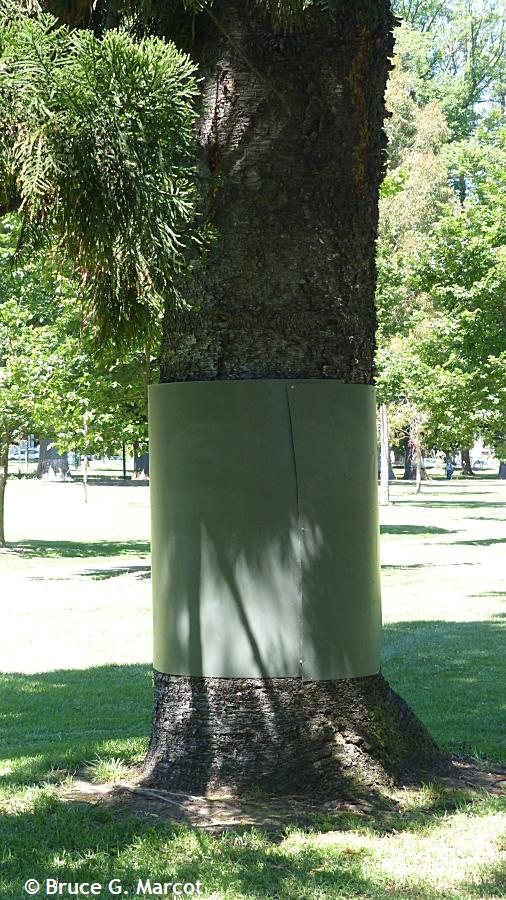
Possum-Proofing the Trees |
|
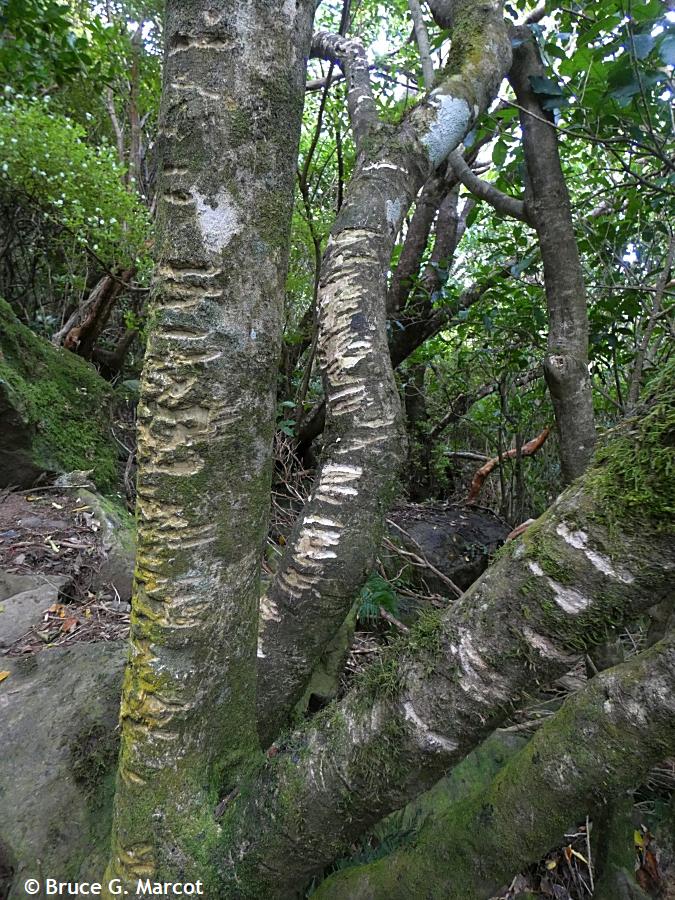
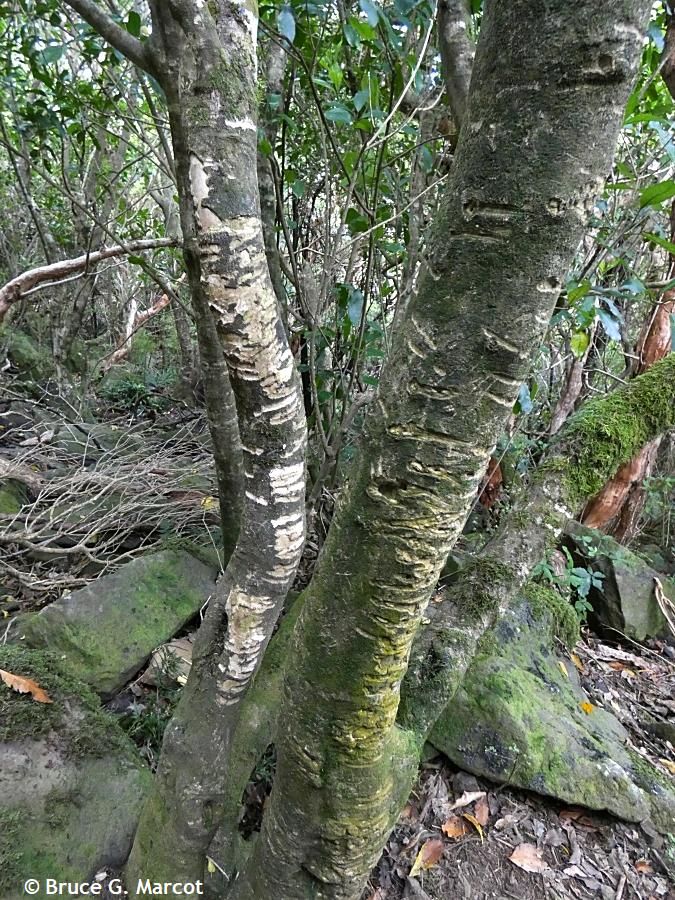
Damage from Common Brushtail Possum |
Credit & Copyright: Dr. Bruce G.
Marcot
|
Explanation: This week we exploring the wonderful Montgomery Park Scenic Reserve, here in Banks Peninsula along the east coast of South Island, New Zealand. This park has immense ecological value for its old growth tōtara trees (Podocarpus totara) that are essentially extinct throughout most of their former range. But there is something ominous occurring here! Something is causing irreparable damage to this wonderful woodland! The deep scars appearing in the above photos are the workings of a major pest that is also causing severe damage to agriculture in the country. That is the common brushtail possum (Trichosurus vulpecula), that was introduced into New Zealand from Australia in 1837, and then in 1858, for the fur trade. The possums escaped and eventually spread across most of New Zealand, occupying a wide range of environments, causing great damage to native trees and woodland ecosystems, preying upon native species of birds and other mammals, occupying tree cavities usually used by nesting birds, and even potentially spreading disease such as bovine tuberculosis, impacting the deer and dairy farming industry there. The damage caused by introduced common brushtail possums is even a concern in the United States, where it is prohibited to import the species . There is a major effort throughout New Zealand to control and locally eradicate the possum populations through trapping and baiting. The Department of Conservation there has even developed a program to sell the furry pelts as a source of income to bolster the control programs (and to support the program, I even bought one when visiting South Island in 1998).
|
Next week's picture: White Stork on Nest
< Previous ... | Archive |
Index |
Location | Search | About EPOW | ... Next >
Google Earth locations
shows all EPOW locations;
must have Google Earth installed
Author & Webmaster: Dr. Bruce G. Marcot
Disclaimers and Legal Statements
Original material on Ecology Picture of the Week © Bruce G. Marcot unless denoted otherwise