EPOW - Ecology Picture of the Week

Each week a different image of our fascinating environment is featured, along with a brief explanation written by a professional ecologist.

10-16 August 2026

Click on images for larger versions

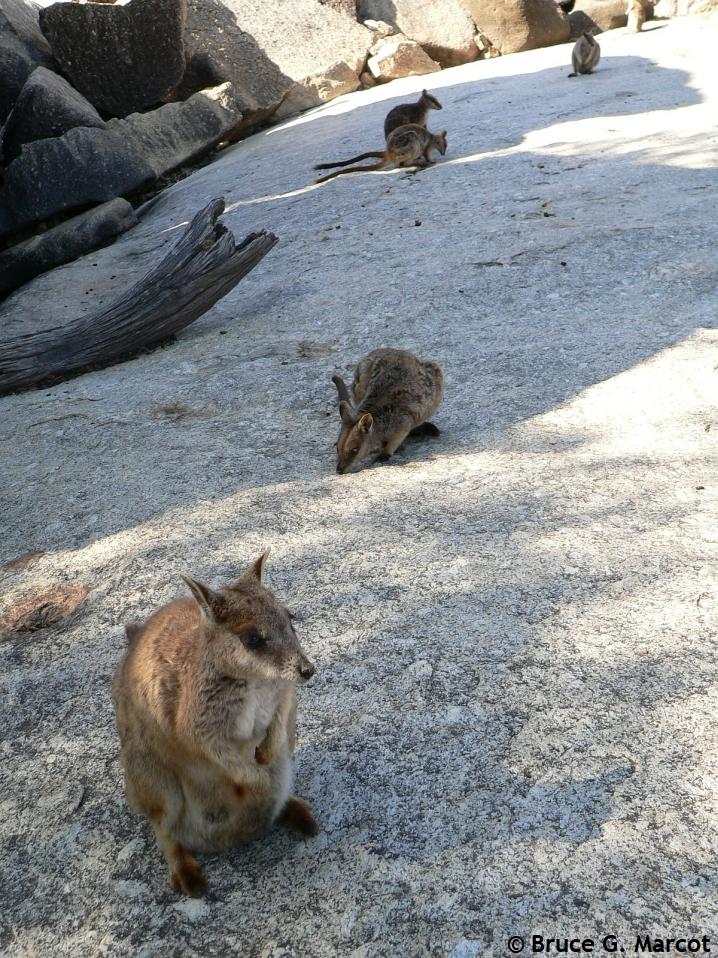
Wallaby on the Rocks

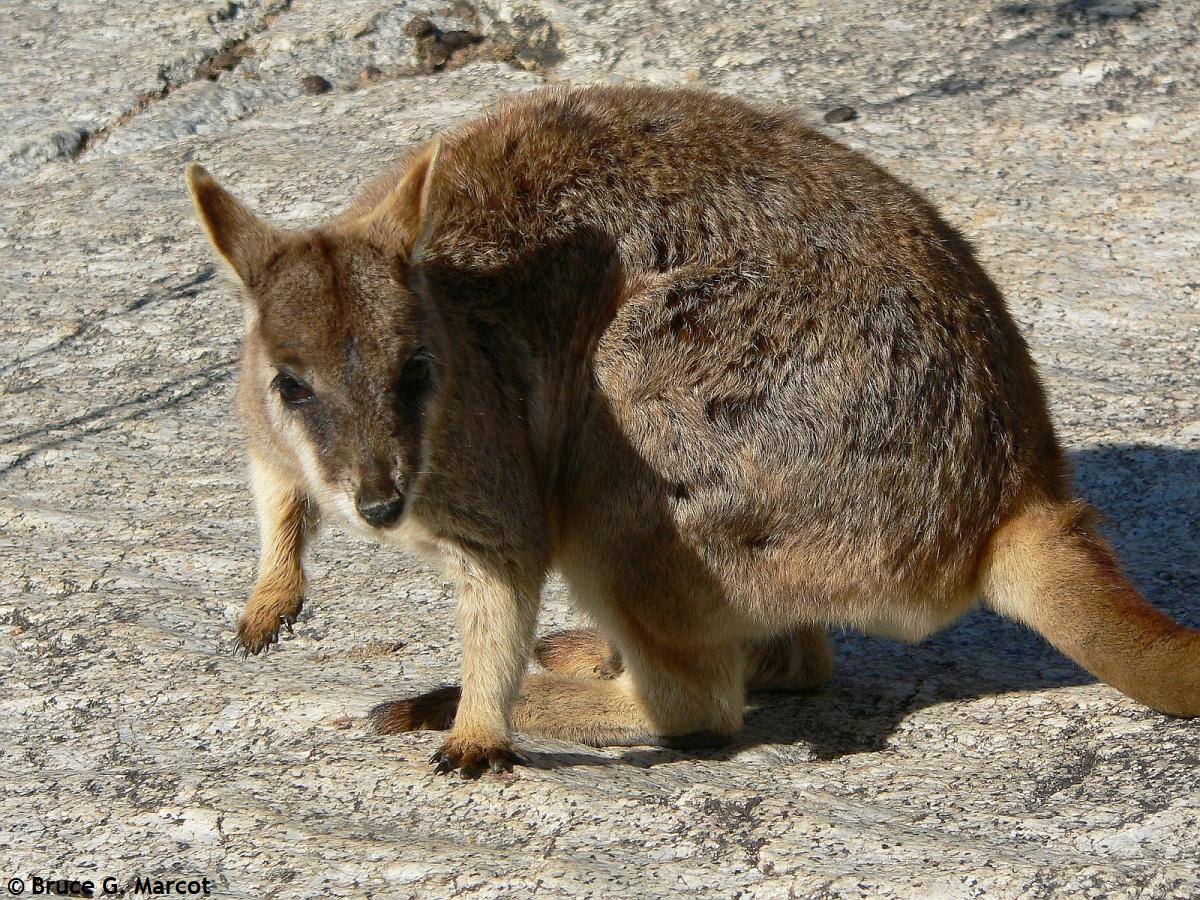
Mareeba Rock-Wallaby (Petrogale mareeba), Family Macropodidae
Queensland, Australia

Credit & Copyright: Dr. Bruce G. Marcot

Explanation:  Way up in east-central Queensland, in northeast Australia, resides this rare and locally-endemic species, the Mareeba rock-wallaby, so-named for occurring near the town of Mareeba, and for occupying ... well, rocks.  

Some sources (e.g., Menkhorst and Knight 2004) note that this is one of nine rock-wallaby species of genus Petrogale found "in a virtually unbroken chain" throughout the region, identified mostly by their individual locations.  And seven of these nine species are virtually identical and indistinguishable in the field, told apart mostly by their unique geography and chromosomes.  It is very much a case of locally adaptive radiation, such as found with lava lizards in the Galapagos Islands.  

And this species, the Mareeba rock-wallaby, occupies a tiny corner of its Queensland home.  And, in their relative isolation, there are only some 800 to 1,000 individuals of this species, in total.  


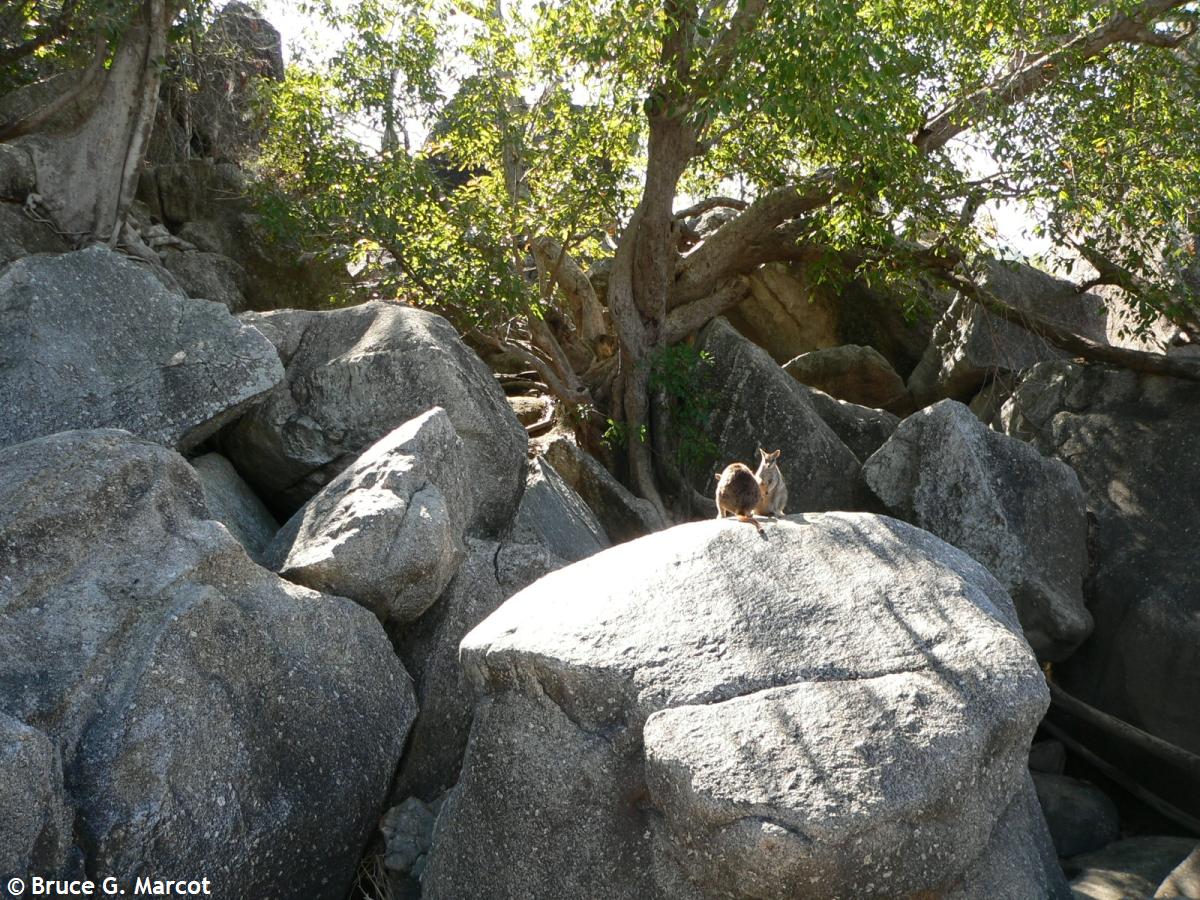
Their habitat of higher-country rock outcrops provides the Mareeba rock-wallaby with some protection from the greater heat and rain of the lowlands, and from some predators as well.   


Despite its small population size and tiny distribution, the Mareeba rock-wallaby is listed as "least concern" by the Queensland Government.  It doesn't even have any specific conservation, recovery, or management plans, mostly because it does occur in these isolated protected areas.  Their granite gorge rocky home also has provided protection from bushfires that, in turn, stimulated regrowth of the vegetation.  


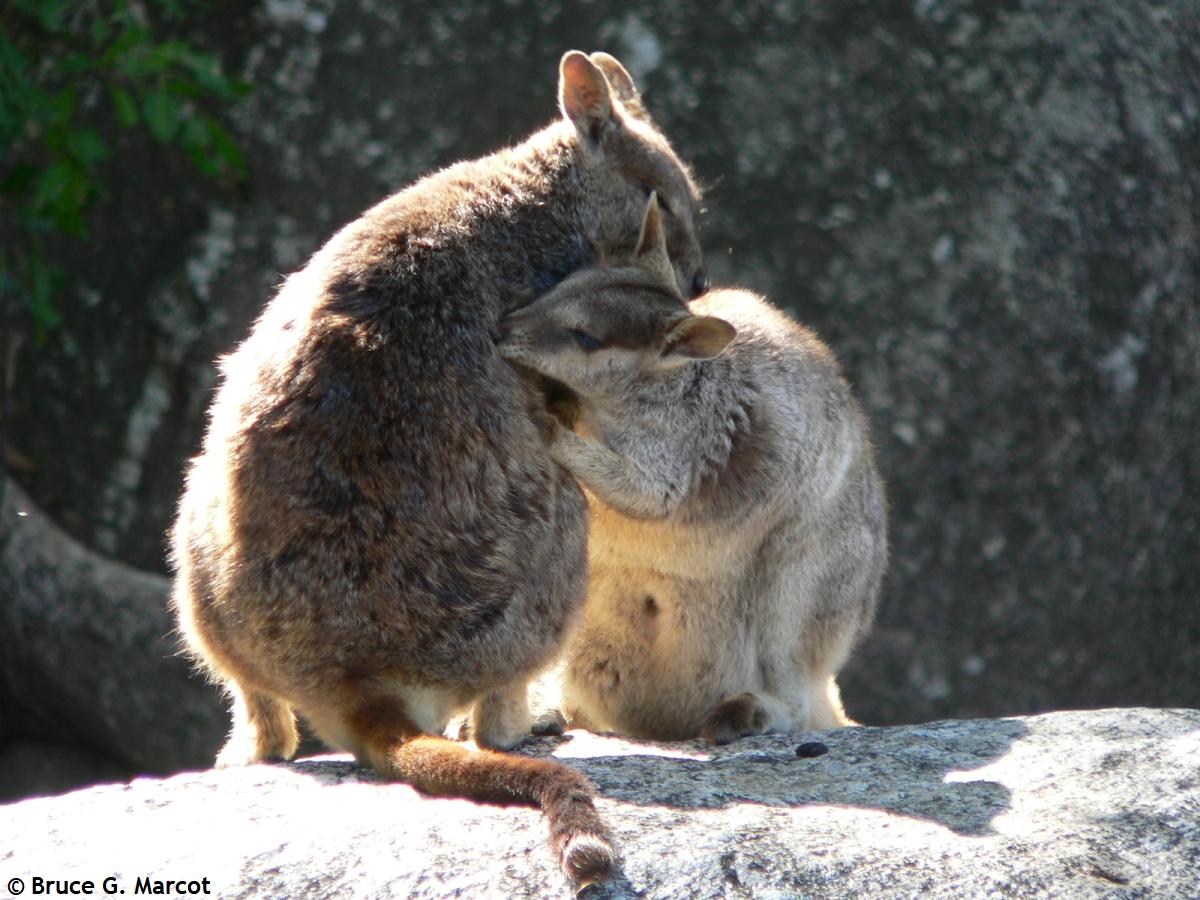
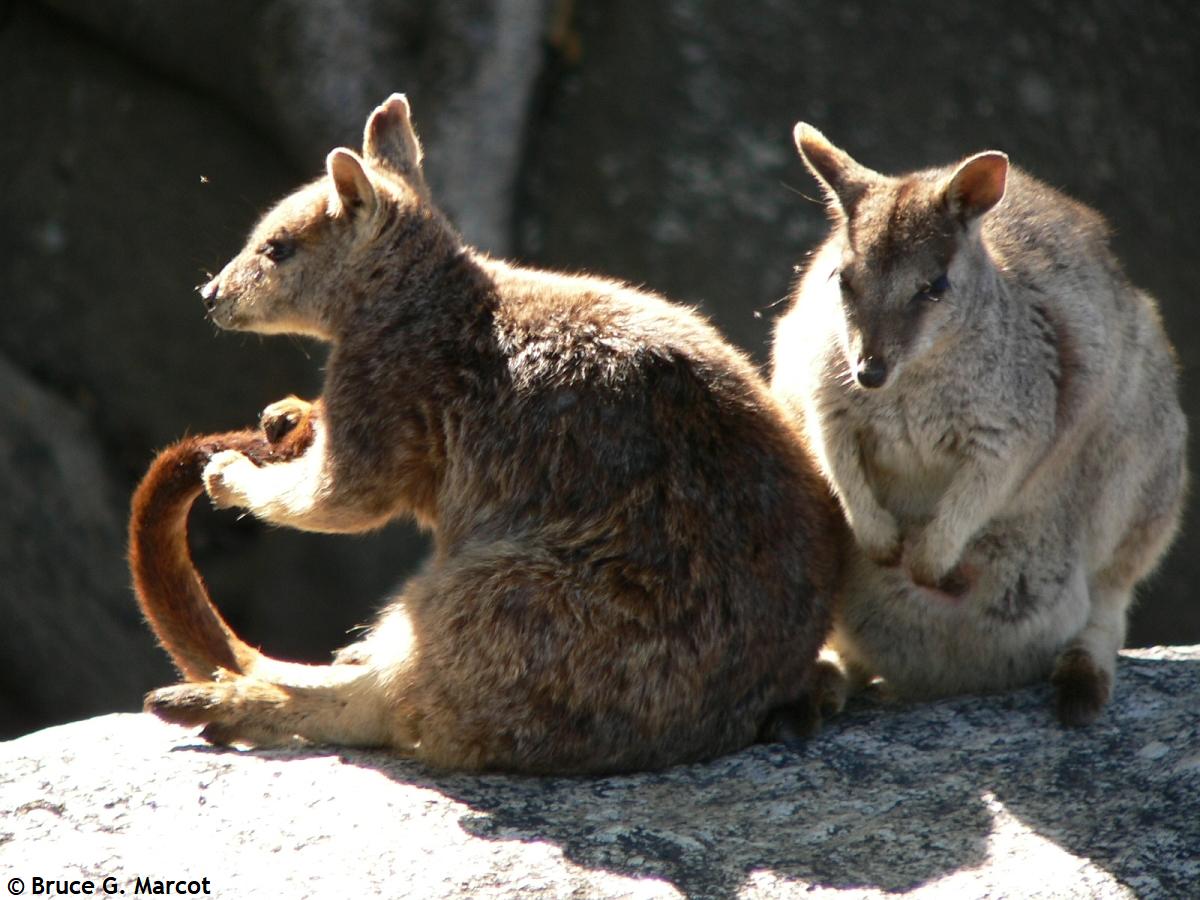
Mareeba rock-wallabies in quiet repose, soaking
in the sunlight of a warm afternoon.


Here, at Granite Gorge, Queensland, this population hs been "provisioned" for over 45 years mainly by hand-feeding (Oliker 2025).  

This has led to their being acclimated to people, and you can approach them directly and closely, although disturbing them is not advised.

However, another result of long-term food provisioning has led to their being more aggressive, their being more aggregated, competitive, and habituated to humans.


And I love it that the genus name Petrogale derives from the Latin "petr" meaning rock, and the Greek "galé" meaning weasel (with an ancient common ancestor).  


Information:
    
Menkhorst, P., and F. Knight.  2004.  A field guide to the mammals of Australia.  Second edition.  Oxford University Press.  278 pp.
     Oliker, E.  2025.  Effects of provisioning on two species of rock-wallaby (Petrogale mareeba and Petrogale assimilis) in North Queensland, Australia.  Australia: Rainforest, Reef, and Cultural Ecology 4. https://digitalcollections.sit.edu/ase2/4.


Next week's picture:  To Be Determined


< Previous ... | Archive | Index | Location | Search | About EPOW | ... Next >


Google Earth locations
shows all EPOW locations;
must have Google Earth installed

Author & Webmaster: Dr. Bruce G. Marcot
Disclaimers and Legal Statements
Original material on Ecology Picture of the Week © Bruce G. Marcot unless denoted otherwise