|
|
|
Mistletoe in the Canopy |
|
|
|
|
|
Mistletoe in the Canopy |
|
Western Dwarf Mistletoe (Arceuthobium campylopodum),
Family Santalaceae |
Credit & Copyright: Dr. Bruce G.
Marcot
|
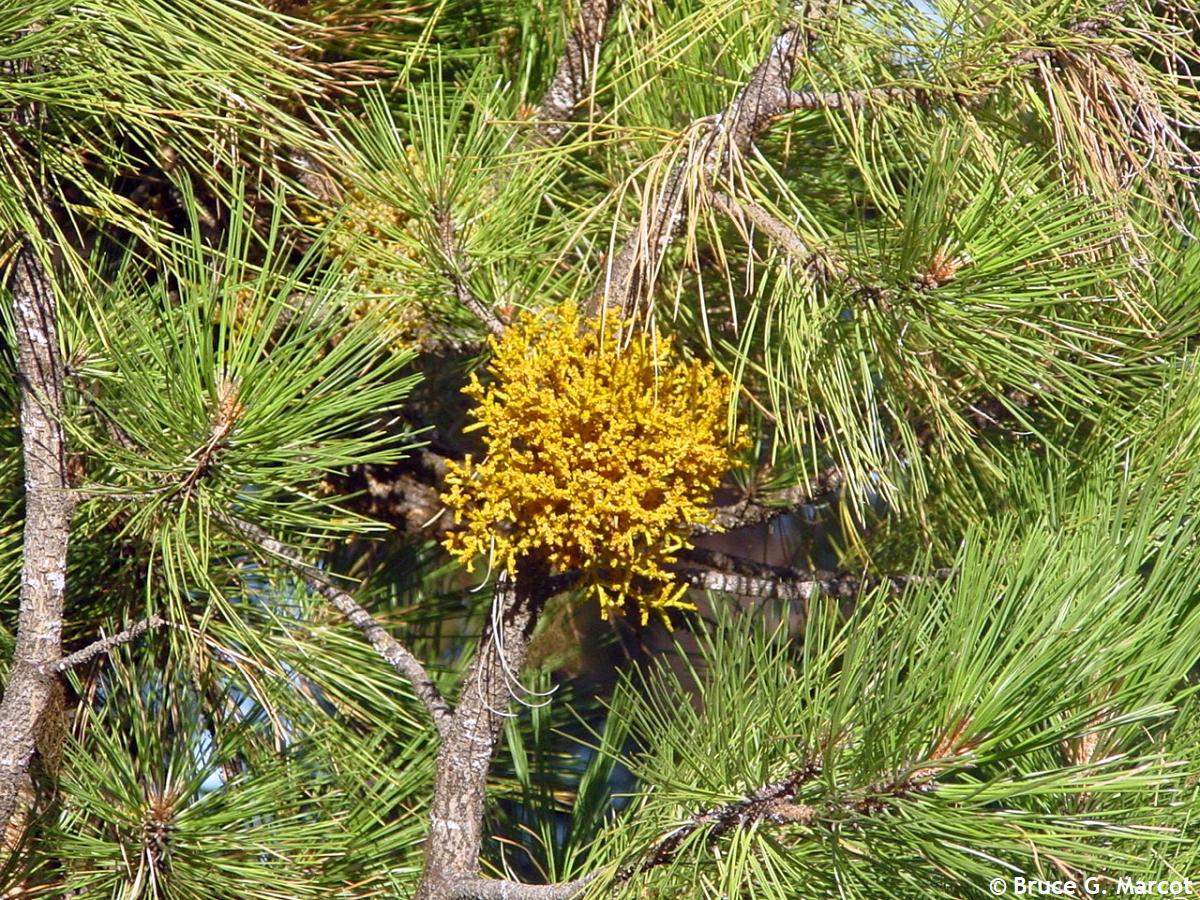
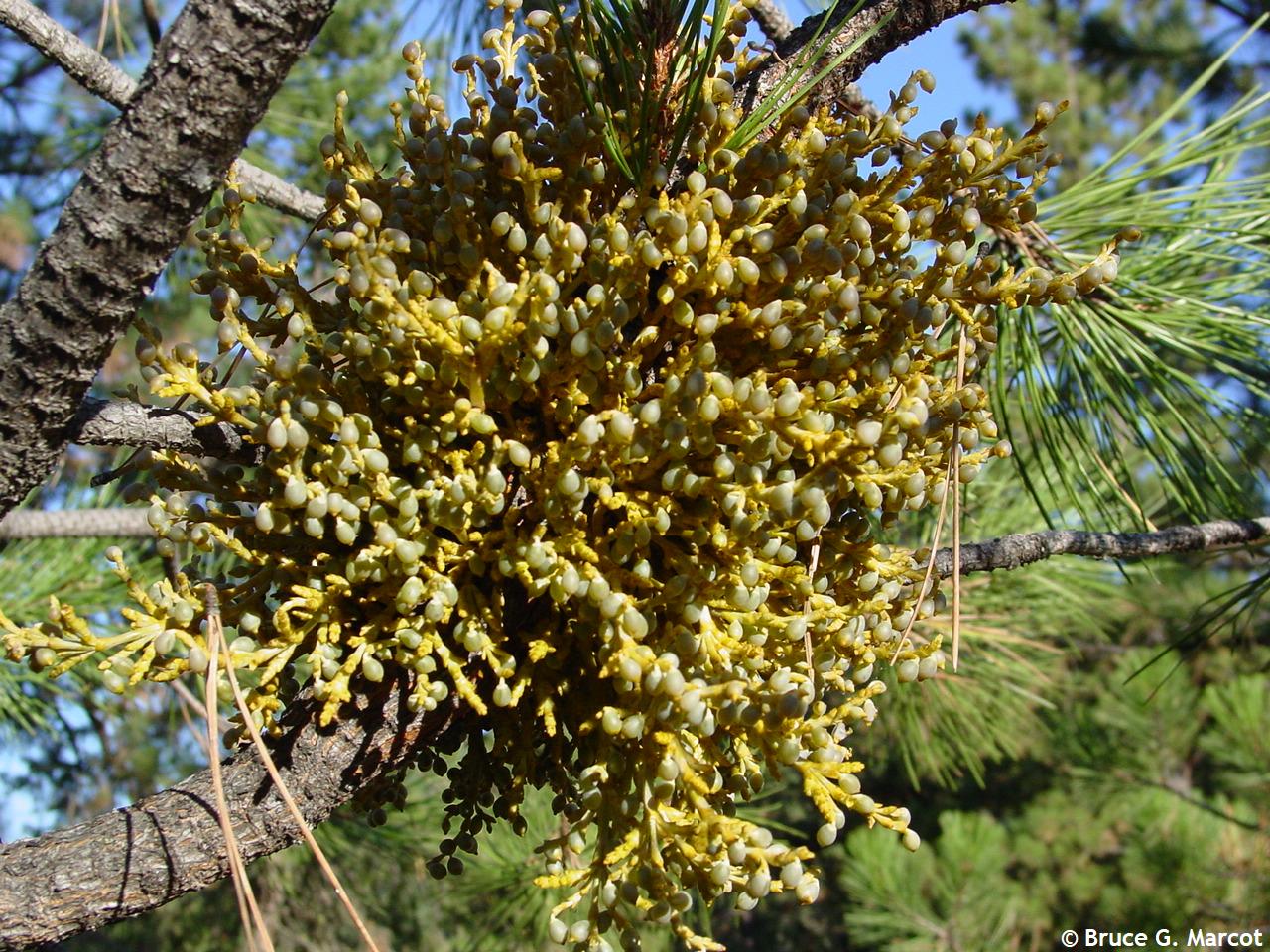
Explanation: Nestled on a branch within the needle clusters of a ponderosa pine is this most interesting structure of western dwarf mistletoe. We are in an old-growth pine forest in Malheur National Forest in eastern Oregon, USA. Western dwarf mistletoe is seen as a pest species, a disease, a parasitic plant of this ponderosa pine here, and of Jeffrey pine further south, and other species further east. The mistletoe is said to drain the nutrients and water from its host tree, eventually weakening, stunting, and killing the tree. The severity of infestations are rated on a 6-class scale that pertains to how much of a host tree is covered and affected.
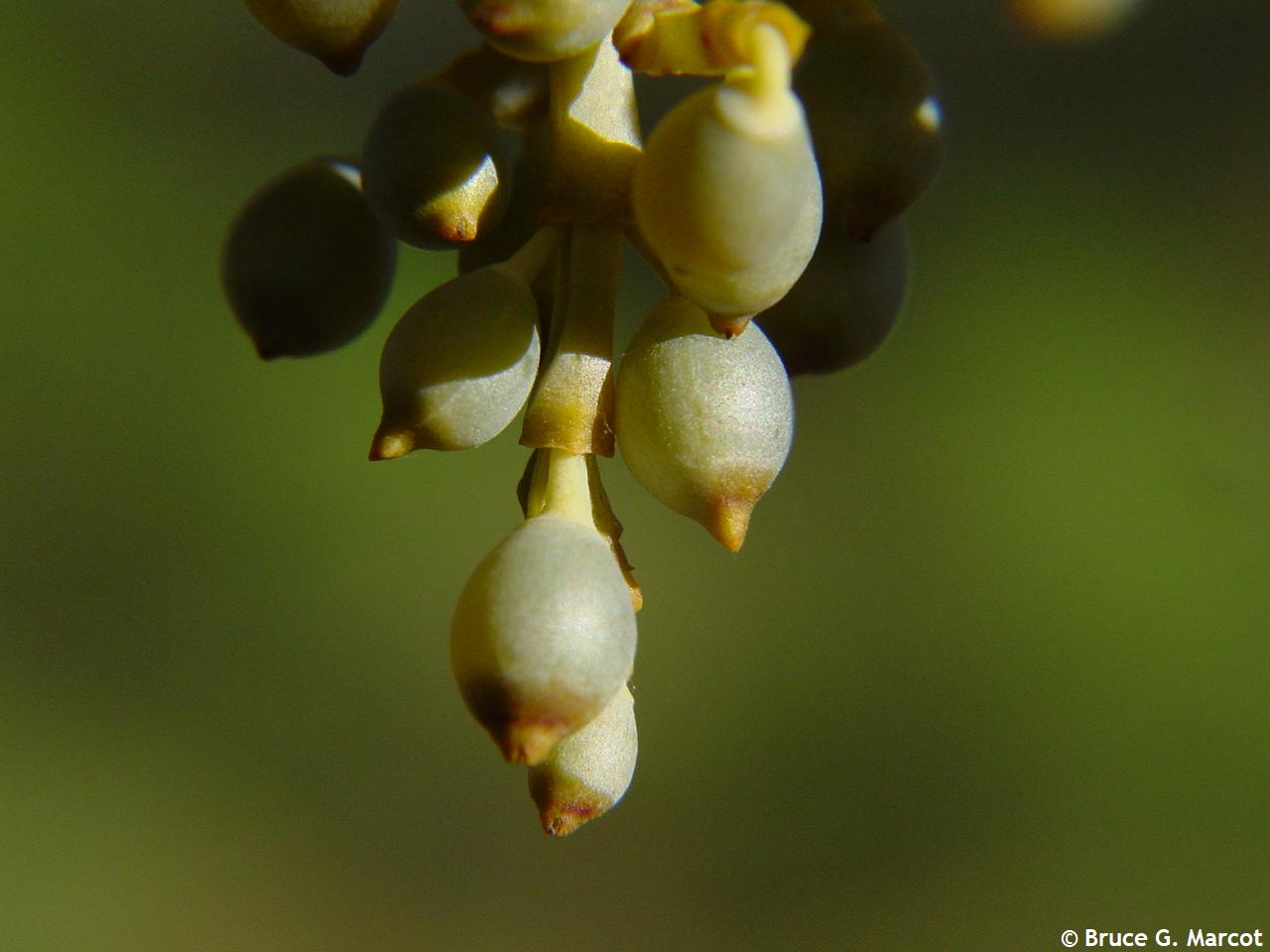
The leaves of dwarf mistletoe are small and found at the base of their shoots which can grow 4-6 inches (10-15 cm). Their roots embed into the tree's branch tissues, where the mistletoe gets its nutrients and water. The seeds then sprout from the tips of the shoots, and fall to the ground when ripe. Seeds can be coated with a sticky fluid allowing them to adhere to other branches of its host tree or surrounding trees, thus spreading. (This is not entirely unlike the dispersal biology of an exotic mistletoe that is spread instead by a co-adapted bird species, in Australia!)
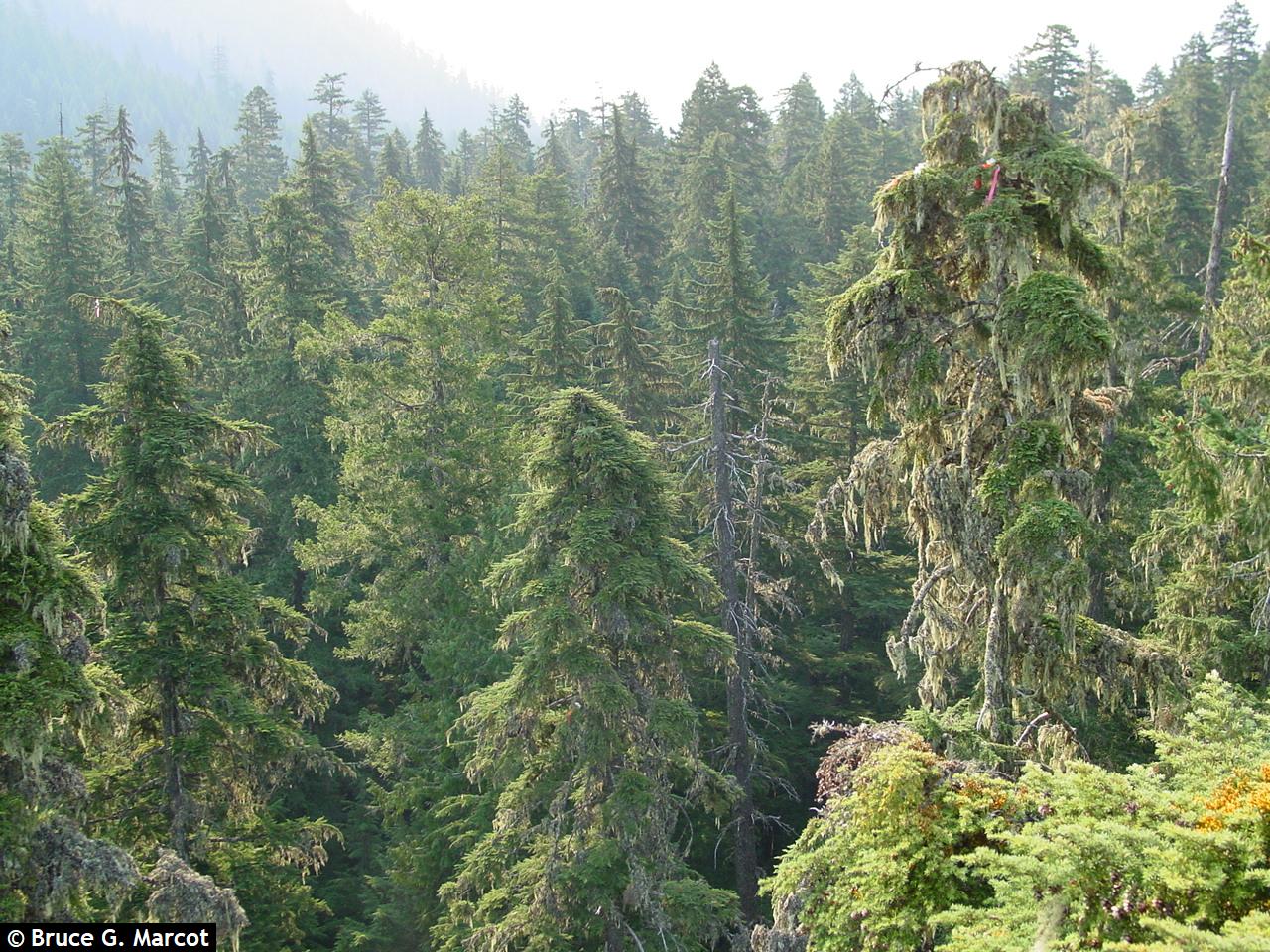
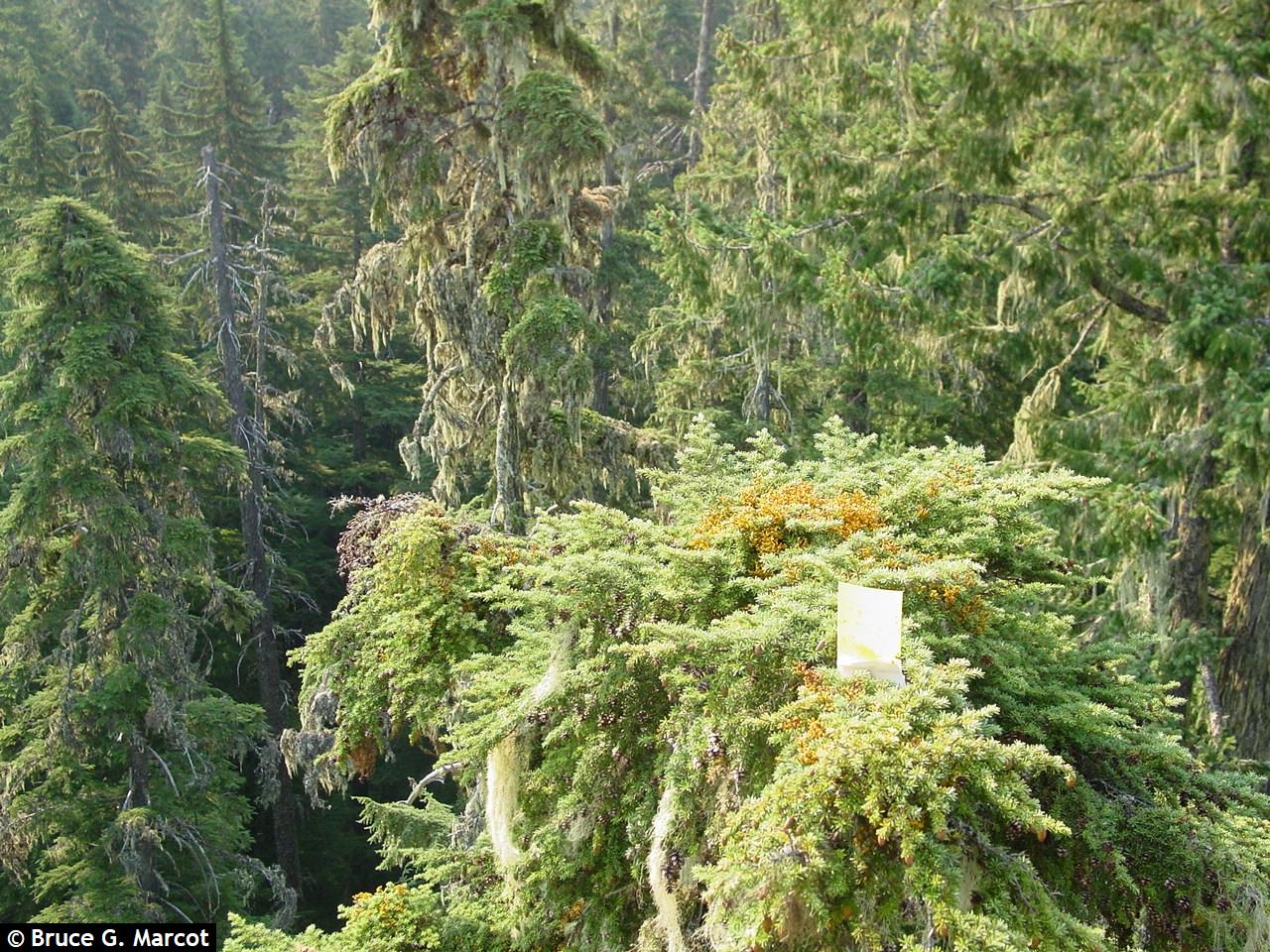
In south-central Washington state, USA, I once used the canopy crane (no longer operational) to study the ecology of top layers of a stand of old-growth conifer forest of Douglas-fir and western hemlock:
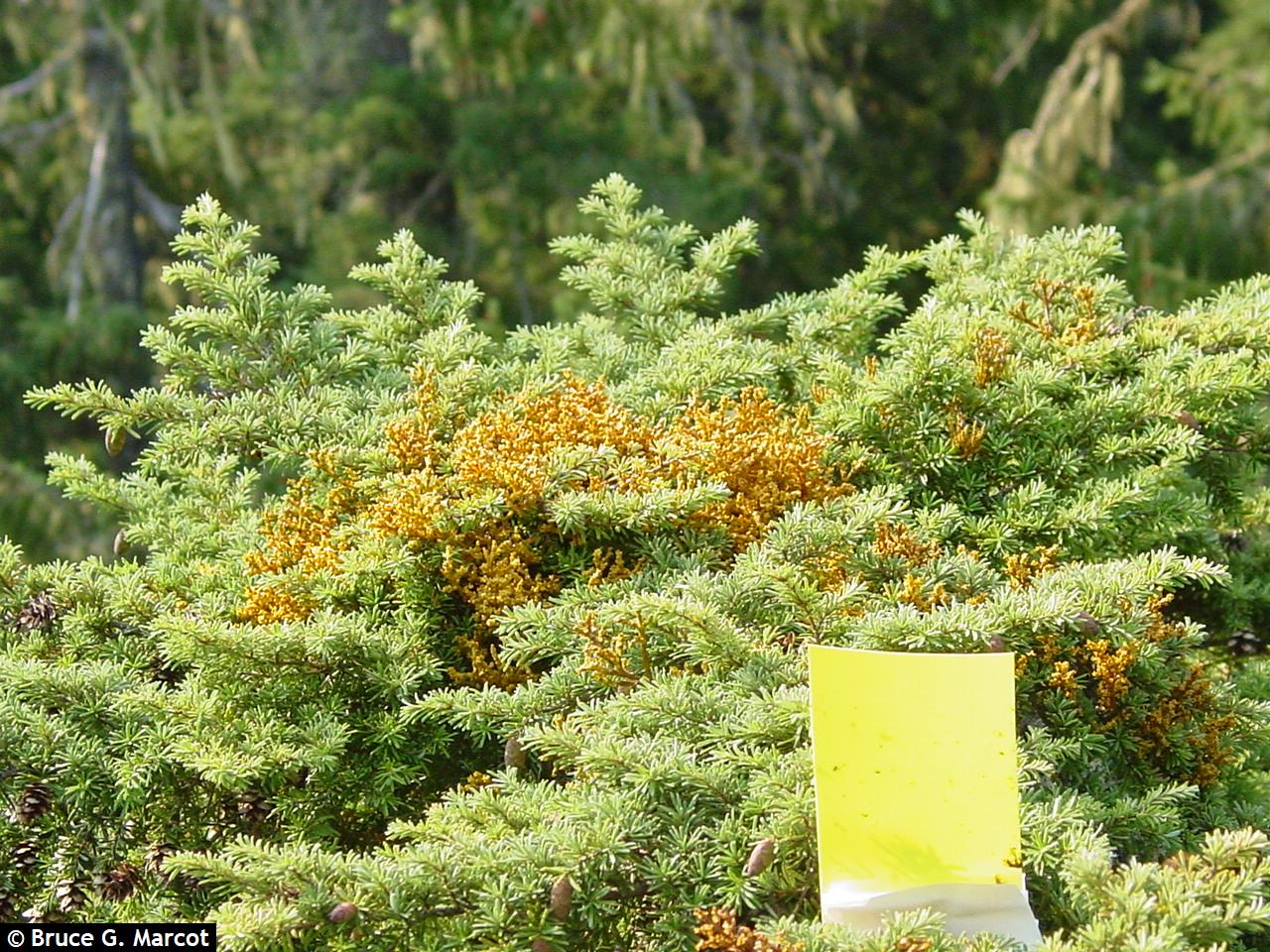
Upon closer inspection:
... I saw that the location had already been discovered and was tagged by another forest biologist, to monitor its impact on the current tree and its potential spread on the surrounding trees.
This species, of western hemlock dwarf mistletoe, seems to have a wider host range than does the dwarf mistletoe. Its hosts include not just western hemlock, but also Pacific silver fir, noble fir, and subalpine fir, species of mid- to higher-elevational ranges. As it infects these trees, the effects are typically rather minor until the host trees become older than about 120 years of age. As used elsewhere, such as in Nevada and in Colorado, management tactics used to save the host trees and stands can include cutting and pruning infected branches if they can be reached, treating with chemicals to thwart the spread, and even selecting more mistletoe-resistant host tree species to plant in the first place.
|
Next week's picture: Wallaby on the Rocks
< Previous ... | Archive |
Index |
Location | Search | About EPOW | ... Next >
Google Earth locations
shows all EPOW locations;
must have Google Earth installed
Author & Webmaster: Dr. Bruce G. Marcot
Disclaimers and Legal Statements
Original material on Ecology Picture of the Week © Bruce G. Marcot unless denoted otherwise