|
|
|
Tamarisk in the Sahara |
|
|
|
|
|
Tamarisk in the Sahara |
|
Tamarisk (cf. Athel Tamarisk, Tamarix
aphylla),
Family Tamaricaceae |
Credit & Copyright: Dr. Bruce G.
Marcot
|
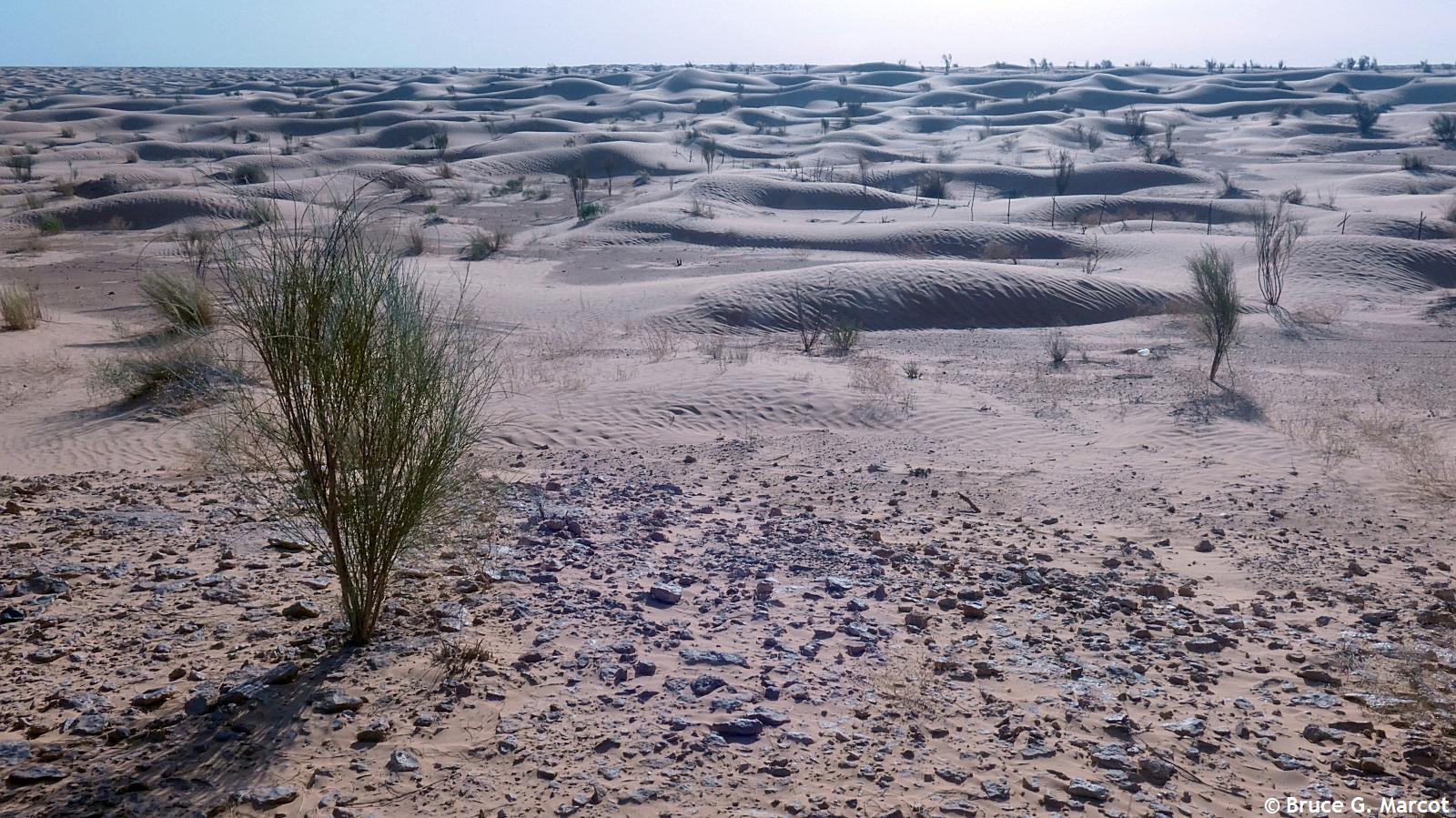
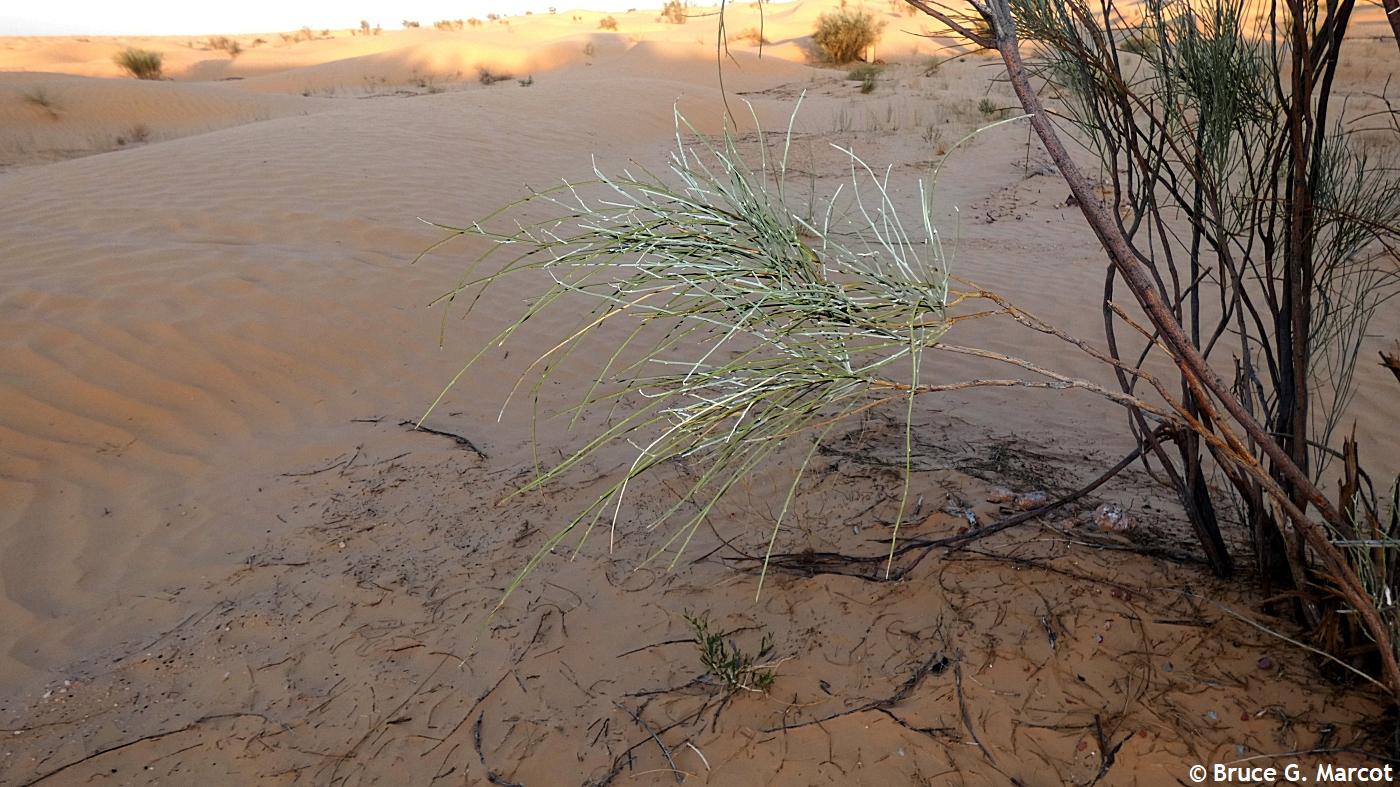
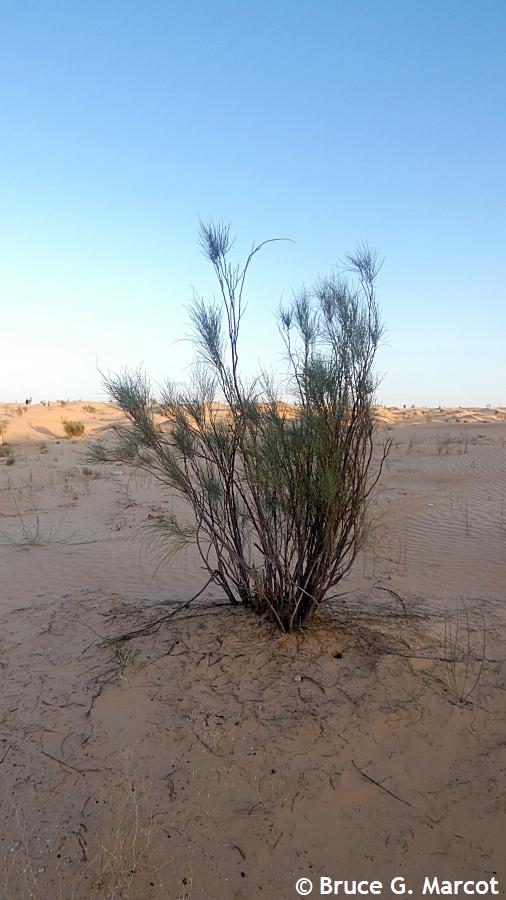
Explanation: Way down in central Tunisia, northwest Africa, we encounter the mighty Sahara Desert. Here thrives a rather remarkable plant, the tamarisk. This evergreen tree sports a filigree of spreading branches with drooping wiry twigs. It is remarkably tolerant of the desert heat, aridity, drought, and even salt. It is used, introduced, to help stabilize dune slopes with its fast growth and deep taproot and spreading root system. And it is also used for forage, apiculture, and more.
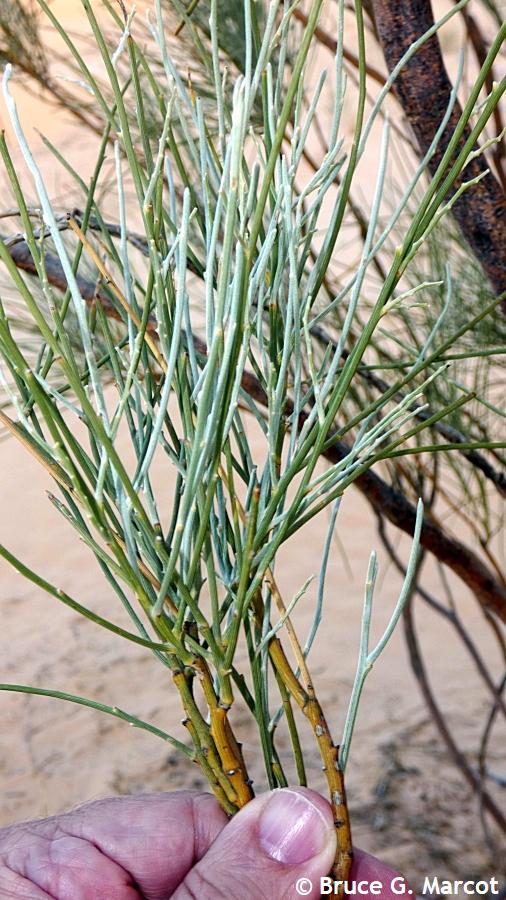
Stems are reddish in younger plants, and the gray-green leaves overlap with the stems. Species of tamarisk, particularly Tamarix aphylla, is native to northeast Africa, such as here in the Sahara of Tunisia, and also native to western Asia. It was introduced in the 1800s to the western United States as an ornamental, but has become a problem invasive species in the southwest U.S.
The Athel tamarisk has a variety of pharmacological uses, including used as a diuretic for tuberculosis, leprosy, and hepatitis, but has much "hidden potential" for other ethnobotanical uses (Alshehri et al. 2021). Its potential seems to include antibacterial, anti-inflammatory, antifungal, and other uses. Other uses purportedly include treatment for tooth and gum infection, fever, asthma, hair loss, and much more. An amazing array, if research validates its diverse utilities!
Hail to the hearty tamarisk!
|
Next week's picture: What Black Bears Do
< Previous ... | Archive |
Index |
Location | Search | About EPOW | ... Next >
Google Earth locations
shows all EPOW locations;
must have Google Earth installed
Author & Webmaster: Dr. Bruce G. Marcot
Disclaimers and Legal Statements
Original material on Ecology Picture of the Week © Bruce G. Marcot unless denoted otherwise