|
|
|
Orangutan Safety |
|
|
|
|
|
Orangutan Safety |
|
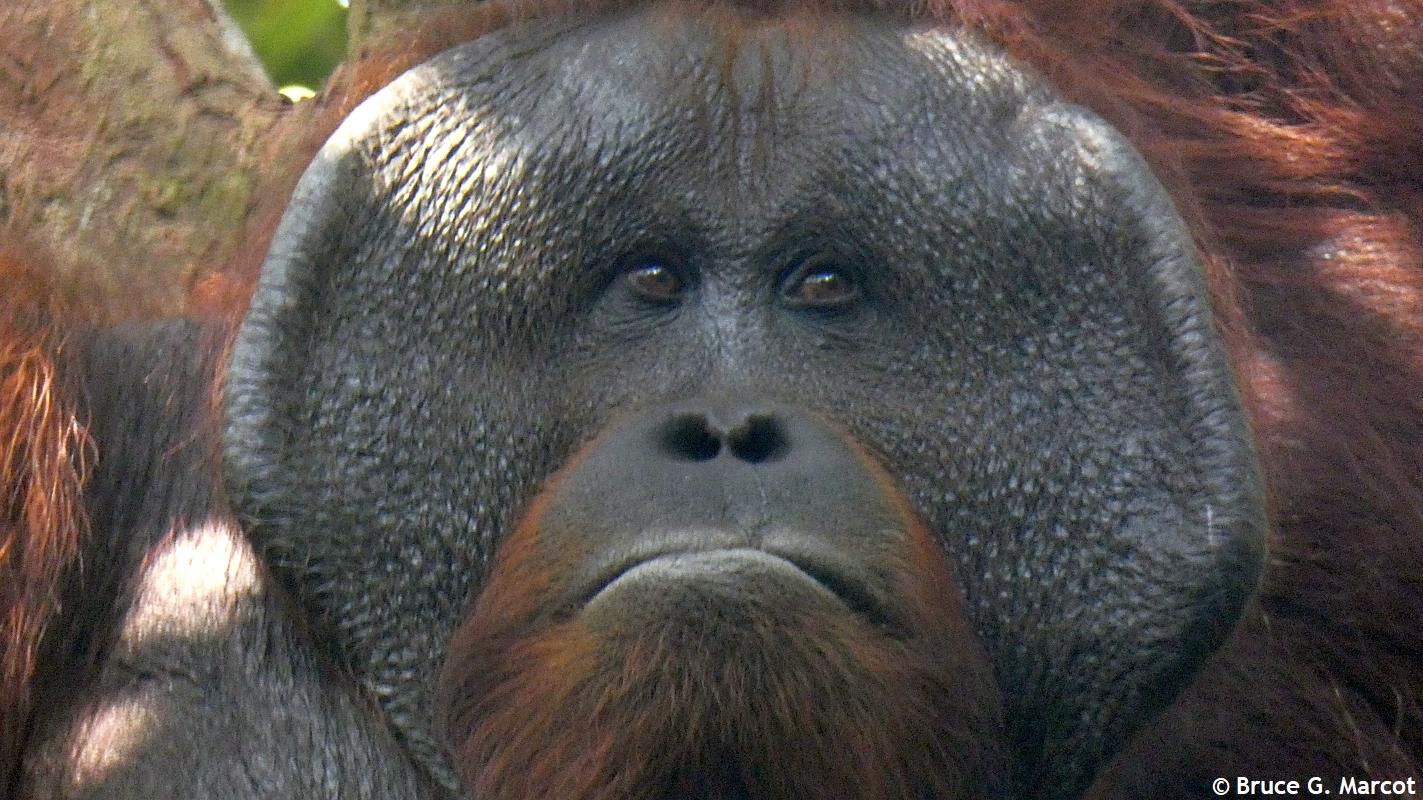
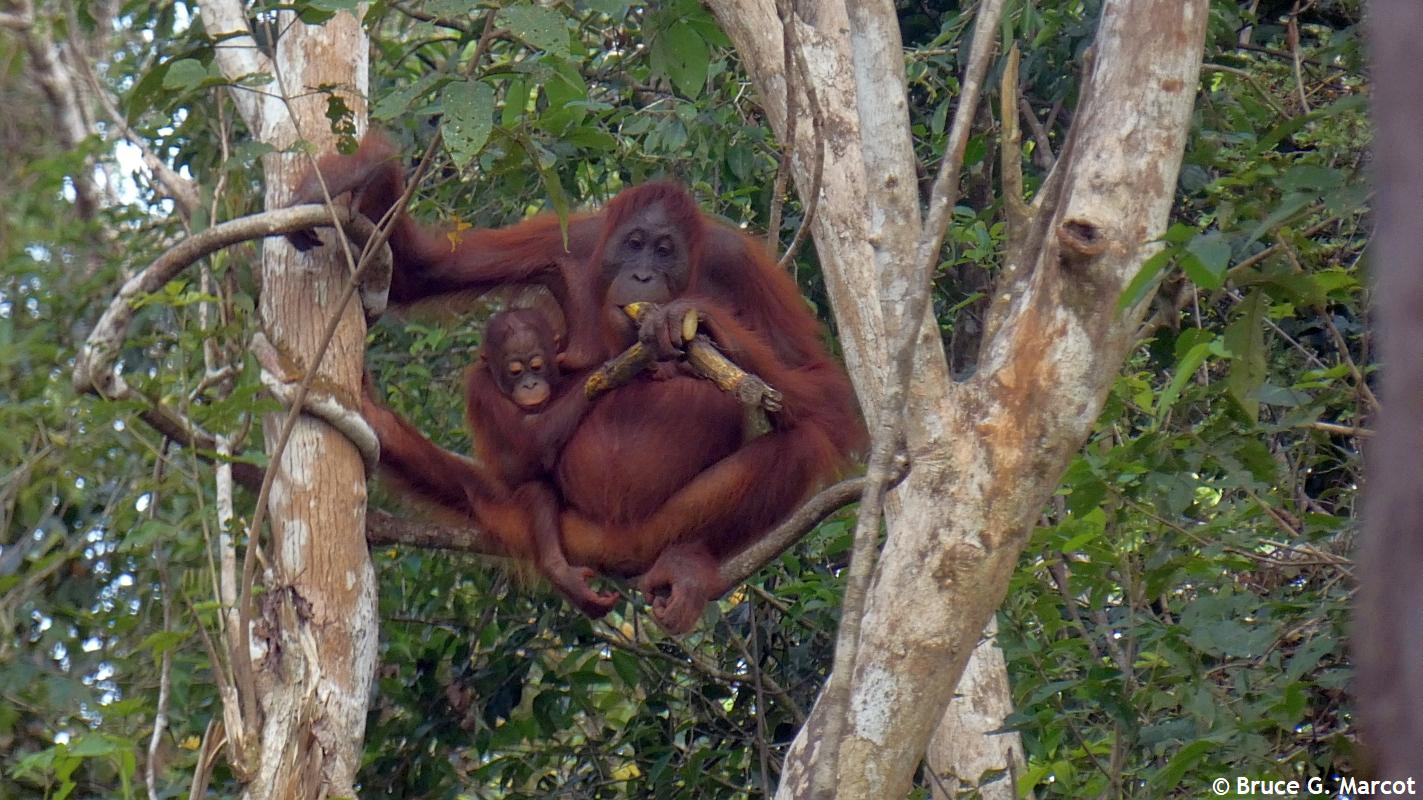
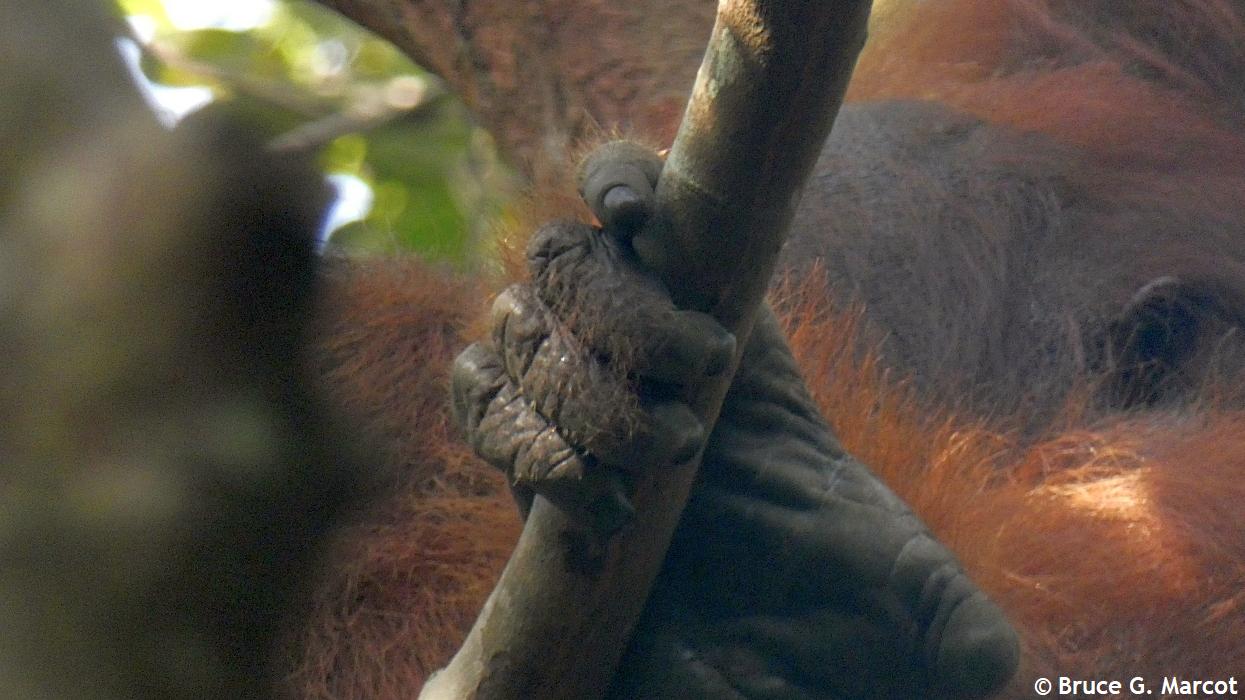
Bornean Orangutan (Pongo pygmaeus),
Family Hominidae |
Credit & Copyright: Dr. Bruce G.
Marcot
|
Explanation: Resting on a large branch in the subcanopy of the lowland tropical rainforest of southern Borneo, Indonesia, is this mature male Bornean orangutan. The massive facial disk, referred to as flanges, develop during the male's dominance. Flanges can serve several functions, mostly to display dominance to subordinate males and a sign of dominance to attract females, but also to help amplify their vocalizations. Large flanges grow in front of the ears; otherwise it might be tempting to draw a parallel to the facial disks of some large owl species that increase their hearing sensitivity, such as in great gray owls. Orangutans are currently separated into three distinct species, this one found in Borneo and two others found in Sumatra. Here, in south Borneo, part of Indonesia, this species is protected at least in part within forest reserves and parks, such as where I observed this male in Tanjung Puting National Park. But all three orangutan species are noted in the IUCN Red List as Critically Endangered, with all populations decreasing. Threats are many, including residential and commercial development, mining and quarrying, wildfire, clearing of rainforest for logging and agriculture, and more. We can only hope that human-caused threats -- yes, including impacts of extreme weather events from regional climate change -- can be reduced or even reversed in critical habitat for the trio of these great ape species. They are each indeed hanging on for life, literally and figuratively ...
|
Next week's picture: Tamarisk in the Sahara
< Previous ... | Archive |
Index |
Location | Search | About EPOW | ... Next >
Google Earth locations
shows all EPOW locations;
must have Google Earth installed
Author & Webmaster: Dr. Bruce G. Marcot
Disclaimers and Legal Statements
Original material on Ecology Picture of the Week © Bruce G. Marcot unless denoted otherwise