|
|
|
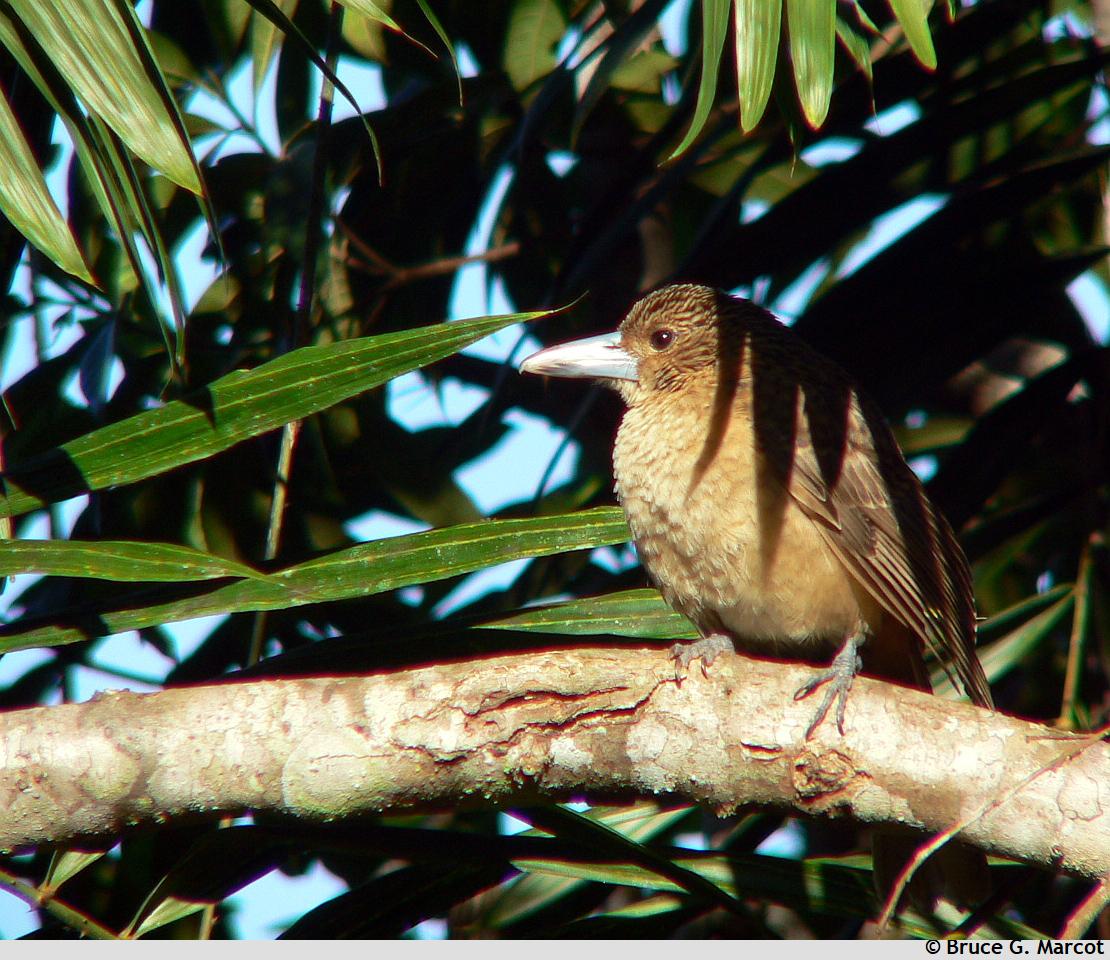
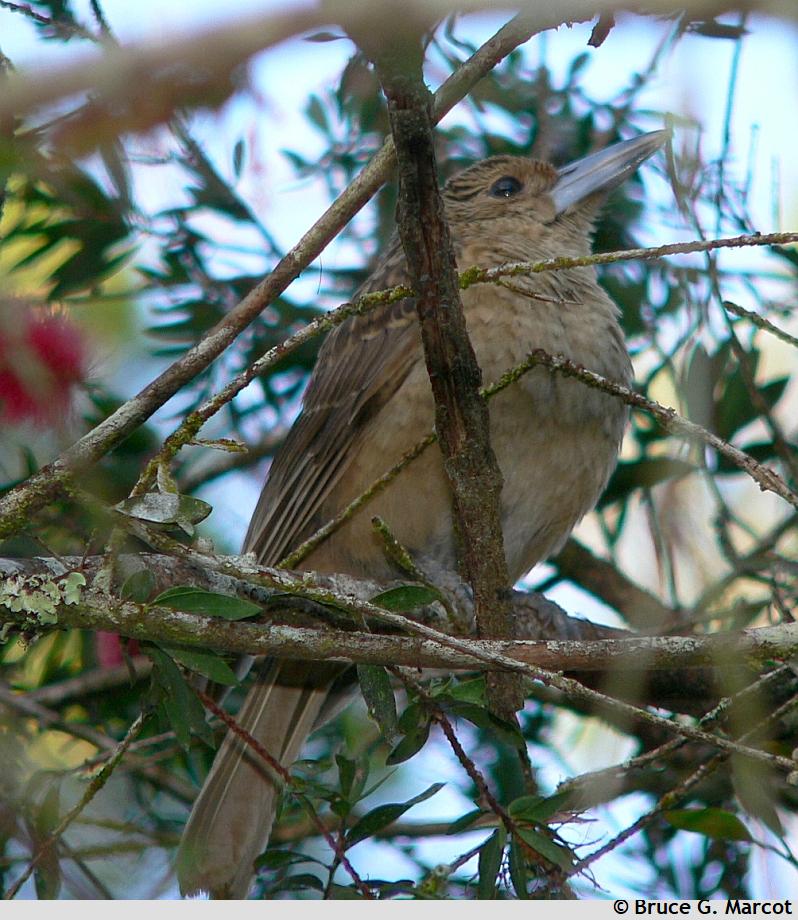
Black Butcherbird Wearing Rufous |
|
|
|
|
|
Black Butcherbird Wearing Rufous |
|
Black Butcherbird (Melloria [Cracticus]
quoyi rufescens), Family Artamidae |
Credit & Copyright: Dr. Bruce G.
Marcot
|
Explanation: Found in Papua New Guinea, Indonesia, and here in a tiny sliver of very northern and northeastern Australia, is the Black Butcherbird. But ... this specimen is not black, why? And why is it called a butcher? For the first question, this seems to be the rufous morph (rufescens) of the species, found only in coastal Queensland of northeastern Australia, although immatures also can appear in rufous garb. And adults are, well, very black, all over except for their gray beak that is nonetheless tipped with black. For the second question, Black Butcherbirds are named after their feeding habit of approaching or luring in unsuspecting prey by mimicking the calls of other birds or even humans ... and then seizing the prey and impaling it onto thorns or crevices for later feeding, in a way that some shrikes do elsewhere (an interesting bit of parallel behavioral evolution between unrelated species). I
encountered this specimen in the tropical forests of so-named Cassowary House
in Queensland, which we also visited in a recent
EPOW episode for a different avian encounter.
Black Butcherbirds used to be put into the genus Cracticus, but research (Cake et al. 2018) demonstrated their likeness to the Australian Magpie and related species so that all were included in the expanded genus Melloria.
|
Next week's picture: Patterns of the Brahmaputra
< Previous ... | Archive |
Index |
Location | Search | About EPOW | ... Next >
Google Earth locations
shows all EPOW locations;
must have Google Earth installed
Author & Webmaster: Dr. Bruce G. Marcot
Disclaimers and Legal Statements
Original material on Ecology Picture of the Week © Bruce G. Marcot unless denoted otherwise