|
|
|
Solifluction on the Slopes |
|
|
|
|
|
Solifluction on the Slopes |
|
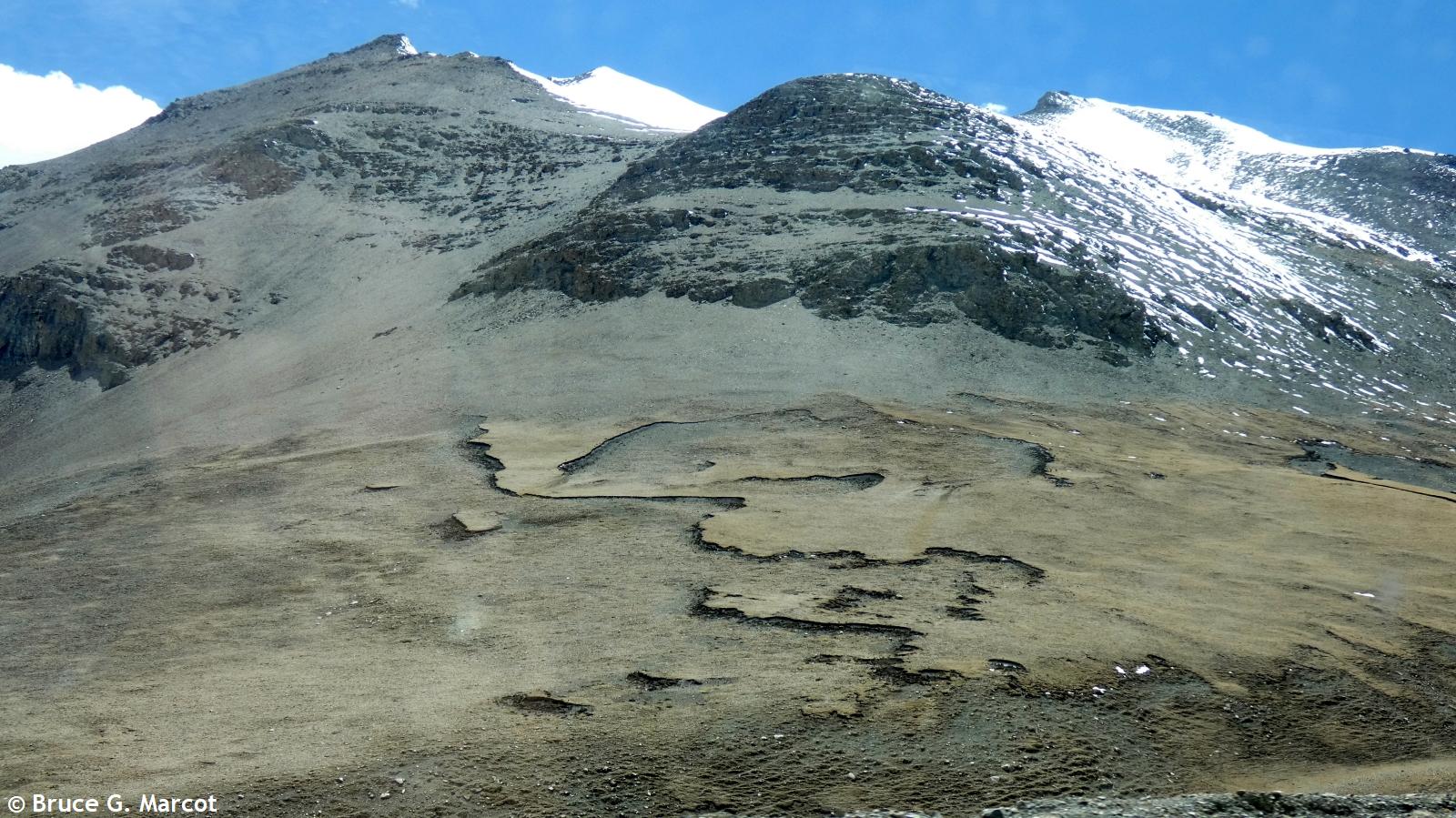
Slope Solifluction, Karo La Glacier |
Credit & Copyright: Dr. Bruce G.
Marcot
|
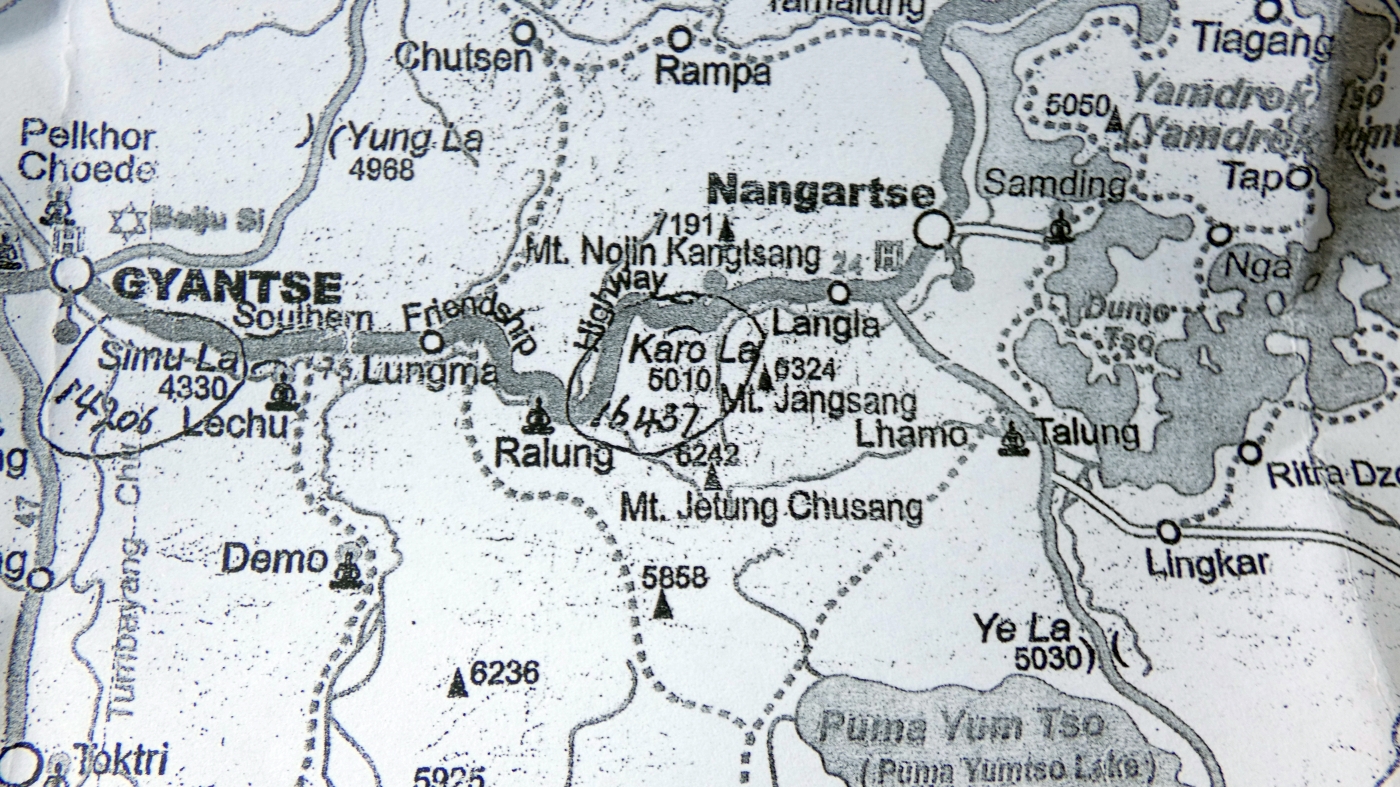
Explanation: What are these strange-appearing ridges and lobes, on this high alpine slope? We are at Karo La Glacier, at the Karo La Pass in southeast Tibet (sometimes spelled Karola). We visited this place in a previous EPOW episode, regarding how much the glacial ice is receding under a warming climate. And here is another part of that story. The
lobes on the slope are the results of solifluction,
where the underlying permafrost is intermittently thawing. Gravity then
causes slippage of the so-called "active layer," that upper portion
of the soil profile that thaws annually. Over time, under increased
regional warming, the active layer gets deeper, meaning that the thawing
occurs in greater depths.
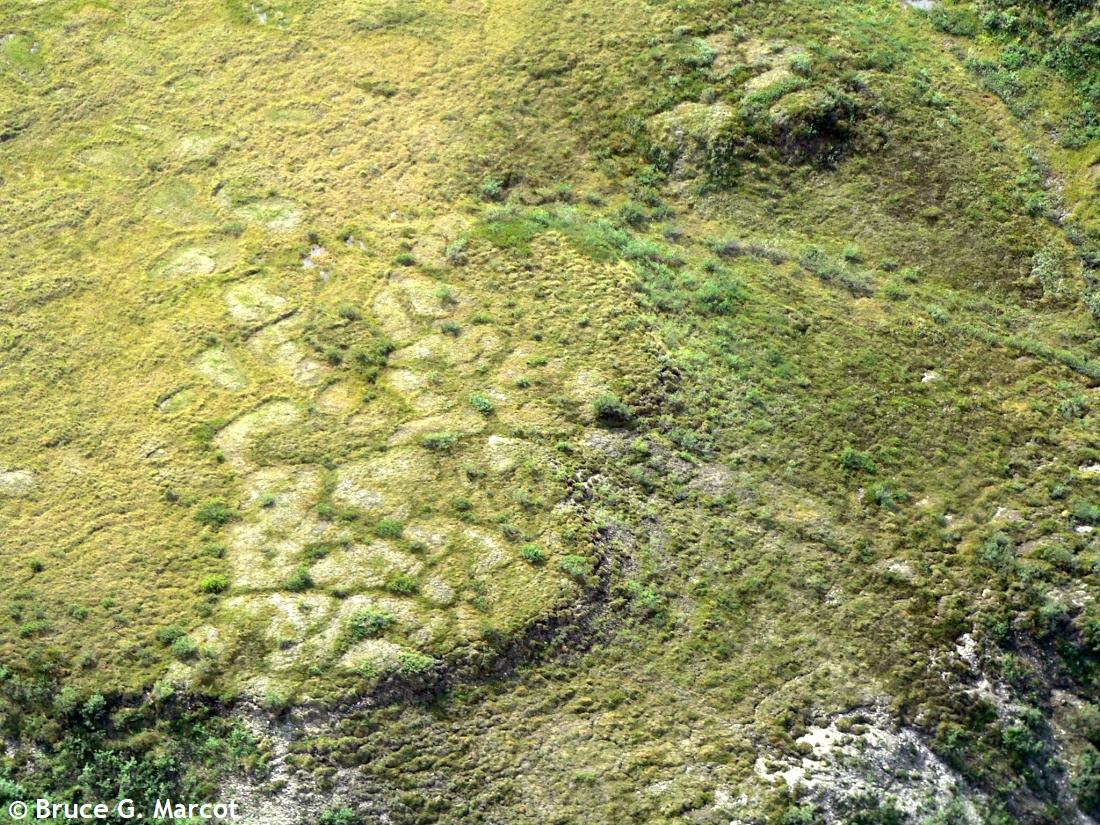
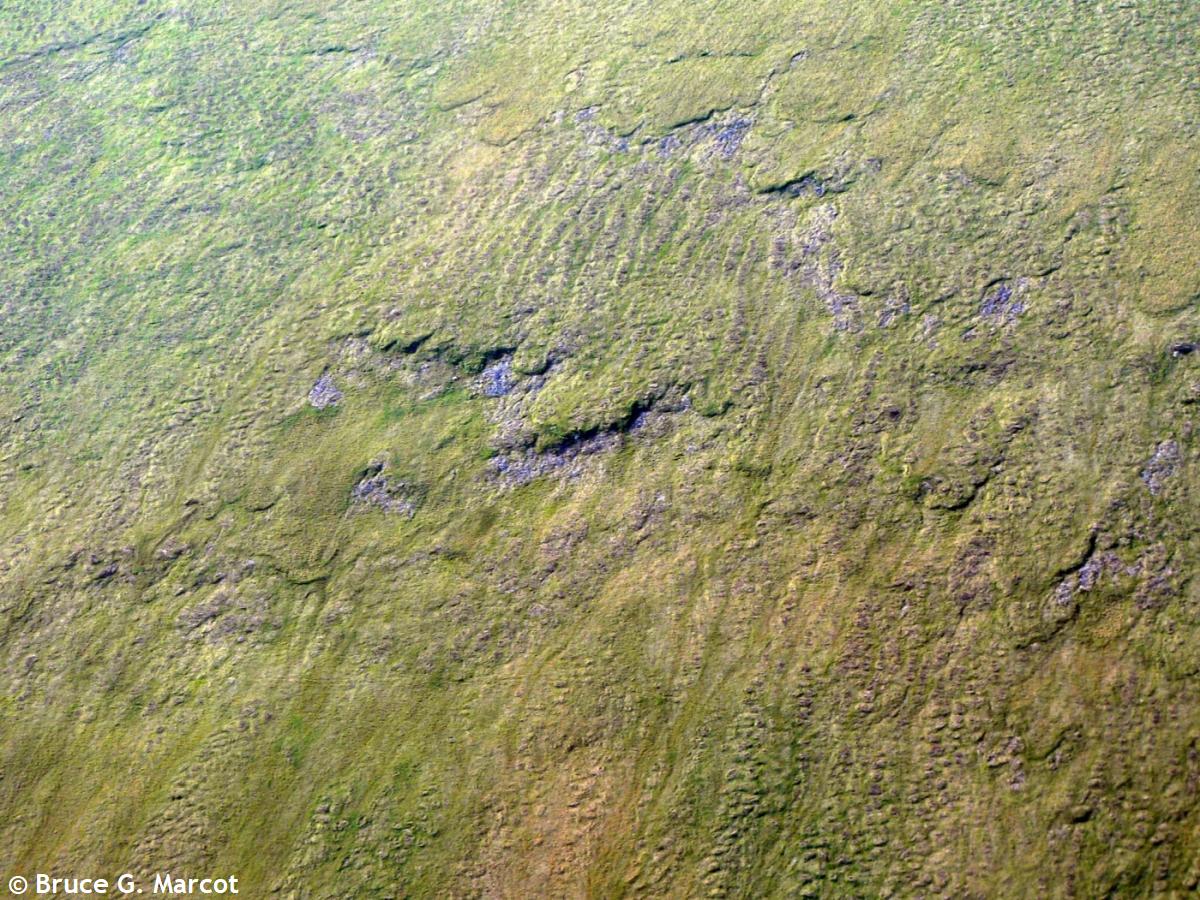
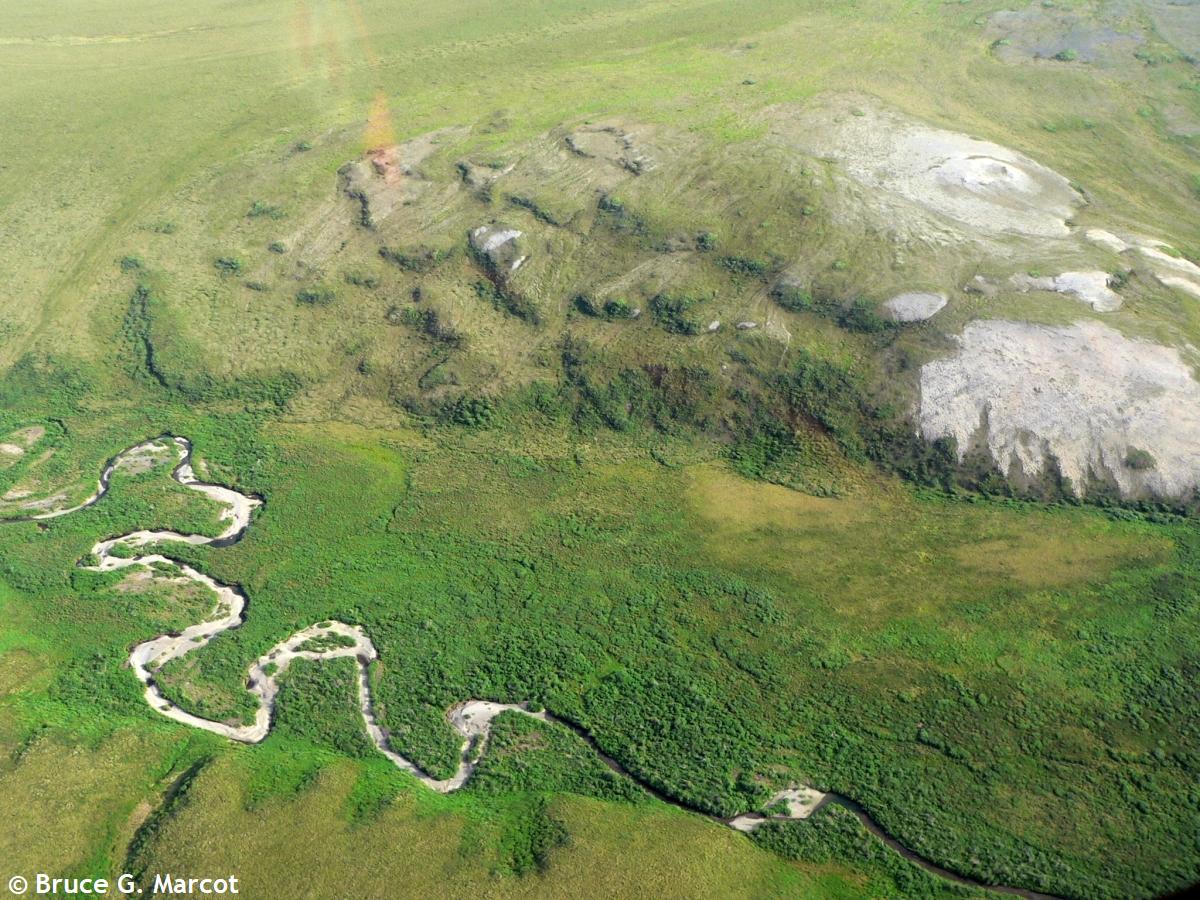
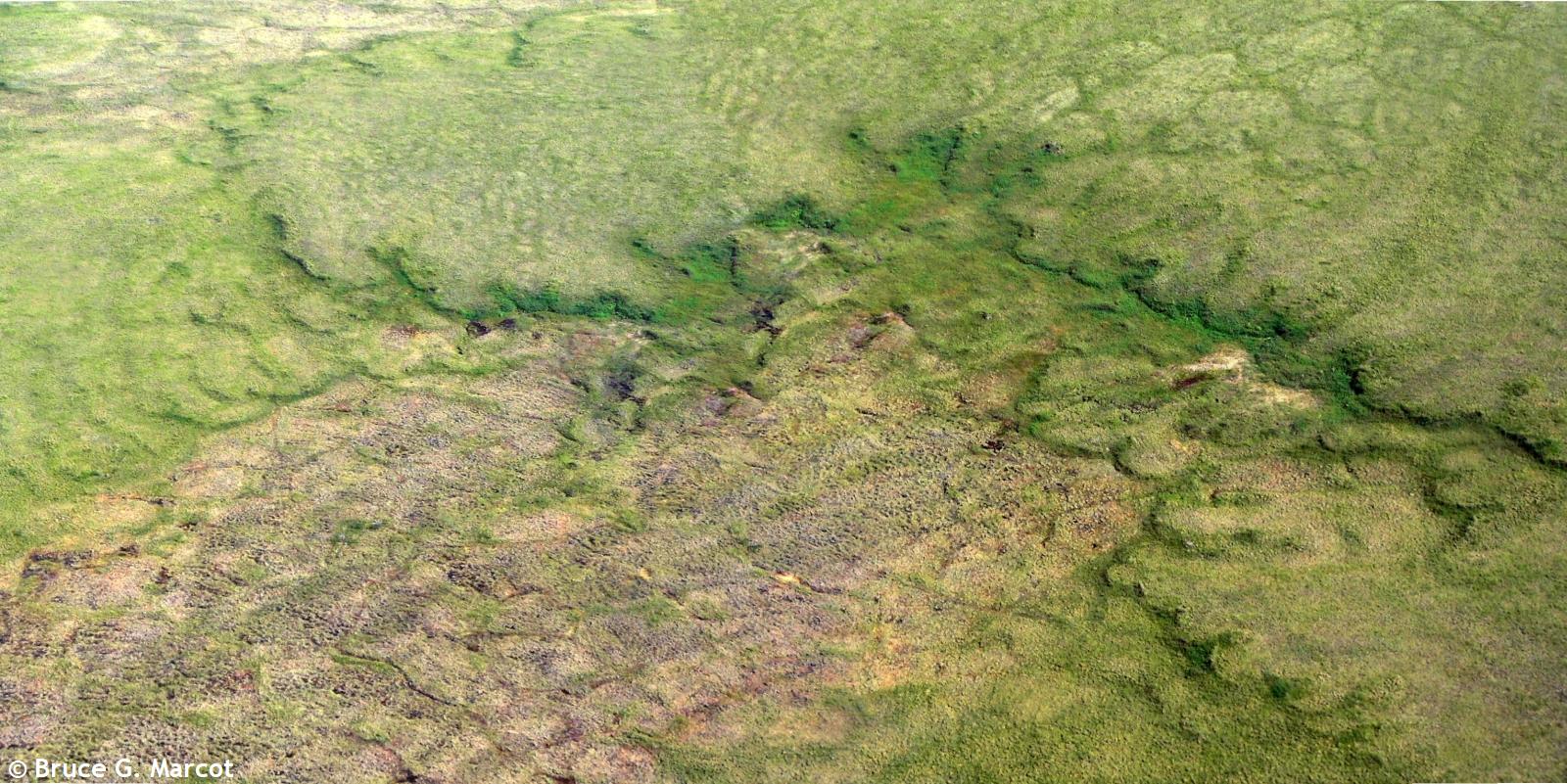
Solifluction (sometimes called gelifluction when it is next to a glacier) can be seen in other parts of the high alpine and high arctic environments. Following are some examples from arctic Alaska.
And temporal changes in solifluction, particularly accelerating changes in lobe distribution and extent, could serve as indicators of the impacts of increased regional warming under climate change.
|
Next week's picture: Coupled Camphor Trees
< Previous ... | Archive |
Index |
Location | Search | About EPOW | ... Next >
Google Earth locations
shows all EPOW locations;
must have Google Earth installed
Author & Webmaster: Dr. Bruce G. Marcot
Disclaimers and Legal Statements
Original material on Ecology Picture of the Week © Bruce G. Marcot unless denoted otherwise