|
|
|
Common Murre Colony as Indicator |
|
|
|
|
|
Common Murre Colony as Indicator |
|
Common Murre (Uria aalge), Family
Alcidae |
Credit & Copyright: Dr. Bruce G.
Marcot
|
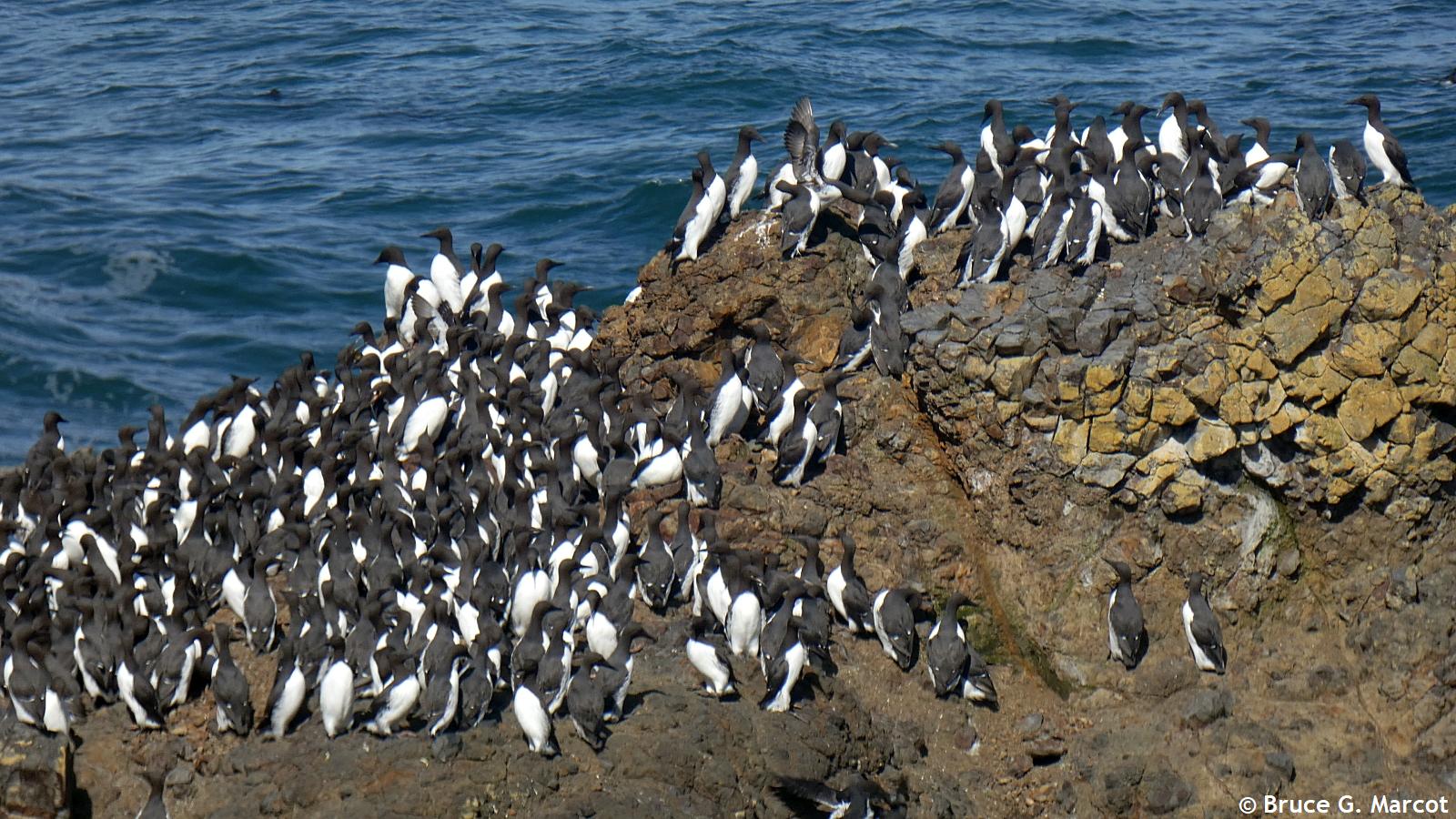
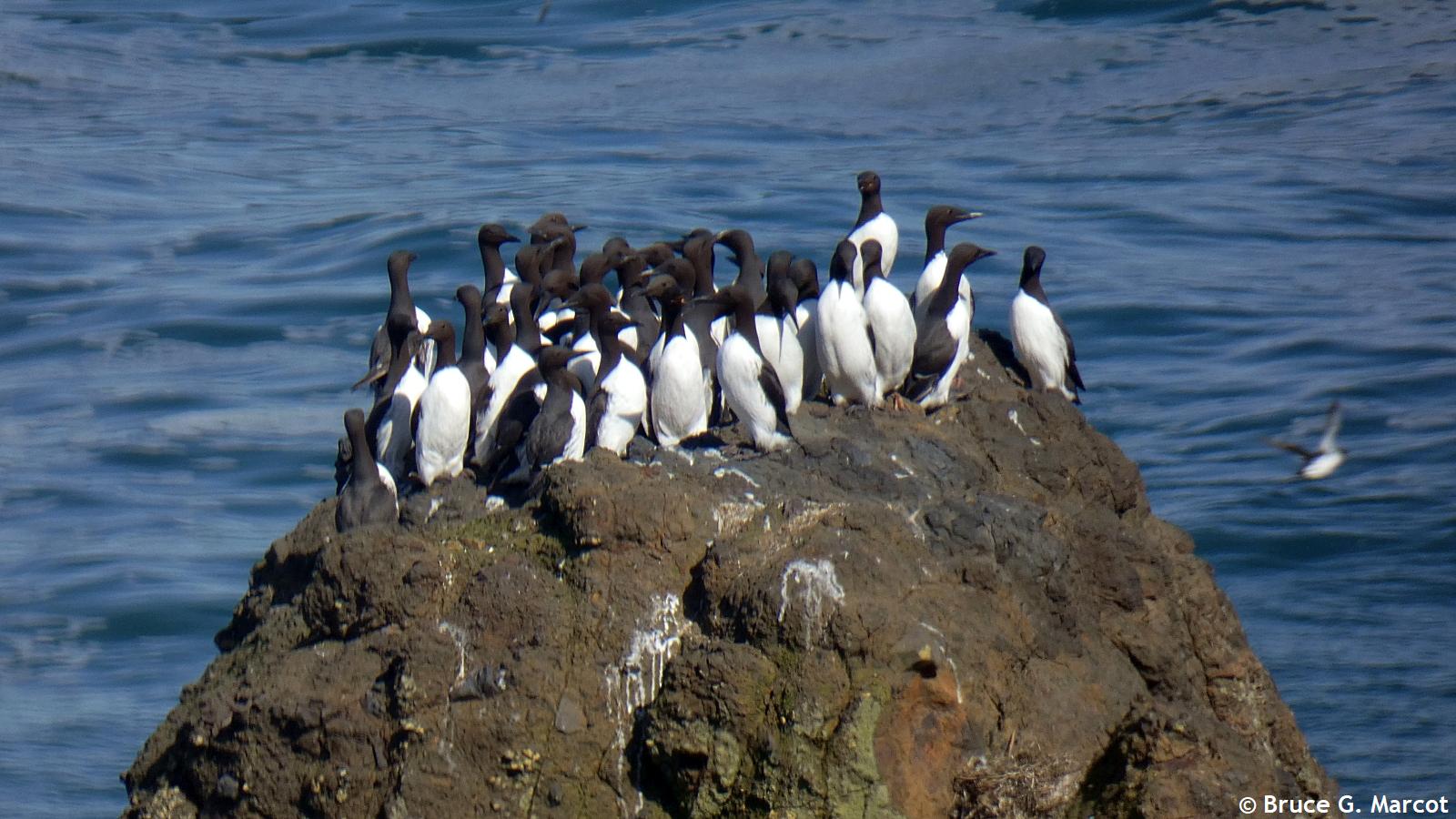
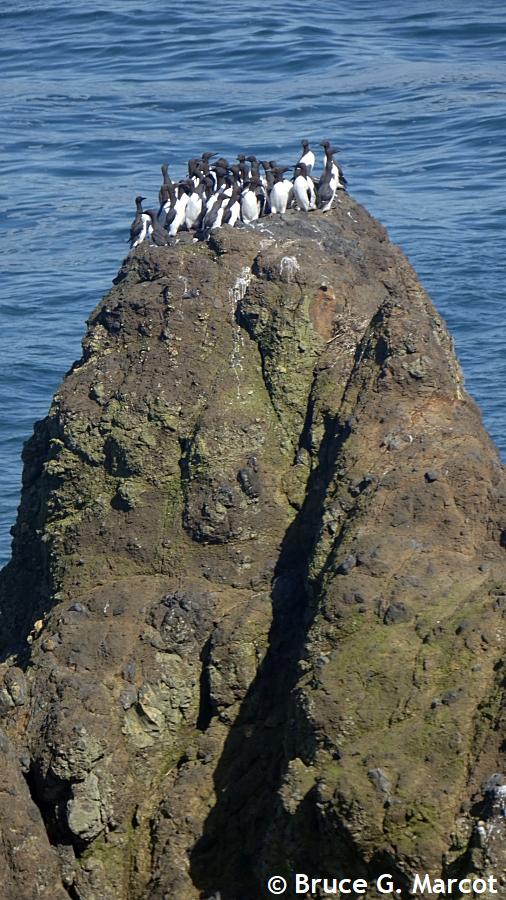
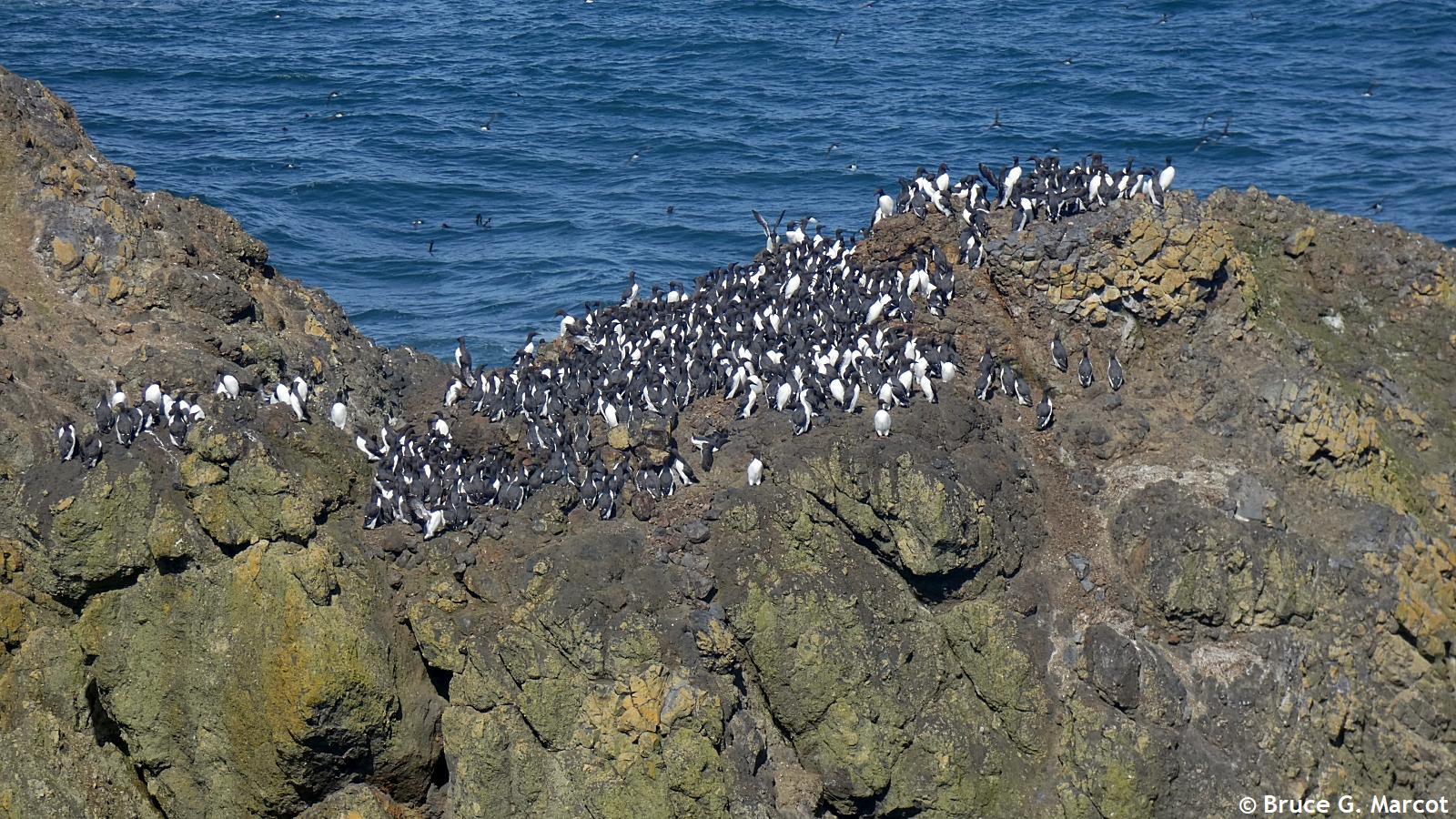
Explanation: This week we are on the coastal cliffs of Oregon, USA, overlooking the Pacific Ocean and these offshore stacks comprising the Yaquina Head Outstanding Natural Area. And here resides the largest and highly viewable breeding colonies of seabirds ... especially this massive congregation of Common Murres. For some 27 years now, researchers have tracked, counted, and monitored these colonies at this site, at times the murre colony swelling to some 60,000 strong. Their work has revealed swings in their reproductive success and survivorship. For Common Murres, some threats include direct predation by Bald Eagles, secondary predation by gulls, ravens, and other small predators on eggs of exposed nests, and other factors. The Yaquina Head site occurs within the Northern California Current System that itself varies over the years in timing and degree of upwelling, and that, in combination with variations in the Pacific Decadal Oscillation and the El Niño Southern Oscillation, affects marine prey abundance and availability. As influenced by all of these forces, the productivity of the Common Murre colony here, in particular, has varied significantly over time in response to secondary changes in predation and in their marine food sources.
The birds typically crowd together for optimal roosting sites, but the crowing also provides some individual degree of protection from aerial predators such as eagles.
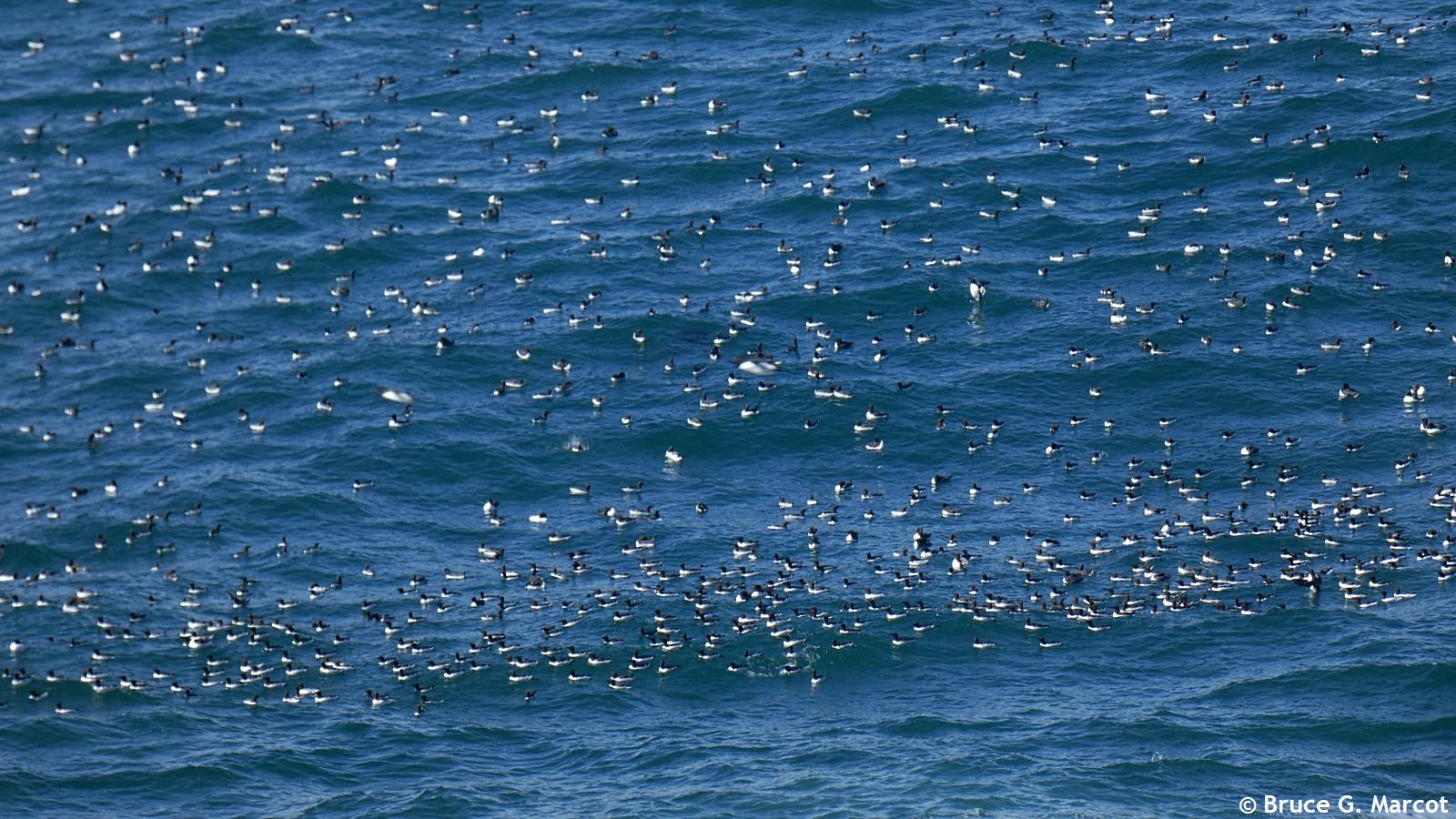
And when threatened by an eagle, even as a "test" flyby, the murres commonly bolt from their rocky thrones and dash into the water by the hundreds:
Note: My photos from this posting were were taken in March of 2024. |
Next week's picture: Solifluction on the Slopes
< Previous ... | Archive |
Index |
Location | Search | About EPOW | ... Next >
Google Earth locations
shows all EPOW locations;
must have Google Earth installed
Author & Webmaster: Dr. Bruce G. Marcot
Disclaimers and Legal Statements
Original material on Ecology Picture of the Week © Bruce G. Marcot unless denoted otherwise