|
|||
|
Snow Fleas of the Soil |
|
|
|
|||
|
Snow Fleas of the Soil |
|
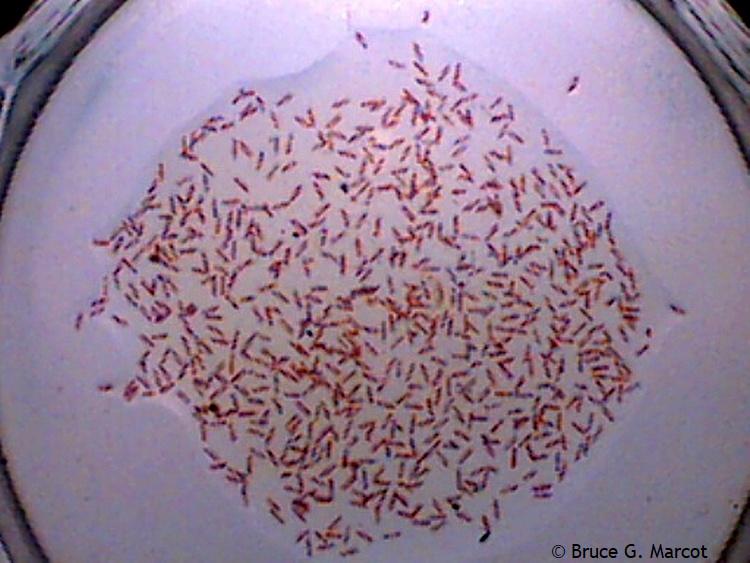
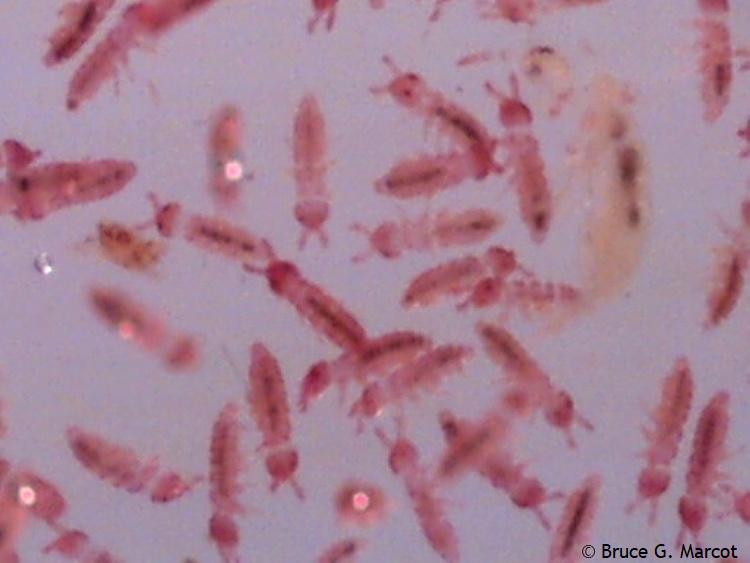
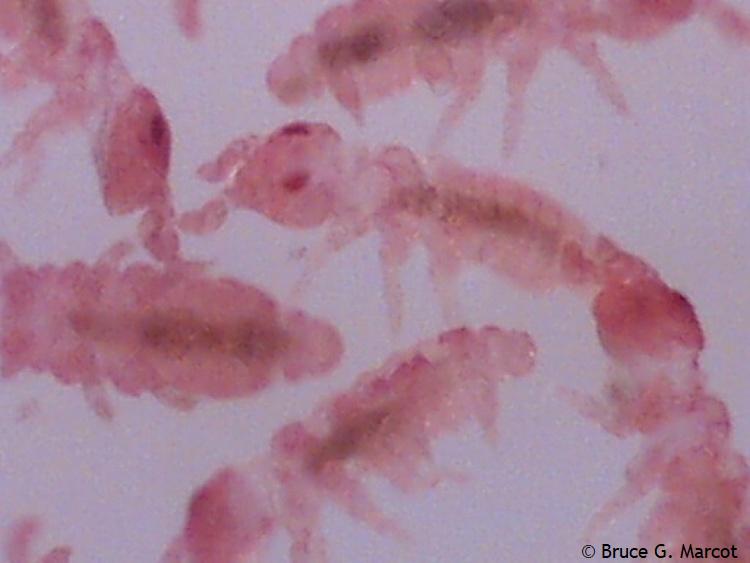
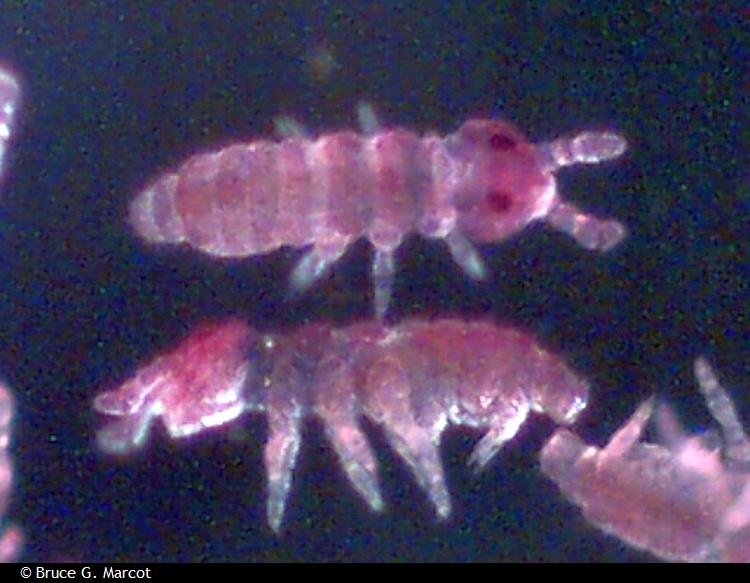
Snow Flea (Hypogastrura cf. nivicola),
Family Hypogastruridae |
Credit & Copyright: Dr. Bruce G.
Marcot
|
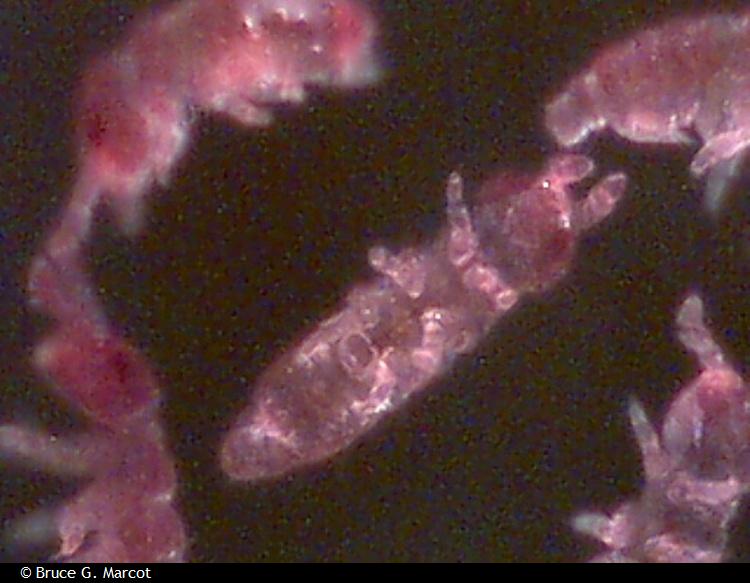
Explanation: Retrieved from a "soil excision" sample in the conifer forests of the Cascades Mountains of southern Washington state, USA, is this wonderful collection of tiny invertebrates known as springtails. Also going by the name "snow fleas," springtails can play key roles in the ecology of the forest soil ecosystem. But first, a quick word on the above triad of photos. I had extracted the organisms from the soil sample using a "Berlese-Tullgren" funnel method, where you put the soil sample in a funnel with a mesh filter, placed under a strong and hot lamp. The light and heat induces living organisms that are sensitive to losing body moister to burrow down, where they pass through the filter and drop into a sample plate below. My photos above are of the retrieved sample, where I used direct, pass-through lighting from below ("transmitted light microscopy") so as to highlight some internal structures of the organisms. The top photo is at 10x magnification, the middle photo at 60x, and the bottom photo at 200x. So, snow fleas -- springtails of this genus Hypogastrura -- live in the upper layers of soil and litter. There, they feed on decaying plants, bacteria, lichen, and fungi. They serve a critical function of decomposing forest vegetation litter, thereby passing nutrients on to other organisms of the soil. They can be present in great numbers, and as such their presence and density can signal the health of a forest soil ecosystem.
Monitoring their presence and abundance could be an easy way to determine and monitor trends of forest ecosystem health and productivity.
|
Next week's picture: A Little Crater Lake
< Previous ... | Archive |
Index |
Location | Search | About EPOW | ... Next >
Google Earth locations
shows all EPOW locations;
must have Google Earth installed
Author & Webmaster: Dr. Bruce G. Marcot
Disclaimers and Legal Statements
Original material on Ecology Picture of the Week © Bruce G. Marcot unless denoted otherwise