|
|
|
Pigeon Seed-Disperser |
|
|
|
|
|
Pigeon Seed-Disperser |
|
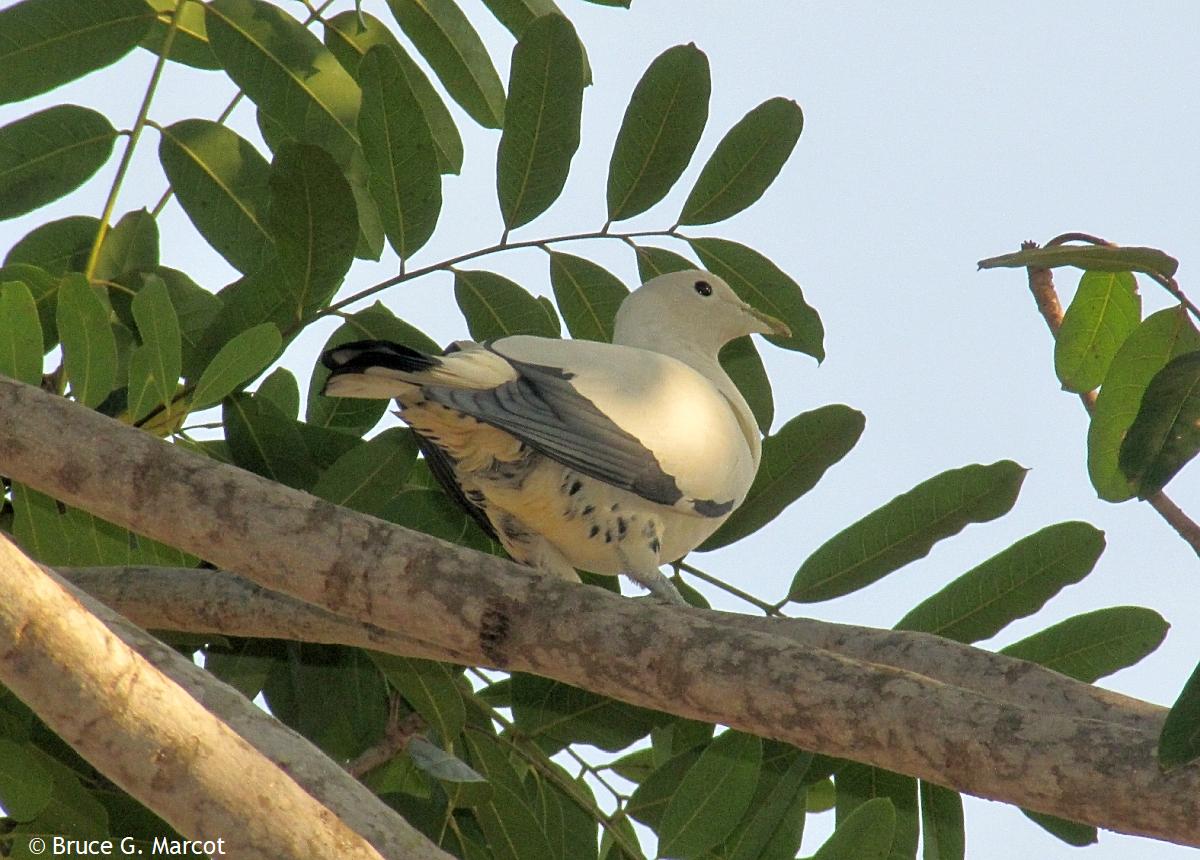
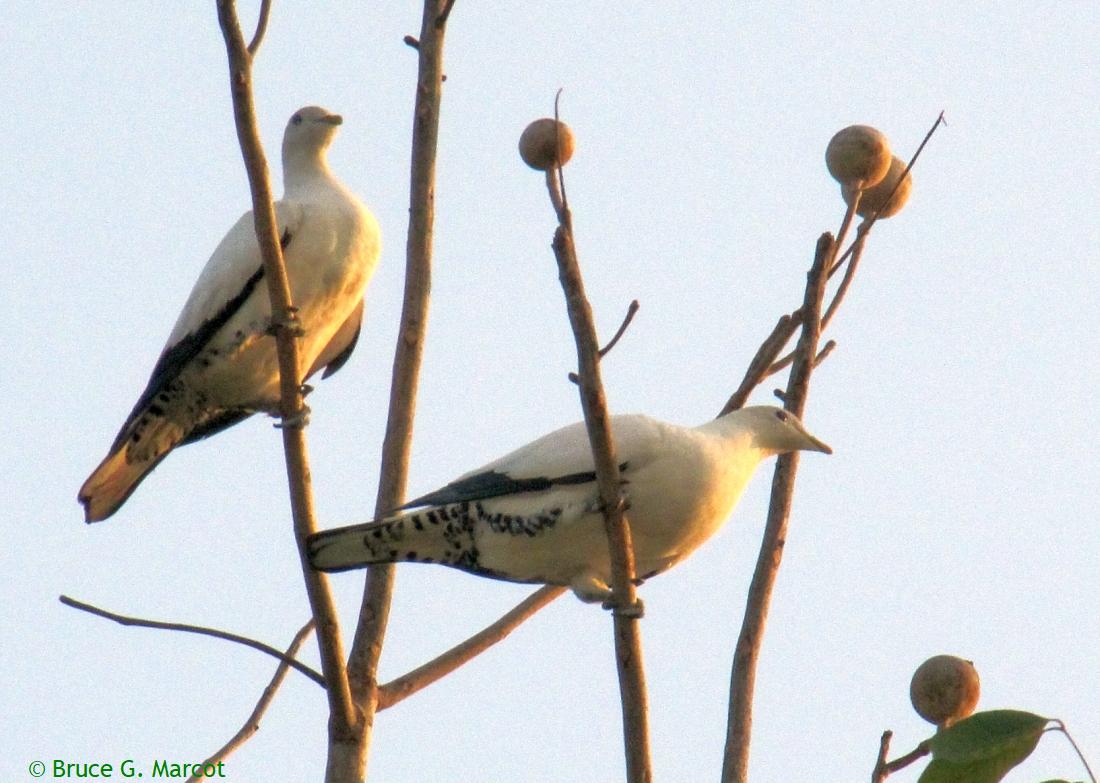
Torresian Imperial Pigeon (Ducula
spilorrhoa), Family Columbidae |
Credit & Copyright: Dr. Bruce G.
Marcot
|
Explanation: This avian denizen of the forest canopy is a Torresian Imperial Pigeon that also goes by the Torres Strait Pigeon as well as quite a list of other common names. We are in the area of Palmerston, Northern Territory, in the "Top End" of Australia, in the tropics. From August to January, the birds will migrate from Papua New Guinea to tropical northern Australia where they nest and raise their chicks. Torresian Imperial Pigeons play key ecological roles of seed-dispersal. One of their primary foods in Australia is the seeds of Carpentaria palm trees (Carpentaria acuminanta) which is endemic to Northern Territory and is grown widely in Australian tropical gardens, according to a local information sign. The palms produce profusions of bright red berries during the rainy season that are eaten copiously by the pigeons that then widely disperse the seeds as they pass through their gut. The seeds can then readily germinate, making the pigeon an important ecological agent to maintain the health and distribution of the palm populations.
The local information sign also quotes Ranger Julie Trembath as saying "Some Torres Strait Pigeons [Torresian Imperial Pigeons] no longer migrate because watered gardens provide fruit throughout the Dry [Season]" (also see Noske and Lilleyman 2016). How this change in migration strategy affects seed dispersal in Australia and in Papua New Guinea as well does not seem to have been studied. It is yet another interesting case of how human activities affect wildlife behavior, with unknown secondary effects on the wildlife's key ecological functions.
|
Next week's picture: Nurse Palm
< Previous ... | Archive |
Index |
Location | Search | About EPOW | ... Next >
Google Earth locations
shows all EPOW locations;
must have Google Earth installed
Author & Webmaster: Dr. Bruce G. Marcot
Disclaimers and Legal Statements
Original material on Ecology Picture of the Week © Bruce G. Marcot unless denoted otherwise