|
|
|
Desert Locust in Hiding |
|
|
|
|
|
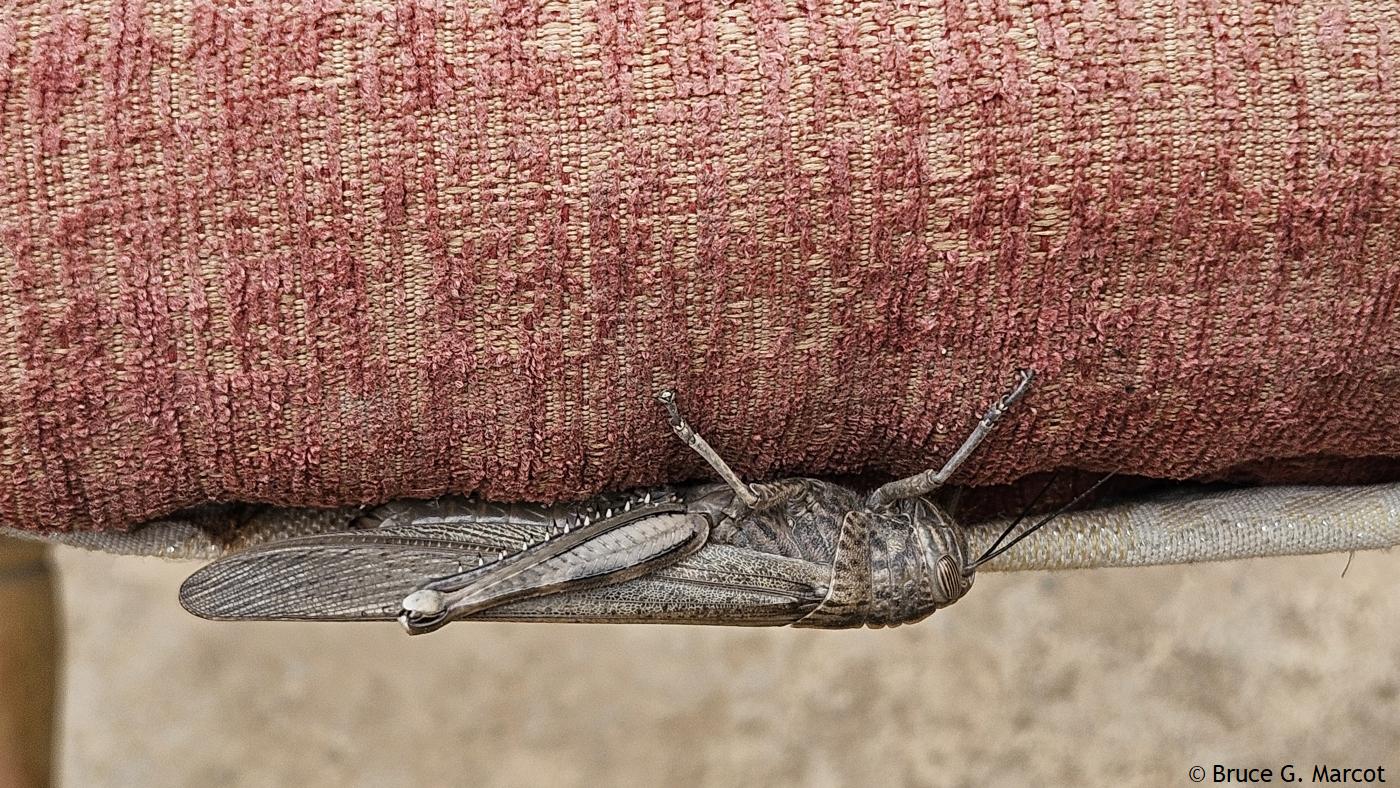
Desert Locust in Hiding |
|
Locust (Schistocerca cf. gregaria), Family
Acrididae |
Credit & Copyright: Dr. Bruce G.
Marcot
|
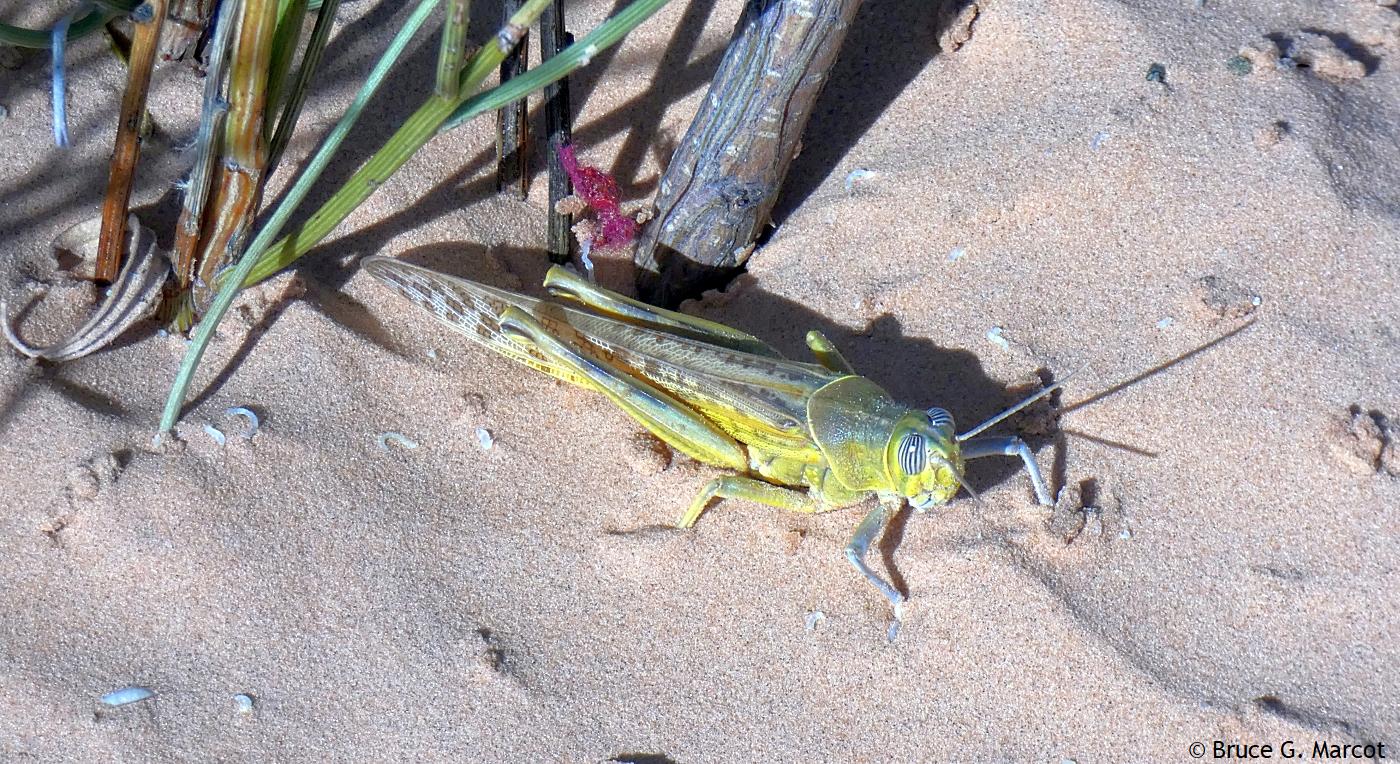
Explanation: Nicely hidden beneath, and clinging to, the cushion of this chair on the patio of a Berber village house is this locust, likely the widespread desert locust. We are in the Ourika Valley of the Atlas Mountains in northern Morocco, outside the city of Marrakesh. We are not in the desert here, but the rocky Agafay Desert is but 25 miles (40 km) to the southeast, as the locust flies. Still, here, we are apparently within the distribution of the locust's breeding area as well as within its range of population outbreaks, and certainly within its range of intercontinental migration. The Food and Agriculture Organization (FAO) of the United Nations has declared the desert locust as "the most destructive migratory pest in the world." Desert locusts are notorious for forming massive outbreaks that decimate agricultural plantations. Some control mechanisms include using baits and dusting and sprays with insecticide, but further information is needed for effective control strategies (see Katel et al. 2021).
Desert
locust swarms often prefer to roost in tall desert plants.
|
Next week's picture: Pigeon Seed-Disperser
< Previous ... | Archive |
Index |
Location | Search | About EPOW | ... Next >
Google Earth locations
shows all EPOW locations;
must have Google Earth installed
Author & Webmaster: Dr. Bruce G. Marcot
Disclaimers and Legal Statements
Original material on Ecology Picture of the Week © Bruce G. Marcot unless denoted otherwise