|
|
|
Leech in the Night |
|
|
|
|
|
Leech in the Night |
|
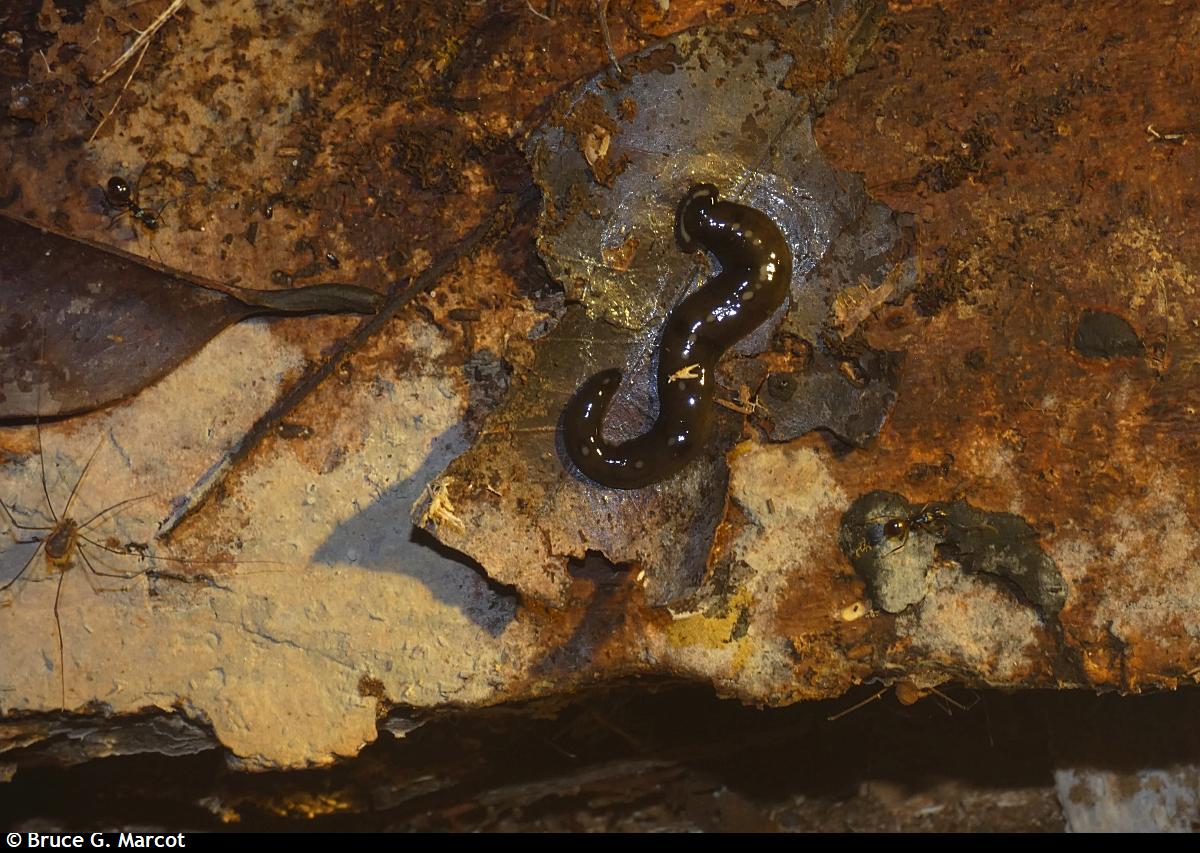
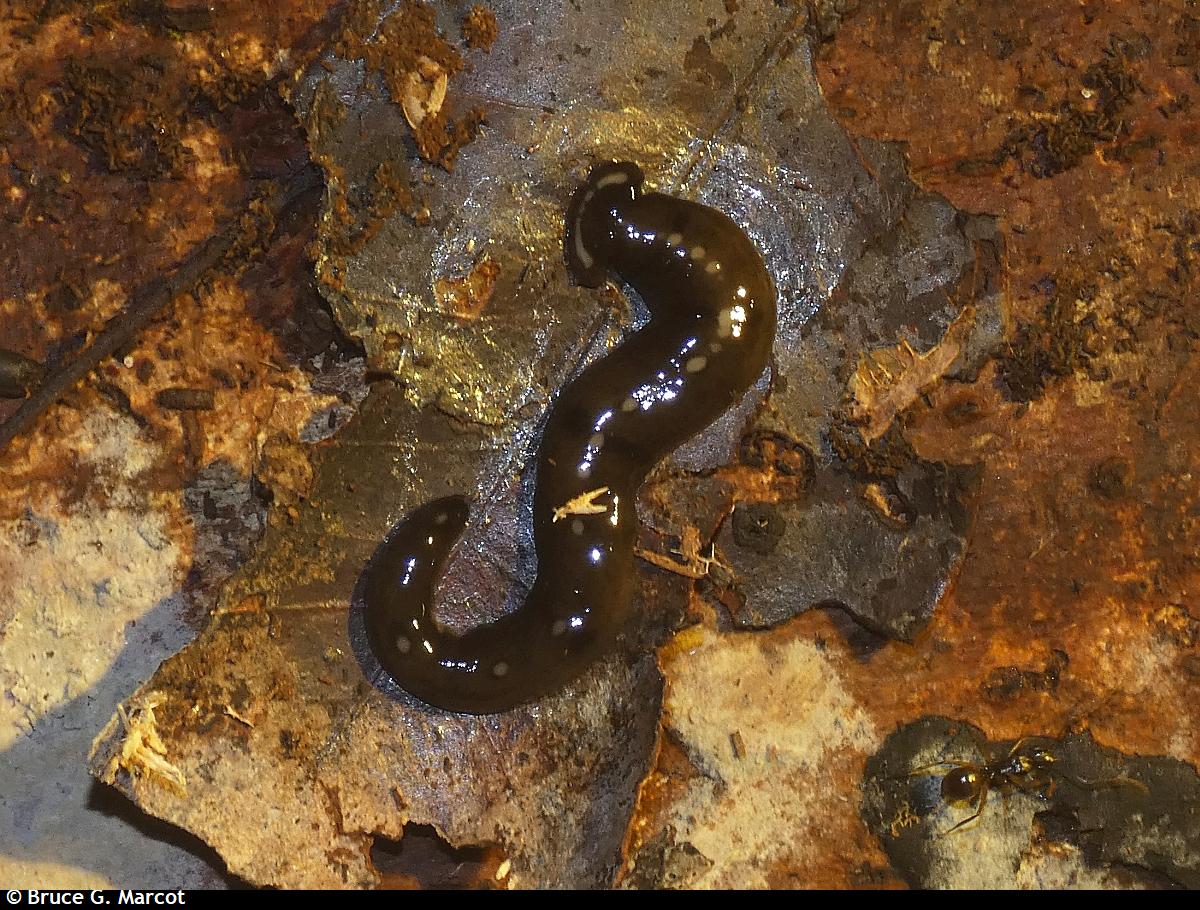
Leech, poss. Tiger Leech (Haemadipsa
sp., cf. picta), Family Haemadipsidae |
Credit & Copyright: Dr. Bruce G.
Marcot
|
Explanation: Bearing headlamps during an exploratory night hike through lowland tropical forests of Tanjung Puting National Park in southern Borneo, Indonesia, we happened upon a wonderful nocturnal invertebrate world. On the edge of some decaying tree bark resided a microcosm of the microworld. Look closely at the above photo. The center star of the scene is indeed the leech, possibly a Tiger Leech. Some sources note that at least 9 species of leeches occur in Borneo and provide ways to prevent or remove them should they give you a nice leech-hug. But
also look at the photo again. Did you notice the two ants, to the upper
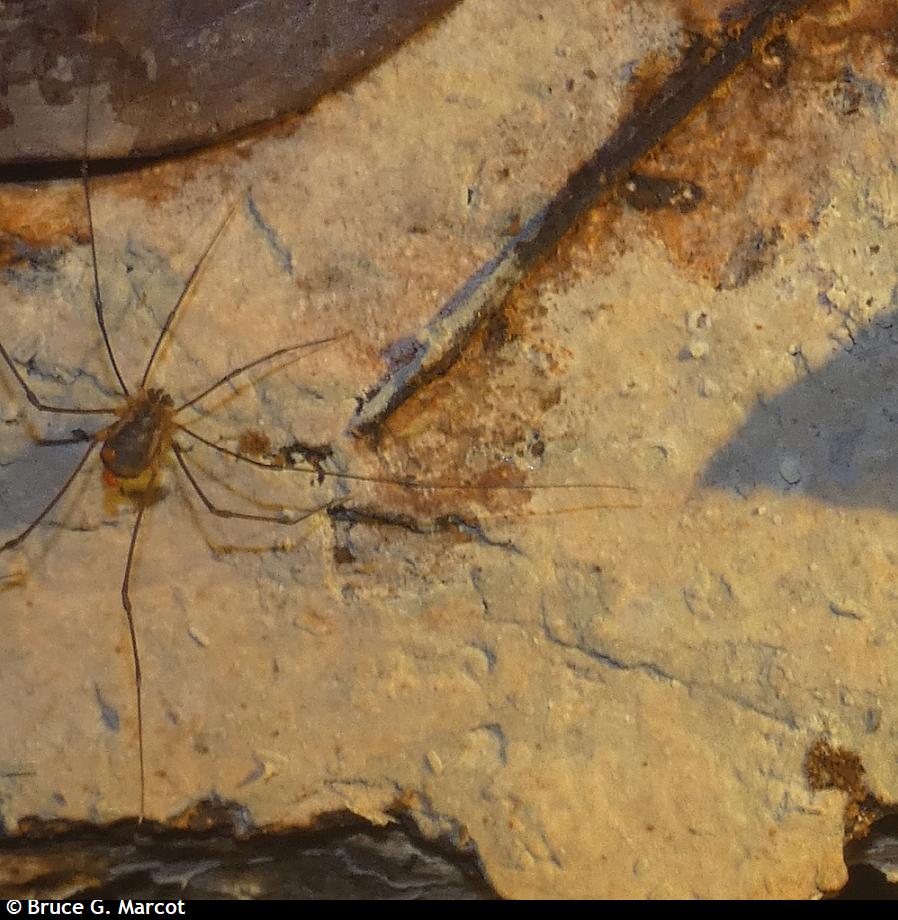
left and lower right of the leech? And the spider at left, and the one
just under the bark edge at the bottom?
One study (Drinkwater et al. 2020) suggests that "blood-feeding terrestrial leeches," including Tiger Leeches, can serve as useful ecological indicators of the degree of forest system degradation, and also -- so interestingly -- as a source of mammal DNA for monitoring mammal species (in the way that species DNA can be detected in some spider webs)! Tiger Leeches on Borneo specifically could be useful as indicator taxa for biomonitoring (Nelaballi et al. 2022), as the species has a narrow distribution in lower elevation wet tropical forests and thus may be sensitive to lower levels of soil moisture. Lower abundance of the leeches, if monitored over time, could indicate trends in aridity and drying of soils and vegetation, and thus potential adverse impacts on the broader biota associated with moist tropical vegetation. So, hail to the utility of the "giant" leeches of tropical forests!
|
Next week's picture: Chimborazo: The Highest Point on Earth!
< Previous ... | Archive |
Index |
Location | Search | About EPOW | ... Next >
Google Earth locations
shows all EPOW locations;
must have Google Earth installed
Author & Webmaster: Dr. Bruce G. Marcot
Disclaimers and Legal Statements
Original material on Ecology Picture of the Week © Bruce G. Marcot unless denoted otherwise