|
|
|
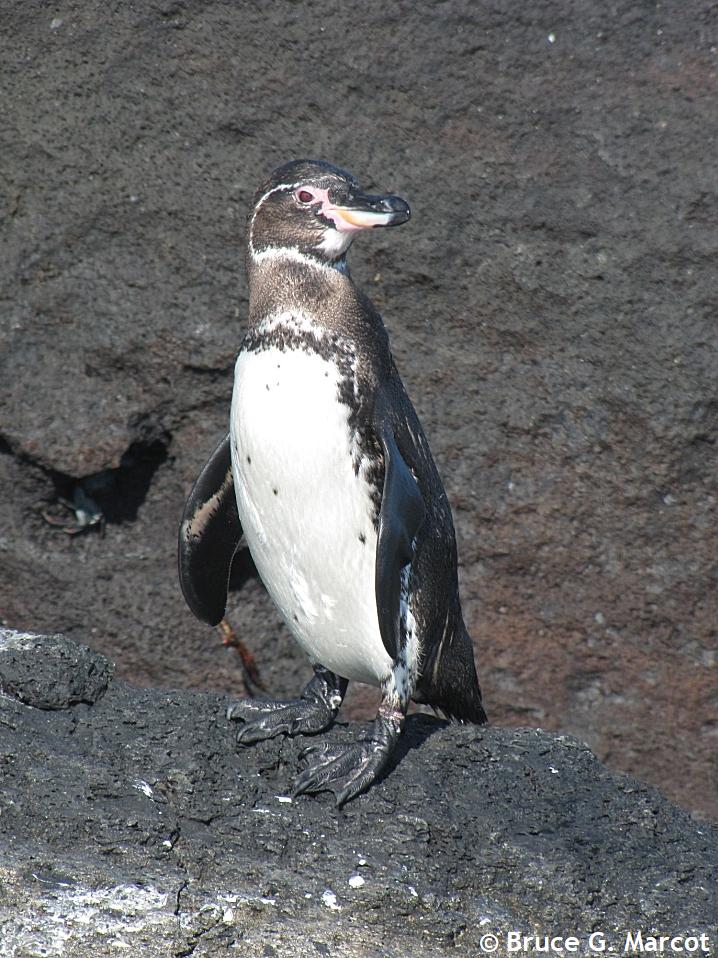
Galapagos Penguin on the Rocks |
|
|
|
|
|
Galapagos Penguin on the Rocks |
|
Galapagos Penguin (Sphensicus
mendiculus), Family Spheniscidae |
Credit & Copyright: Dr. Bruce G.
Marcot
|
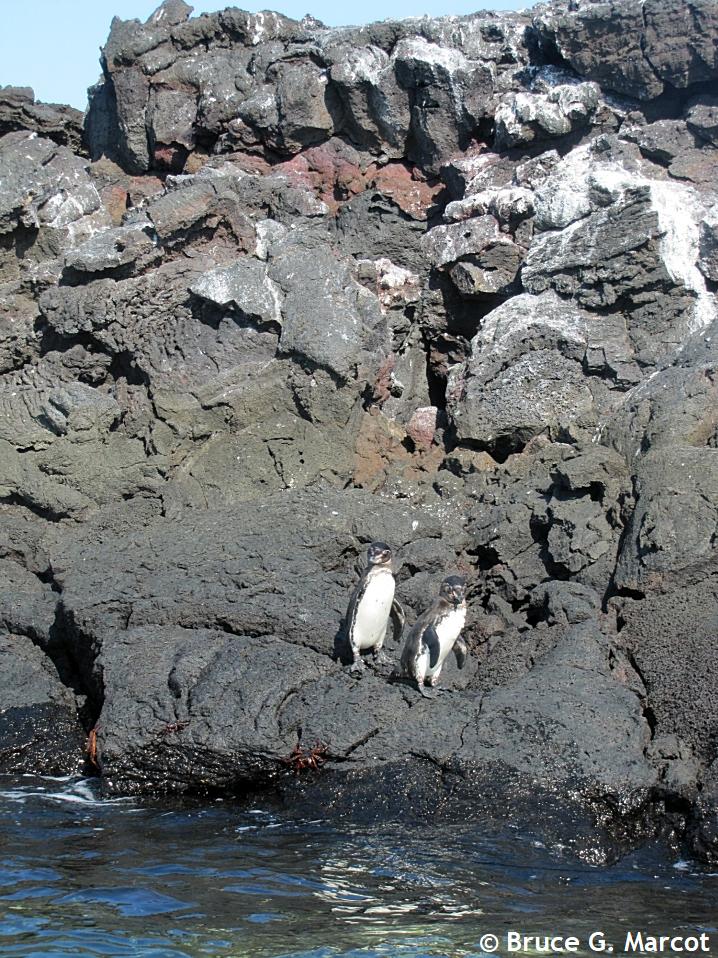
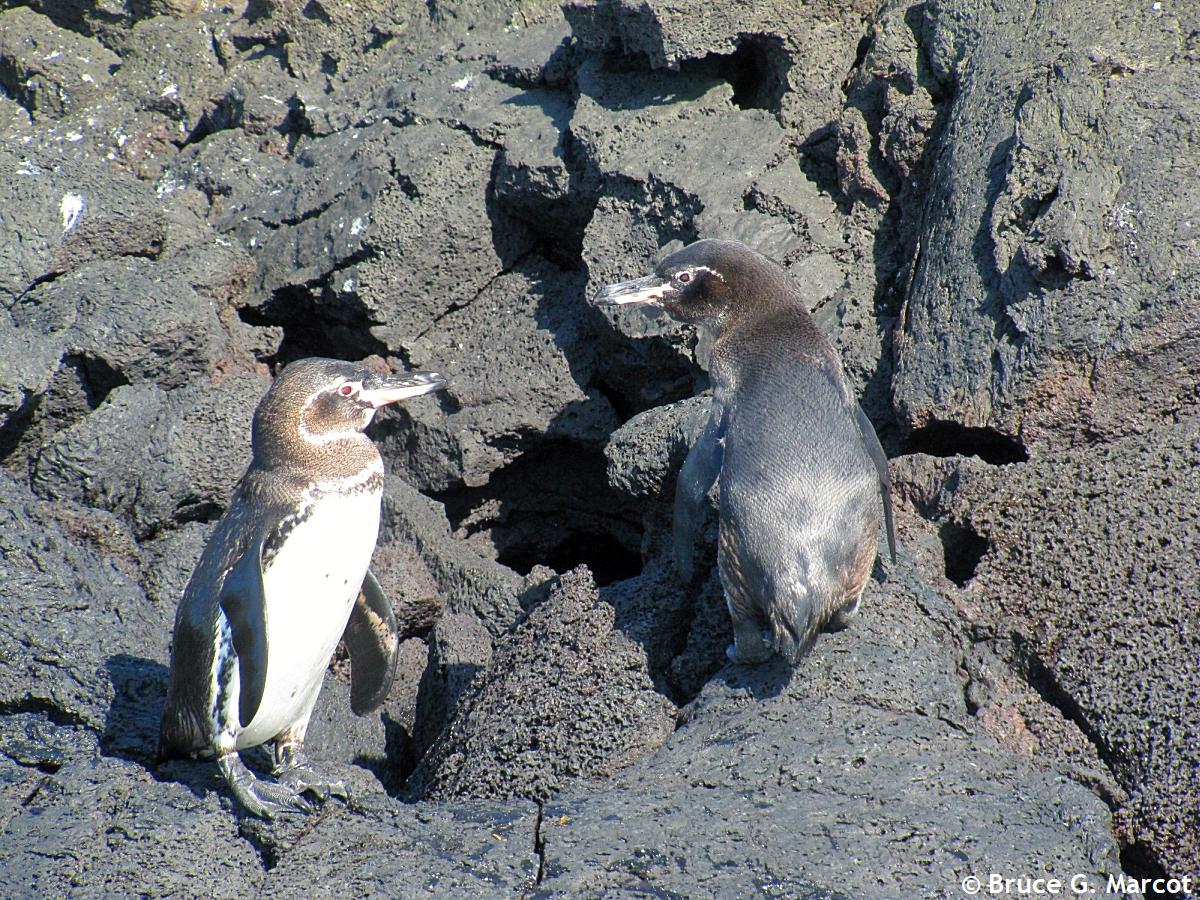
Explanation: Hauled out on steep rocky cliffs on an offshore stack, safe from marine predators, is this hearty Galapagos Penguin. This is one unique bird, being one of the smallest penguin species, the only penguin found in the northern hemisphere, the only penguin living near the equator, and the only penguin to breed entirely within the tropics!
Galapagos Penguins breed throughout the year when their small fish food resources are available, nesting in small crevices in rocky stacks close to shore. They form small colonies, and are the only penguin found in the Galapagos Archipelago.
When on shore on the main islands, they become vulnerable to attack by introduced dogs, cats, and rats. IUCN lists it as Endangered, with a decreasing population, currently numbering only about 1,200 mature individuals. A multitude of threats have been cited to the population, including pollution, recreational activities, hunting, trapping, fishing, non-native species predation, diseases, and temperature and storm extremes. But
did you know that there is a Global
Penguin Society dedicated solely to conservation of the world's 18 species
of penguins? And Penguins
International, also dedicated to penguin conservation? And Galapagos
Conservation Trust, aiming to protect and restore the biodiversity of the
archipelago? And many other wildlife conservation organizations and
institutions providing guidance and leadership on conservation actions for
this and many other imperiled species of our planet.
|
Next week's picture: Another Sutter View
< Previous ... | Archive |
Index |
Location | Search | About EPOW | ... Next >
Google Earth locations
shows all EPOW locations;
must have Google Earth installed
Author & Webmaster: Dr. Bruce G. Marcot
Disclaimers and Legal Statements
Original material on Ecology Picture of the Week © Bruce G. Marcot unless denoted otherwise