|
|
|
More Than Just a Tea |
|
|
|
|
|
More Than Just a Tea |
|
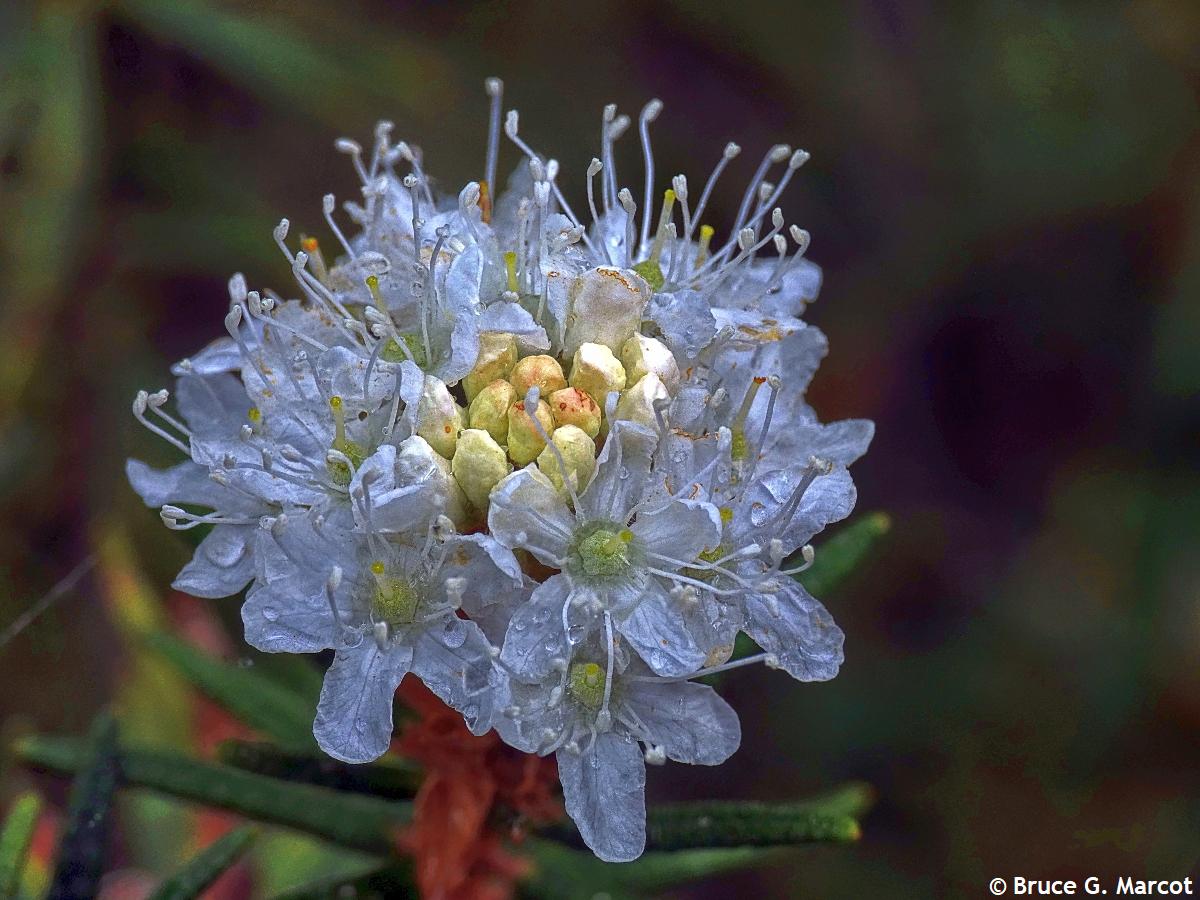
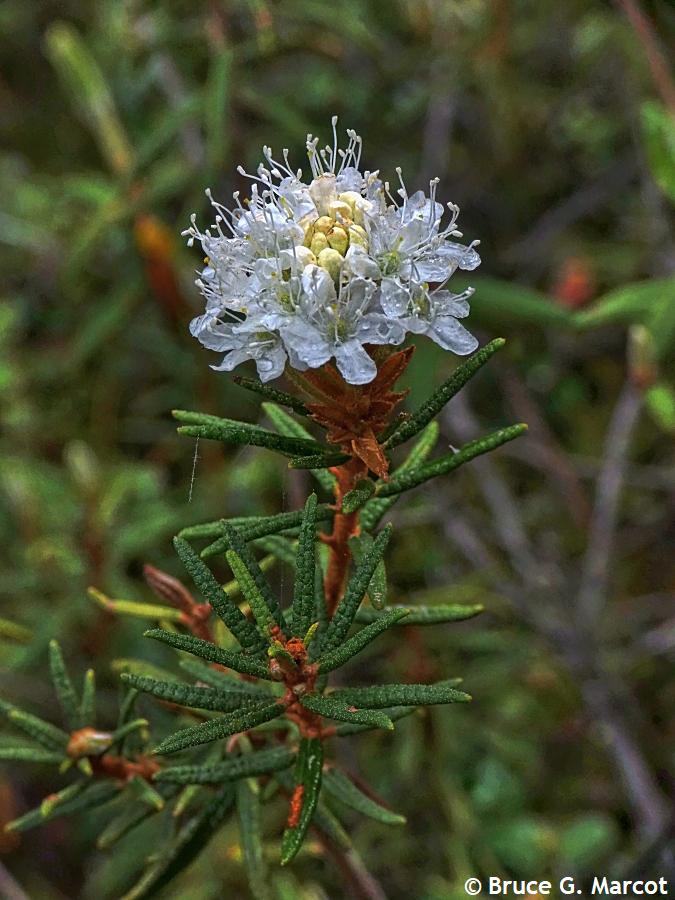
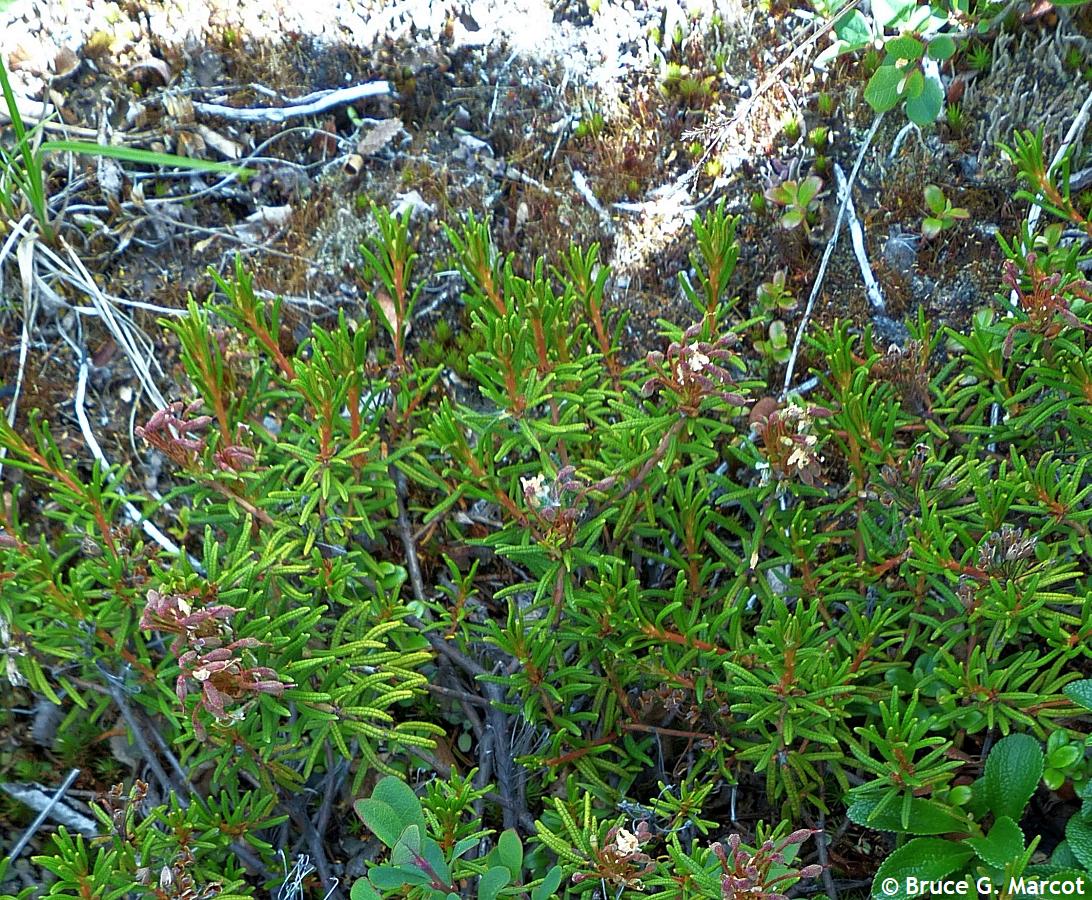
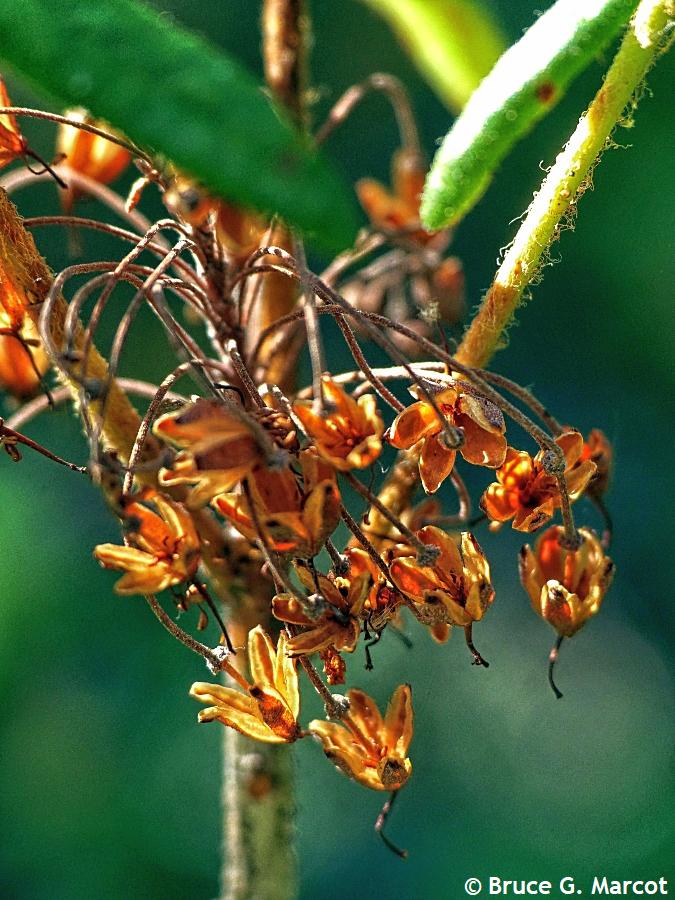
Marsh Labrador Tea (Ledum
palustre ssp. decumbens, syn. Rhododendron tomentosum), Family
Ericaceae |
Credit & Copyright: Dr. Bruce G.
Marcot
|
Explanation:
Part of the genus Rhododendron is this
plant of boreal and arctic regions. It goes by marsh Labrador
tea and other common names, as well as the (sub?)genus Ledum.
In central Alaska, it is found in bogs along with dwarf birch, bog rosemary, and sedges, as well as in tussocks along with birches and willows (Tande et al. 1996). It is also widespread across northern latitudes, included being reported in wetlands of northeast China (Ren et al. 2019).
Labrador tea is prized, also, with high economic and medicinal values, and is reported to contain components that serve as bactericides, and aid as agents for anti-inflammation, anti-tumor, and anti-oxidants (Ren et al. 2019), as well as treating rheumatism, cough, cold, and insect bites (Dampc and Luczkiewicz 2013), and even more! But it is also reported as being highly toxic, with fatality an outcome if eaten, containing a narcotic toxin called Ledel. Although a tea can be made from its aromatic leaves, brewing for a long period in a closed container can release the toxin.
|
Next week's picture: Crested Pigeon
< Previous ... | Archive |
Index |
Location | Search | About EPOW | ... Next >
Google Earth locations
shows all EPOW locations;
must have Google Earth installed
Author & Webmaster: Dr. Bruce G. Marcot
Disclaimers and Legal Statements
Original material on Ecology Picture of the Week © Bruce G. Marcot unless denoted otherwise